
How Doctors Decide Between Keyhole and Open Bypass
The decision between a keyhole approach and a conventional open bypass is not a cosmetic choice. The surgeons consider safety, access, and long-term graft quality, balancing these against the patient’s technique, anatomy, and overall risk. Both options are frequently encountered by people researching heart surgery in London, but the final decision is not always determined solely by preference.
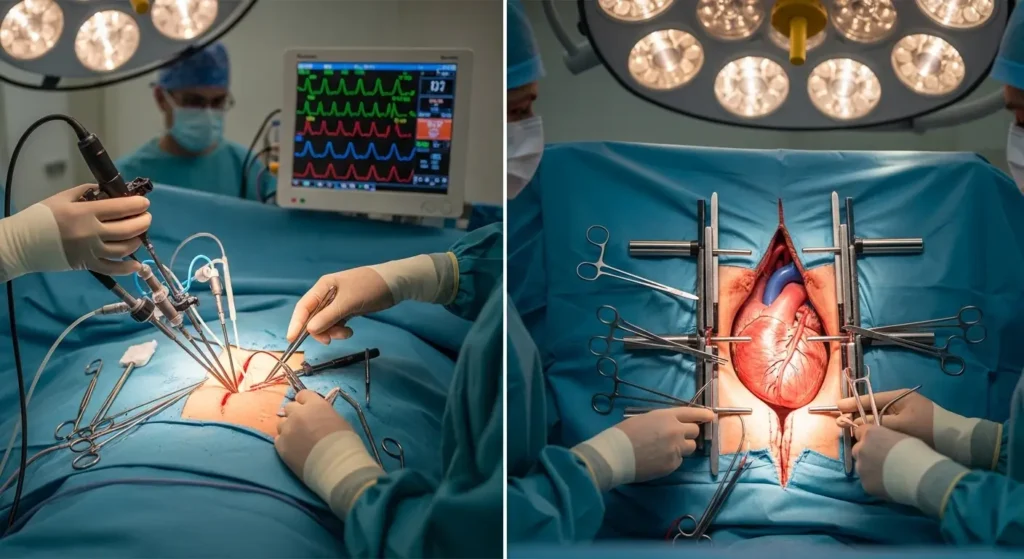
What Keyhole and Open Bypass Mean
Classical coronary artery bypass grafting is usually done with a median sternotomy, where the breastbone is cut to provide complete access to the heart. Keyhole procedures involve making smaller incisions between the ribs to access target vessels without opening the sternum, sometimes aided by robotic or endoscopic techniques.
Keyhole coronary bypass may involve minimally invasive direct coronary artery bypass, minimally invasive multivessel surgery, or completely endoscopic surgery with instruments being delivered via small incisions. Open bypass is still very common because it is highly visible and flexible when more than one graft is required.
Coronary Pattern Drives The Decision
This is largely determined by the number of arteries that require grafts. In some patients, single-vessel disease, especially that of the left anterior descending artery, can be treated with a minimally invasive technique. In skilled centres, multi-vessel disease may still be treated with less invasive procedures; however, complexity often drives teams to perform open surgery to achieve adequate access to multiple grafts.
Location matters as well. Some can be accessed with ease through a small opening, while others may be hard to access safely without full access. If grafting is needed on more than one surface of the heart, open surgery can provide more controlled access and better positioning.
Patient Anatomy and Lung Function
Keyhole surgery may involve the surgeon operating between the ribs, occasionally with one lung deflated to make an operating room within the thoracic cavity. It implies that respiratory health and lung capacity can be used to determine eligibility. The individual who has a poor lung reserve might not be able to sustain the necessary ventilation plan, and open bypass is a safer choice.
Access can also be influenced by body habitus. The shape of the chest wall, the distance between ribs, and the location of the heart determine a surgeon’s ability to access target vessels using small incisions. The open approach can help mitigate operative risk when exposure is likely to be limited, such as visibility and manoeuvrability.
Other Heart Problems Change The Plan
Other procedures, such as valve repair or replacement, may sometimes be required to be performed alongside the bypass. In combined surgery, the preferred approach is usually sternotomy because it provides wide access to various structures in a single operation.
Another influence is urgency. In unstable cases, the team may adopt the technique that provides the quickest and most predictable access for safe grafting. An open route may also be preferred due to complex anatomy, risk of bleeding or the likelihood of requiring a quick conversion.
Pump Use and Beating Heart Options
Some bypass surgeries are done with the help of a heart-lung bypass machine, but some are done off-pump as the heart continues beating. In some minimally invasive environments, either approach is possible, based on the methodology and personnel.
The decision here will be based on the coronary targets, the surgeon’s experience, and the patient’s stability. Off-pump work may help avoid exposing some people to the bypass machine, though it may also be technically challenging, particularly when a series of grafts is planned. The goal of the surgeons is to identify the most promising method for producing long-lasting grafts with the lowest risk.
Recovery Considerations and Trade-offs
Smaller cuts can minimise chest wall trauma, helping the chosen patients recover faster. The restrictions associated with bone healing may also be avoided by avoiding sternotomy, which can be important for individuals with physically demanding occupations.
The only goal is recovery, but not only. First is the quality of grafts and revascularisation. The longer recovery may be a good compromise when open surgery provides a more favourable path to a secure graft position. Simply put, the safest operation is the one that gives the projected grafts the lowest risk of loss.
Recovery after major surgery often involves paying close attention to digestive health, especially when medications, reduced activity, and dietary changes are involved. Specialists such as dr gina sims gastroenterologist frequently emphasize the importance of maintaining good gastrointestinal function during recovery to support overall healing and patient well-being.
The Role Of Centre Experience
Keyhole coronary bypass is not available everywhere, in part due to the specialist training, equipment, and team coordination required. NHS guidance defines totally endoscopic and robotic methods as newer techniques and highlights key points such as small incisions and lung deflation. Evidence reviews also indicate that minimally invasive coronary revascularisation may yield results comparable to conventional bypass in the right patients, especially in experienced, high-volume centres.
This is why surgeons frequently discuss the work a particular unit does on a regular basis. One technique may be high quality in the right hands but less effective when performed by the local team.
Questions That Help Patients Choose Well
The consultation should explain the number of grafts required, the affected arteries, and other procedures that may be necessary. Inquire about the approaches that the team provides regularly and why one of them is suggested in your case. There is also a valid reason to speak about the possibility of conversion to open surgery in case of a limited exposure, as the safety of patients is more important than adherence to the planned incision.
Talk about recovery expectations practically: expected hospitalisation, pain management, activity limitations and follow-up. This information can help alleviate anxiety and improve preparation.
A Practical Way To Think About The Choice
Keyhole and open bypass are chosen based on a match between the technique and the coronary anatomy, patient factors, and procedural objectives. Sternotomy is favoured in complex multivessel disease, combined surgery, or limited access, and specific patterns are appropriate for minimally invasive approaches in specialised centres. The most helpful question is not which approach is easier to perform, but which offers the best chance of achieving full, permanent revascularisation with minimal risk to the individual patient.