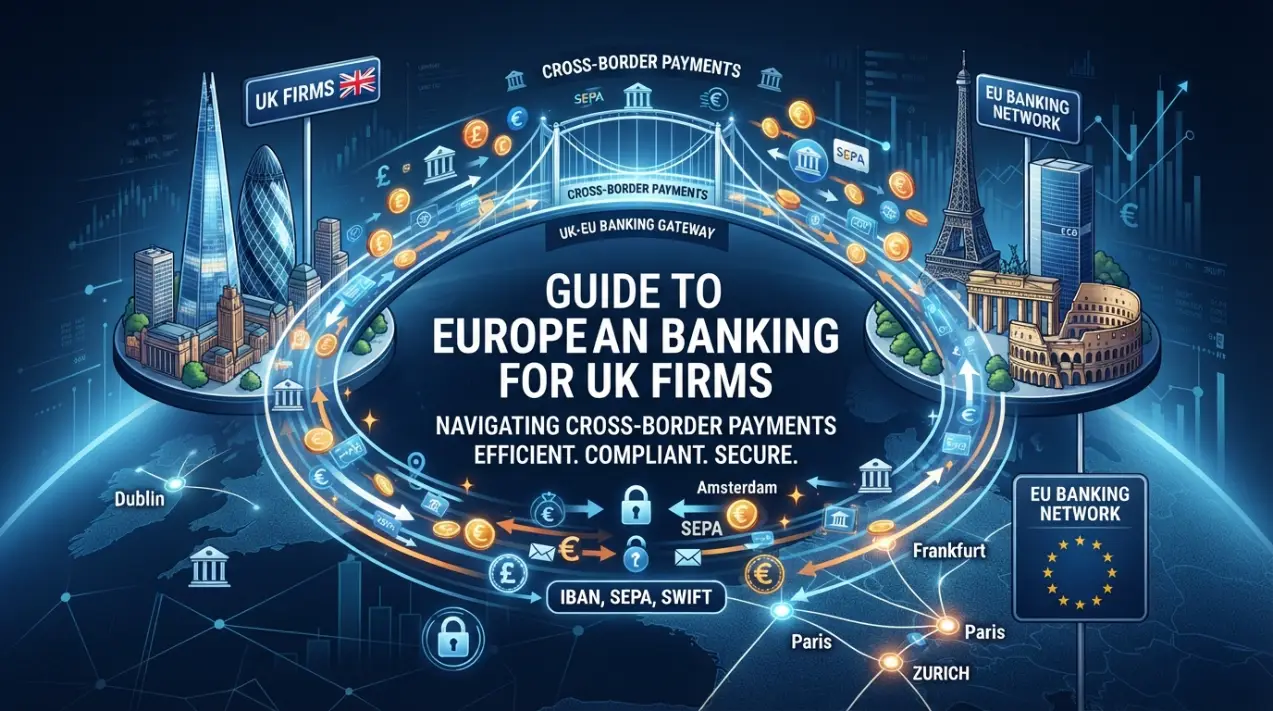
Guide to European Banking for UK Firms | Cross-Border Payments
A UK company can sell into the EU from day one, but payments often reveal the gap after the first invoice. If clients pay in euros and suppliers expect SEPA, your account setup needs to handle European flows.
SEPA Instant Credit Transfer can move euro payments in up to 10 seconds when both providers support the scheme. That matters when payroll and client receipts depend on euro timing.
The post-Brexit landscape for British exporters
The UK remains connected to the Single Euro Payments Area (SEPA), but post-Brexit operations still feel different for many SMEs. EU clients may expect an IBAN that fits their process, while finance teams need clear invoice and supplier records.
For a SaaS studio, digital agency, or e-commerce company, the problem is the weekly mix: a German client pays in EUR, a Dutch supplier asks for SEPA.
For founders researching EU banking for UK residents and UK-run companies, the choice should be judged by fit, not only speed. The provider should understand the business model, ownership, corridors, and source of funds.
Benefits of holding a European business bank account
For many UK firms, a european business account is less about adding another account and more about making euro flows easier to manage. It can reduce friction when clients prefer SEPA, separate company money from founder spending, and simplify payment review.
Satchel is relevant here because its business account is built around cross-border SMEs. The product page describes remote account opening, a unique European IBAN, SWIFT and SEPA transactions in various currencies, payment cards, and personalised support.
That fits UK growth companies that need remote onboarding, a European IBAN for SEPA payments, payment cards for team spending, and clearer records for CFOs.
Compliance still matters. Know Your Customer (KYC) and Anti-Money Laundering (AML) checks should stay in place. The difference is whether the provider understands clients, suppliers, and funding sources instead of rejecting international structures on a formal basis.
How to simplify SEPA payments for EU clients
To simplify SEPA payments for UK-based workflows, start with repeat monthly flows. Map who pays you in EUR, who you pay in EUR, which invoices need fast settlement, and who needs cards.
A UK agency could receive EU retainers into a European IBAN, pay contractors through SEPA, keep SWIFT for non-European partners, and issue virtual cards. If it processes EUR 40,000 in monthly client payments, even small delays can affect payroll timing.
European accounts for SMEs should also support internal control: transaction history, card visibility, and support before month-end close.
Satchel brings these elements together for UK firms that need European reach without a patchwork of providers. It gives UK firms one setup for a European IBAN, payment rails, cards, and compliance-led onboarding for more predictable cross-border operations.