
Leah Ray embodying excellence in British culture and fashion means, according to the XXBrits page, balancing timeless British elegance with contemporary trends. The page presents Leah Ray as a prominent figure in the British fashion scene who combines classic garments such as tweed blazers with modern cuts, minimalist heels, and statement accessories. According to the British Fashion Council, the British fashion sector generates £67.5 billion in gross value added and supports nearly 1.4 million jobs, which makes fashion a major force in British cultural life.
This article explains what Leah Ray embodying excellence in British culture and fashion means. It defines British culture and British fashion, shows how heritage shapes modern design, lists the 5 main elements of Leah Ray’s style that the page presents, examines craftsmanship and sustainability, profiles 3 British fashion icons, lists the 5 main benefits of blending tradition with modernity, compares heritage fashion with fast fashion, names 4 challenges of the fast-fashion era, and gives 5 steps readers can follow. Every claim about Leah Ray stands as what the XXBrits page presents, not as independently verified biography.
Readers who want background on the platform can read what XXBrits is before continuing with the sections below.
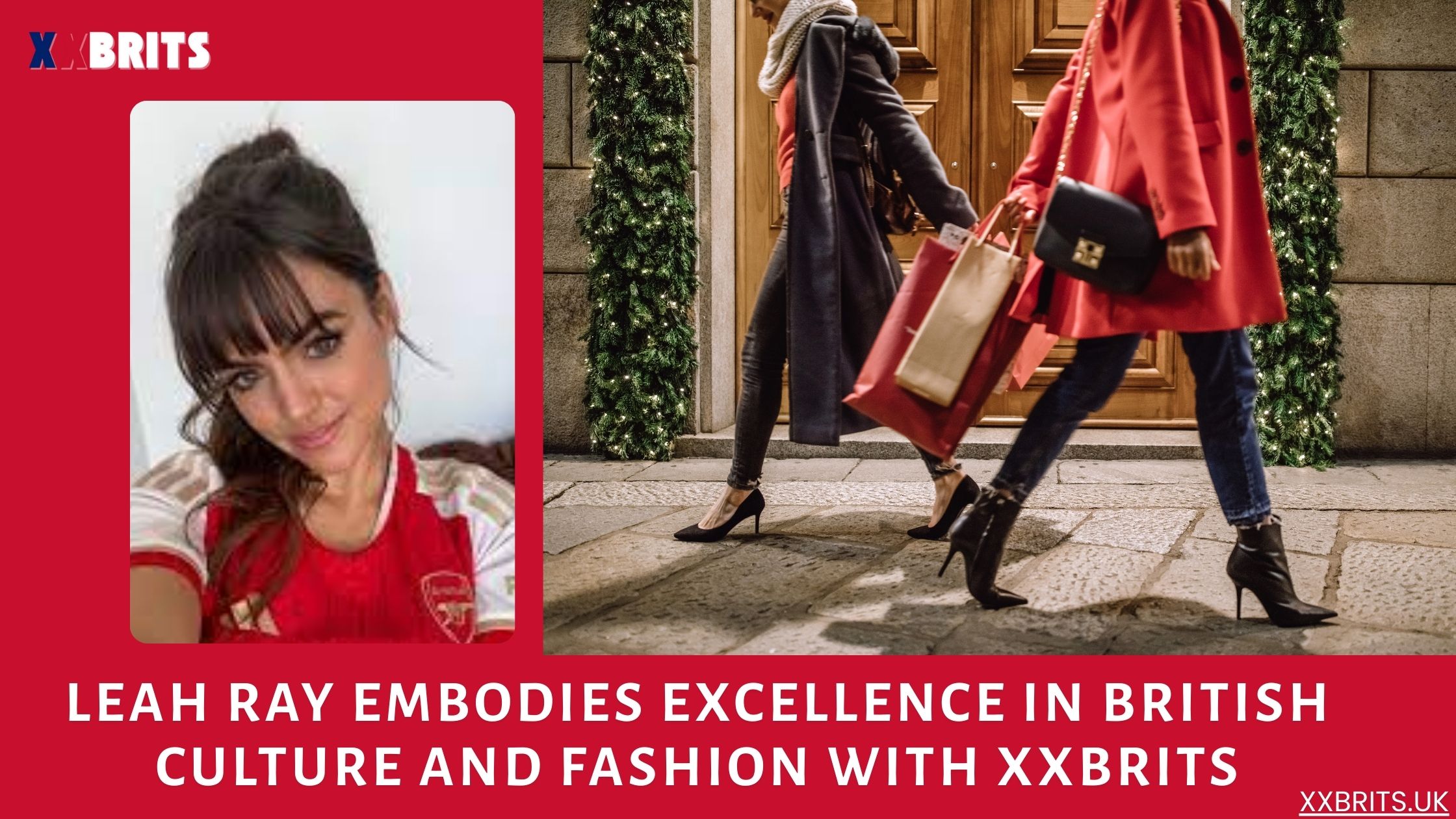
What Does Leah Ray Embodying Excellence in British Culture and Fashion Mean?
Leah Ray embodying excellence in British culture and fashion means balancing timeless British garments with contemporary styling in the way the XXBrits page presents her.
The page frames Leah Ray as a creator who refuses simple trend-following. She pairs traditional pieces with bold patterns and relaxed silhouettes. She adapts iconic looks rather than copying them. The result is a style that reads as both fresh and rooted.
Excellence in the page’s framing carries 3 meanings: technical quality of garments, cultural literacy about heritage, and consistency of personal style. The page presents Leah Ray as meeting all 3 standards. No single outfit proves excellence. A sustained pattern of choices proves it.
Readers encounter the presentation as an invitation to honour their roots. Stylists encounter it as a case study in mixing eras. Heritage brands encounter it as validation of craftsmanship. Each perspective confirms the same central claim: heritage and modernity reinforce each other.
The page organises the presentation around 3 moves: showing heritage garments in modern combinations, crediting craftsmanship and sustainability, and citing British icons as styling references. Each move answers a reader question. How does heritage look today? Why does craft matter? Who models the blend? The structure keeps every section inside the macro context of Leah Ray embodying excellence in British culture and fashion.
What Is British Culture?
British culture is the set of shared traditions, arts, institutions, and customs practised across the United Kingdom.
The page names 3 long-standing traditions: afternoon tea, royal celebrations, and stately gardens. These traditions coexist with fast-moving trends in fashion, music, and social media. British culture therefore holds continuity and change in productive tension.
Fashion belongs to the same export system as the English language, the BBC, and Premier League football. A tweed blazer signals British identity through the same visual language as those institutions. The page uses this shared language when it presents Leah Ray as an embodiment of British culture.
Cultural historians emphasise institutions and rituals. Younger consumers emphasise remixed traditions. Both views confirm that British culture remains a living system rather than a fixed relic. The page draws on both views when it presents Leah Ray as a bridge between eras.
Regional cultures enrich the national picture. Scottish tweed, Welsh wool, and Northern Irish linen each carry local craft traditions. London concentrates design and media. The regions supply materials and making. British culture therefore reads as a federation of local identities under one national frame.
What Is British Fashion?
British fashion is the design, manufacture, and retail of clothing and accessories produced or popularised in the United Kingdom.
According to the British Fashion Council, the fashion sector directly generates £28.9 billion in gross value added and employs 819,000 people in the United Kingdom. The wider sector contributes £67.5 billion in gross value added and supports nearly 1.4 million jobs, according to Oxford Economics data cited by the British Fashion Council. Fashion employs more people directly than any other creative industry in the United Kingdom.
The British Fashion Council names Vivienne Westwood, Paul Smith, John Galliano, and Alexander McQueen as designers who disrupted fashion conventions. The council names Stella McCartney and Christopher Raeburn as leaders of sustainable practice. These names anchor British fashion in both avant-garde creativity and ethical production.
The sector’s creative impact is visible in its ability to reinvent itself. The British Fashion Council describes the industry as blending traditional craftsmanship with innovation. Heritage brands such as Burberry and Mulberry represent continuity. Newer names such as Erdem, Roksanda, and Emilia Wickstead represent reinvention.
Retail carries the sector to consumers. Department stores, high-street chains, and independent boutiques sell British-designed clothing across the country. Online retail extends the reach further. Production, retail, and media therefore form one connected system.
How Does British Heritage Shape Modern British Fashion?
British heritage shapes modern British fashion by supplying garments, textiles, and silhouettes that designers reinterpret each season.
The table below pairs 4 heritage garments with their modern reinterpretations, showing how tradition enters contemporary wardrobes.
| Heritage garment | Modern reinterpretation |
|---|---|
| Tweed blazer | Tweed blazer with wide-leg trousers and a chunky knit |
| Cashmere sweater | Relaxed cashmere knit with bold patterns |
| Trench coat | Oversized trench with minimalist heels and accessories |
| Brogues | Brogues paired with streetwear silhouettes |
Harris Tweed illustrates the protection of heritage textiles. The Harris Tweed Act of Parliament of 1993 requires authentic Harris Tweed to be handmade in the Outer Hebrides from pure virgin wool. The Harris Tweed Authority stamps certified cloth with the Orb Mark. Harris Tweed is the only hand-woven cloth produced in commercial quantities.
Harris Tweed production reached a peak of 7.6 million yards in 1966. The subsequent decline and revival show that heritage textiles survive through deliberate protection and modern marketing. Contemporary designers give tweed new contexts. Heritage therefore persists through adaptation, not through preservation alone.
Heritage silhouettes persist in ceremony and uniform. The guards at royal palaces wear bearskins and scarlet tunics. The Yeomen Warders wear Tudor-style dress. These uniforms preserve 19th-century and Tudor military dress in daily public life. Fashion designers borrow the same visual vocabulary for runway collections.
What Are the 5 Main Elements of Leah Ray’s Style That the Page Presents?
There are 5 main elements of Leah Ray’s style that the page presents: heritage garments with a modern twist, British craftsmanship, sustainable choices, inspiration from British icons, and family and cultural traditions.
Each element belongs in the page’s portrait of Leah Ray as a creator who balances heritage with growth. The list below defines each element.
- Heritage garments: tweed jackets, floral dresses, and cashmere sweaters paired with contemporary cuts and bold patterns.
- Craftsmanship: handmade fabrics, locally crafted accessories, and locally made jewellery.
- Sustainable choices: well-made garments that survive years of restyling instead of disposable fast fashion.
- Icon inspiration: looks adapted from Kate Middleton, Audrey Hepburn, and Vivienne Westwood rather than copied directly.
- Traditions: family customs and British festivals such as Remembrance Day woven into modern outfits.
The page connects the 5 elements into a single practice. Heritage garments provide the base. Craftsmanship guarantees quality. Sustainable choices extend garment life. Icon inspiration guides styling. Traditions supply meaning. Together they form a coherent method.
How Do Craftsmanship and Sustainability Define British Fashion?
Craftsmanship and sustainability define British fashion by connecting heritage manufacturing standards with circular-economy goals.
According to WRAP, the United Kingdom’s Textiles Pact launched in 2021 with targets of a 50% reduction in carbon and a 30% reduction in water by 2030. Compared with 2019, signatories cut carbon by 6% and water by 9% per tonne of textiles. Reuse and recycling displaced 1.12 million tonnes of carbon dioxide equivalent in 2024.
The table below shows how volume growth offsets per-tonne gains, according to WRAP’s 2024 progress report.
| Metric | Change between 2019 and 2024 |
|---|---|
| Carbon per tonne of textiles | Down 6% |
| Water per tonne of textiles | Down 9% |
| Textiles placed on the United Kingdom market | Up 17% |
| Total carbon footprint | Up 10% |
| Total water use | Up 7% |
According to Catherine David, Director of Behaviour Change and Business Programmes at WRAP, textiles and fashion account for up to 10% of global carbon emissions. Readers can explore the movement further on XXBrits explores the rise of sustainable British fashion.
Readers apply the same principles through 3 actions: buying fewer and better garments, choosing natural and recycled fibres, and repairing clothes instead of discarding them. Each action reduces demand for new production. Each action supports the circular economy that WRAP’s pact promotes.
Fibre choice decides much of the footprint. Wool offers durability and natural biodegradability. Organic cotton reduces pesticide use compared with conventional cotton. Recycled polyester diverts plastic from waste streams. British brands combine these fibres with local manufacturing to shorten supply chains. Each choice lowers the carbon and water cost of a garment.
How Do British Fashion Icons Influence Modern Style?
British fashion icons influence modern style by establishing silhouettes and attitudes that designers and consumers adapt.
The page presents 3 icons as influences on Leah Ray: Kate Middleton, Audrey Hepburn, and Vivienne Westwood. She adapts their styles rather than copying them. A Middleton-inspired look uses modest cuts and classic silhouettes with modern accessories such as minimalist heels or a statement handbag. A Westwood-inspired look draws on punk irreverence and avant-garde construction.
Audrey Hepburn represents timeless simplicity within the page’s icon set. The page presents her as a model of restrained elegance. Leah Ray adapts that restraint through clean lines and understated accessories. The 3 icons together cover modesty, simplicity, and rebellion.
The British Fashion Council names Vivienne Westwood among the designers who disrupted fashion conventions through London Fashion Week. According to the National Trust for Scotland, fashion houses such as Yves Saint Laurent and Vivienne Westwood value Harris Tweed for its authenticity. Icons therefore link heritage textiles to global runways.
How Does London Fashion Week Showcase British Culture?
London Fashion Week showcases British culture by presenting British designers to global buyers, press, and audiences each season.
According to the British Fashion Council, 65 catwalk shows and 45 salon shows and presentations take place over 6 days. The exhibition hosts 170 United Kingdom and international designers. Orders of over £100 million are placed during each season, and more than 5,000 buyers, journalists, and photographers attend.
The event converts creativity into commerce. Buyers place orders. Press plans coverage. Clients discover new collections. The council describes London Fashion Week as a celebration of the United Kingdom’s cultural and creative talent. The week therefore functions as the commercial stage for the icons and heritage textiles described above.
What Are the 5 Main Benefits of Blending Tradition With Modern Fashion?
There are 5 main benefits of blending tradition with modern fashion: a strong sense of identity, wardrobe longevity, cultural preservation, personal authenticity, and support for British makers.
The list below defines each benefit with a short explanation.
- Identity: heritage pieces ground the wearer in a fast-moving trend cycle and create pride in origins.
- Longevity: classic pieces styled for years reduce waste and outlast seasonal fast fashion.
- Preservation: wearing heritage garments keeps customs, festivals, and craft knowledge visible.
- Authenticity: mixing eras produces personal style instead of uniform trend-following.
- Maker support: purchases of British-made garments sustain local artisans and designers.
The benefits compound over time. A wardrobe of heritage pieces costs more per item and less per wear. Cultural knowledge deepens with each season. Maker relationships strengthen with repeat purchases. The page presents these compounding effects as the core argument for the blend.
Per-wear economics favour heritage garments. A £300 tweed blazer worn 200 times costs £1.50 per wear. A £30 fast-fashion jacket worn 10 times costs £3 per wear. The page uses this logic when it presents Leah Ray as investing in well-made garments. Longevity therefore wins on price as well as on principle.
What Is the Difference Between Heritage Fashion and Fast Fashion?
The difference between heritage fashion and fast fashion is the trade-off between garment longevity and production speed.
The table below compares the 2 models across 4 attributes: production time, garment lifespan, price structure, and environmental cost.
| Attribute | Heritage fashion | Fast fashion |
|---|---|---|
| Production time | Months of skilled craft | Days to weeks |
| Garment lifespan | Years to decades | A single season |
| Price structure | Higher upfront, lower per wear | Lower upfront, higher per wear |
| Environmental cost | Lower per wear through longevity | Higher through volume and disposal |
The comparison explains the page’s emphasis on investment dressing. A tweed blazer that lasts 20 years costs less per wear than 10 disposable jackets. The page presents Leah Ray as choosing the heritage column of the table.
What Is the Role of British Textiles in Global Fashion?
British textiles play a global role by supplying heritage fabrics that international designers use as markers of authenticity.
Harris Tweed leads the category. The 1993 Act of Parliament protects the name. The Orb Mark certifies each length of cloth. Mills in the Outer Hebrides spin, dye, and finish the wool. Self-employed weavers produce the cloth on non-powered looms in their homes. The system keeps production local and artisanal.
International fashion houses adopt the cloth. According to the National Trust for Scotland, Yves Saint Laurent and Vivienne Westwood value Harris Tweed for its authenticity and craftsmanship. The cloth moves from island looms to Paris runways. British textiles therefore export craft as well as fabric.
How Do British Consumers Shop for Heritage Fashion Today?
British consumers shop for heritage fashion through 3 main channels: heritage retailers, secondhand markets, and direct-from-maker platforms.
The list below describes each channel.
- Heritage retailers: established British brands and department stores stocking tweed, knitwear, and tailoring.
- Secondhand markets: charity shops, vintage stores, and online resale platforms extending garment life.
- Maker platforms: small-batch producers selling directly to consumers without intermediaries.
The secondhand channel aligns with the circular economy. Repair and resale displace new production. According to WRAP, reuse and recycling displaced 1.12 million tonnes of carbon dioxide equivalent in 2024. Consumer habits therefore shape the sector’s footprint.
What Challenges Does Heritage Fashion Face in a Fast-Fashion Era?
Heritage fashion faces 4 main challenges in a fast-fashion era: production volume, price competition, skill shortages, and changing consumer habits.
According to WRAP, brands placed 17% more textiles on the United Kingdom market in 2024 than in 2019. Total carbon emissions rose 10% over the same period. Volume therefore cancels per-tonne efficiency gains.
Heritage producers face pressure from cheaper imports. Harris Tweed exports to the United States fell from 3 million metres in the mid-1980s to a small fraction of that figure by 1991, before revival efforts rebuilt demand. Consumers face pressure from low fast-fashion prices. Skills face pressure from an ageing craft workforce. Each challenge demands a deliberate response.
Heritage brands view the era as a chance to differentiate on quality. Fast-fashion retailers view heritage as a style to imitate at lower prices. Consumers view both with mixed loyalty. The page sides with the heritage position while acknowledging the pressures.
How Can Readers Apply Leah Ray’s Approach to Their Own Wardrobes?
To apply Leah Ray’s approach, readers follow 5 steps that blend heritage pieces with modern styling.
The 5 steps follow the page’s own logic. Investment comes first because quality enables everything else. Pairing comes second because contrast creates modern style. Artisan support comes third because provenance matters. Accessories come fourth because details personalise. Maintenance comes last because care preserves value. The order is deliberate.
- Invest in timeless pieces: buy a tailored blazer, a cashmere knit, and a classic trench coat.
- Pair classics with contemporary cuts: combine them with wide-leg trousers, relaxed knits, and minimalist heels.
- Support local artisans: choose locally made jewellery and handcrafted accessories.
- Add personal accessories: finish outfits with a statement handbag or a modern watch.
- Maintain garments for longevity: repair, restyle, and rewear each piece across seasons.
What Does the Future Hold for Heritage-Driven British Fashion?
The future of heritage-driven British fashion depends on access, capital, collaboration, and accountability across the industry.
According to the British Fashion Council’s 2030 strategy, the industry needs stronger pathways between education, incubation, and commerce. The strategy responds to rising operating costs and international competition. Chairman David Pemsel describes the plan as a deliberate reset for the British fashion ecosystem.
Heritage brands face the same pressures as the wider sector: post-Brexit trade complexity, skill gaps in manufacturing, and talent migration to rival fashion capitals. The strategy answers these pressures with longer-term designer funding, mentorship, and industry access. Heritage-driven fashion therefore shares the industry’s future.
How Does XXBrits Cover Leah Ray?
XXBrits covers Leah Ray by profiling her as an exemplar of British culture and fashion who balances heritage with modern trends.
The page belongs to the XXBrits profile series on British creators. Readers can Discover Alexia Grace and Rebecca Goodwin XXBrits for related creator coverage. The XXBrits homepage anchors the series within the platform’s cultural coverage.
The coverage avoids unverified biography. It presents style choices, influences, and themes. It does not assert birth dates, addresses, or private relationships. This restraint matches the profile-page standard: the page covers the public presentation, and the article reports that coverage. Readers get the cultural argument without invented personal detail.
Each profile in the series follows the same editorial logic. The subject supplies the cultural argument. The page supplies the evidence of style. The links supply related reading. The result is a connected map of British creators rather than isolated portraits.
The XXBrits community page extends the conversation about British creators. The Style by XXBrits page frames fashion within the same editorial project.
Summary of Leah Ray Embodying Excellence in British Culture and Fashion
Leah Ray embodying excellence in British culture and fashion means balancing timeless British garments with contemporary styling, in the way the XXBrits page presents her. British fashion contributes £67.5 billion in gross value added and supports nearly 1.4 million jobs. Heritage garments, craftsmanship, sustainable choices, icon inspiration, and family traditions form the 5 main elements of her presented style.
The 5 main benefits of the blend are identity, longevity, preservation, authenticity, and maker support. Heritage fashion differs from fast fashion on longevity versus speed. The 4 main challenges are volume, price competition, skill shortages, and changing habits. Five practical steps carry the approach into any wardrobe. Leah Ray embodying excellence in British culture and fashion therefore stands as a model of heritage with a modern edge.
The article defines British culture and British fashion, traces heritage through textiles and icons, and weighs the economics of longevity against the pressures of volume. It gives readers 5 steps and 3 shopping channels. The model remains simple: choose heritage, style it modern, and maintain it well.