
How to Test and Improve Building Air Quality: A Practical Guide
Indoor air quality (IAQ) is a critical factor influencing the health, comfort, and productivity of building occupants. Poor IAQ can lead to various health issues, including respiratory problems, allergies, and fatigue. Understanding how to assess and improve IAQ is essential for building owners, managers, and occupants alike. This guide provides practical steps to test and enhance the air quality in your building.
Understanding Indoor Air Quality
What Is Indoor Air Quality?
Indoor air quality refers to the condition of the air within a building, particularly as it relates to the health and comfort of its occupants. It is determined by the presence of pollutants such as volatile organic compounds (VOCs), particulate matter (PM), carbon dioxide (CO₂), and humidity levels. Factors like inadequate ventilation, building materials, and occupant activities can influence IAQ.
Common Indoor Air Pollutants
- Volatile Organic Compounds (VOCs): Emitted by paints, cleaning products, and furnishings.
- Particulate Matter (PM): Tiny particles from dust, smoke, and combustion processes.
- Carbon Dioxide (CO₂): Produced by human respiration; elevated levels can indicate insufficient ventilation.
- Humidity: Excess moisture can promote mould growth and dust mites.
- Carbon Monoxide (CO): A colorless, odorless gas from combustion appliances; can be hazardous at high levels.
Testing Indoor Air Quality
1. Visual Inspection
Begin with a thorough visual inspection of the building. Look for signs of water damage, mould growth, or areas with poor ventilation. Check that air vents and ducts are unobstructed and clean.
2. Use of Air Quality Monitors
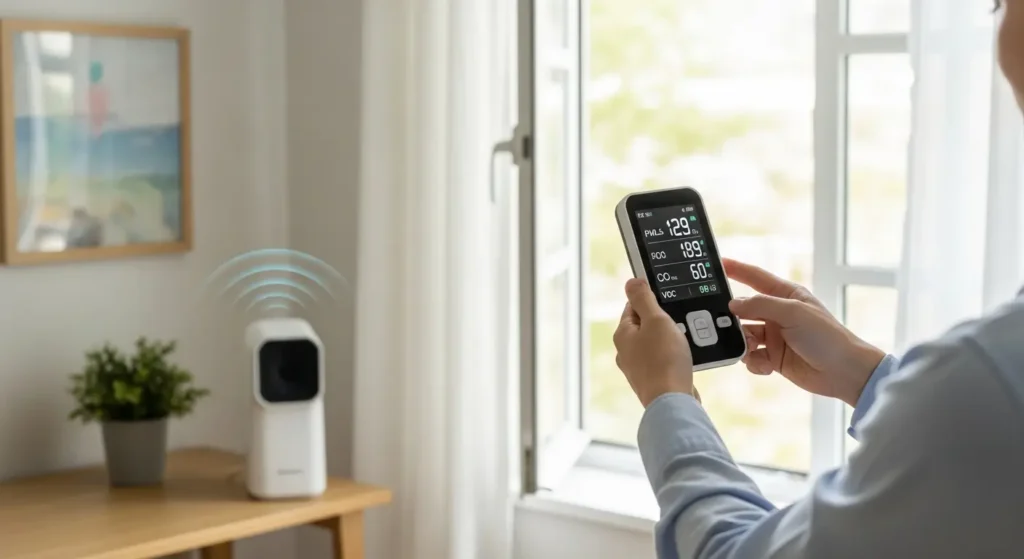
Investing in indoor air quality monitors can provide real-time data on various pollutants. These devices can measure levels of CO₂, VOCs, PM, temperature, and humidity. Some models, like the Airthings View Plus, offer comprehensive data and integrate with mobile apps for easy monitoring.
3. Professional Air Quality Testing
For a more detailed analysis, consider hiring professionals who can perform comprehensive air quality testing. They can conduct tests for specific contaminants and provide recommendations for improvement.
Improving Indoor Air Quality
1. Enhance Ventilation
Proper ventilation is crucial in reducing indoor air pollutants. Ensure that HVAC systems are well-maintained and filters are replaced regularly. Consider upgrading to high-efficiency filters, such as MERV-13, to capture smaller particles CDC Archive. Incorporating mechanical ventilation systems can also help maintain optimal air quality.
2. Control Humidity Levels
Maintain indoor humidity levels between 30% and 50% to prevent mould growth and dust mites. Use dehumidifiers in areas prone to excess moisture, such as basements and bathrooms. Proper ventilation also plays a role in controlling humidity levels.
3. Source Control
Identify and eliminate sources of indoor air pollution. Use low-VOC paints and cleaning products, and ensure that combustion appliances are properly vented. Regularly clean and maintain appliances to prevent the accumulation of pollutants.
4. Air Purification
Consider using air purifiers equipped with HEPA filters to remove particulate matter and allergens from the air. Ensure that the purifier is appropriately sized for the room and maintained according to the manufacturer’s instructions.
Leanr about Bonnie Blue’s work on xxbrits.
Role of Ventilation Systems
Effective ventilation systems are vital in maintaining good indoor air quality. They help dilute and remove indoor pollutants, bring in fresh outdoor air, and control humidity levels. Regular maintenance of these systems ensures their efficiency. For more information on ventilation solutions, visit the VentilationLand company.
Conclusion
Maintaining good indoor air quality is essential for the health and well-being of building occupants. By regularly testing and implementing strategies to improve ventilation, control humidity, and eliminate pollution sources, you can create a healthier indoor environment. Regular monitoring and maintenance are key to sustaining these improvements over time.
Source: xxbrits.uk