How to Make a Low-Ceiling Room Feel Brighter and More Spacious
Low ceilings can make an otherwise comfortable room feel smaller, darker, and more crowded than it really is. The problem becomes especially noticeable in hallways, bedrooms, entryways, and compact living areas where every inch of overhead space matters. Fortunately, making the room feel more open does not always require structural work. The right ceiling fixture, combined with thoughtful colors and layered lighting, can significantly change how the space looks and feels.
The goal is not simply to install the brightest possible light. Excessive brightness can create glare, harsh shadows, and an uncomfortable atmosphere. A successful lighting plan spreads illumination evenly, preserves headroom, and directs attention across the room rather than toward the low ceiling.
Replace Fixtures That Hang Too Far Into the Room
A pendant or chandelier may look attractive in a showroom, but it can feel intrusive in a room with an eight-foot ceiling. Even when no one is likely to bump into it, a hanging fixture creates a visual interruption that makes the ceiling appear lower. This effect is particularly strong in open walking areas where there is no table or counter beneath the light.
A close-to-ceiling fixture keeps the center of the room visually clear. Modern flush mount lighting is available in far more styles than the plain glass domes traditionally installed in hallways and bedrooms. Low-profile designs can incorporate natural materials, diffused LEDs, geometric forms, or subtle decorative details without sacrificing valuable headroom.
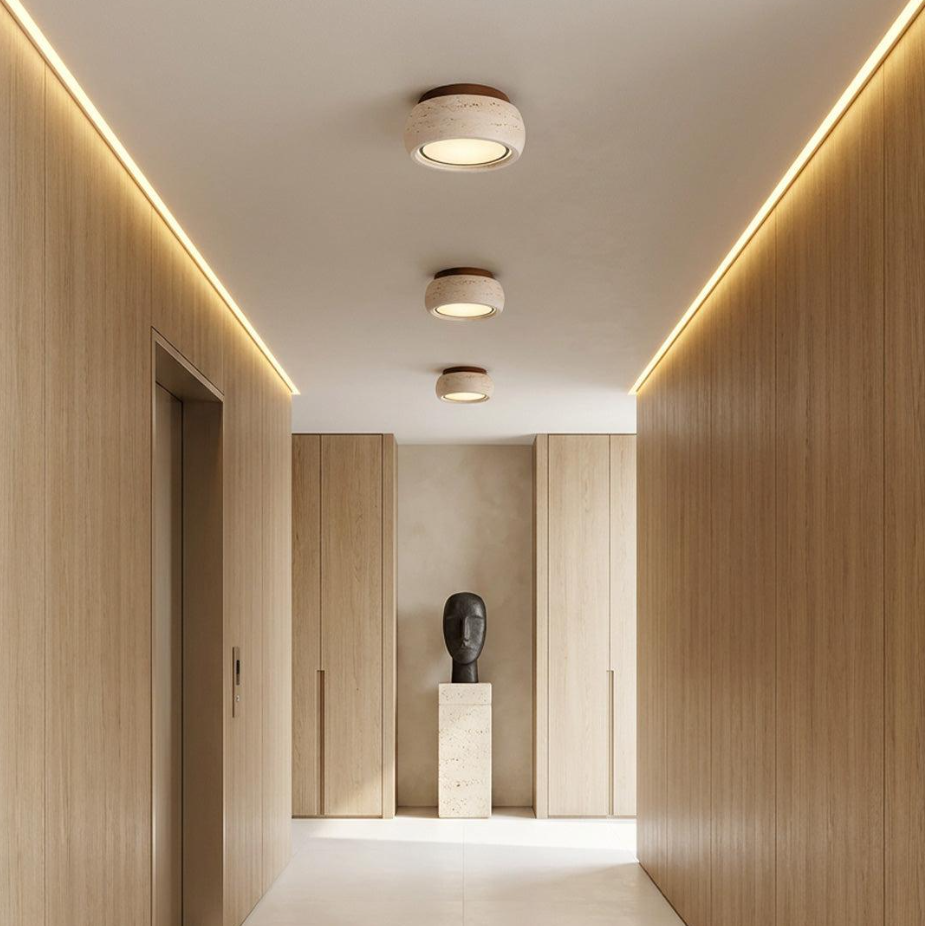
A compact ceiling fixture keeps the hallway visually open while providing comfortable ambient light.
Choose the Right Diameter for the Room
Low profile does not necessarily mean small. A fixture that is too narrow may leave the edges of the room dark and look insignificant against the ceiling. Conversely, an oversized or highly detailed design can make a compact room feel busy.
Measure the room before choosing a fixture, and check both its diameter and total height. A broad, shallow light often works better than a narrow fixture that projects farther downward. In a long hallway, one large central light may not distribute illumination evenly. Two or three smaller fixtures placed at consistent intervals can create a smoother path of light.
Use painter’s tape to mark the proposed diameter on the ceiling if it is difficult to visualise the dimensions. Also check door swings, tall cabinets, and nearby architectural features. The fixture should feel centered within the usable space rather than merely positioned in the mathematical middle of the room.
Look for Soft, Even Light
A visible bulb or concentrated spotlight can make a low ceiling feel oppressive because the intense source remains close to eye level. Diffusers made from acrylic, glass, or another translucent material help spread light across a wider area. This reduces sharp contrasts between the illuminated center and darker corners.
Consider the direction of the light as well. A fixture that sends some illumination toward the ceiling can create a softer sense of height, while a strong downward beam may visually separate the ceiling from the rest of the room. Fixtures with concealed LEDs or recessed light sources are useful when glare is a concern.
Do not rely only on wattage when comparing products. Review the lumen output, recommended room size, color temperature, and dimming specifications. Integrated LED fixtures should also be assessed for driver quality and expected serviceability because their light sources are not replaced in the same way as standard bulbs.
Use Color Temperature to Support the Room’s Purpose
Color temperature affects both comfort and the perceived brightness of a space. Warm white light creates a relaxed atmosphere and works well in bedrooms, living rooms, and welcoming entryways. Neutral white light can make kitchens, utility rooms, and work areas feel clearer and more energetic.
Very cool light may seem brighter, but it can also make warm paint colors and wood finishes look flat. Meanwhile, an excessively warm bulb may cause a windowless hallway to feel dim. When possible, test different settings in the actual room rather than choosing solely from a product photograph.
Adjustable color temperature can be useful in a multifunctional area. A brighter neutral setting may support cleaning or daytime tasks, while a warmer setting creates a calmer mood in the evening. If the fixture is dimmable, confirm that the wall control is compatible before installation.
Add Light at More Than One Height
One ceiling fixture cannot solve every lighting problem. If it is forced to provide all the illumination, the center of the room may become uncomfortably bright while corners remain gloomy. Layering several modest light sources usually makes a low room feel larger than depending on one powerful overhead light.
Table lamps, floor lamps, wall sconces, and under-cabinet lighting draw attention around the room. This wider distribution prevents the eye from focusing on the ceiling height. In a bedroom, bedside lamps can provide task lighting without increasing overhead glare. In a hallway, wall lights can illuminate artwork or architectural details and make the passage feel less enclosed.
Natural light should also be preserved wherever possible. Avoid heavy window treatments that block daylight, and place mirrors where they can reflect light into darker areas. A mirror should reflect something attractive or useful rather than an untidy corner or intense exposed bulb.
Keep the Ceiling Visually Calm
A low ceiling feels more spacious when it is not divided by numerous competing features. Painting the ceiling a light color can help it recede, particularly when the walls are only slightly darker. Using the same color on the walls and ceiling can also soften the boundary between them.
The fixture does not have to disappear completely. A design with wood, stone texture, brass, or black detailing can add character, but it should relate to other materials in the room. Repeating the finish in door hardware, picture frames, or furniture accents makes the choice feel intentional.
Avoid combining an elaborate ceiling light with heavily patterned wallpaper, oversized crown molding, and several large decorative objects in a very small room. Allow one or two features to lead while keeping the remaining surfaces simple.
Think About Maintenance Before Installation
Ceiling fixtures collect dust, and low-profile models can still have grooves or diffusers that require cleaning. Choose a design that can be accessed without dismantling multiple delicate pieces. In kitchens and nearby hallways, smooth surfaces are particularly helpful because airborne cooking residue can make textured fixtures harder to maintain.
Before cleaning, turn off the fixture and allow it to cool. Follow the manufacturer’s care directions, especially for natural stone, painted metal, wood, and acrylic. Abrasive products may scratch diffusers or change the appearance of decorative finishes.
Make Safe Installation Part of the Plan
A flush-mounted fixture may look simple, but it still requires a suitable electrical box and secure ceiling connection. Check the fixture’s weight and installation requirements before removing the existing light. Older homes may have wiring or mounting hardware that needs professional attention.
A qualified electrician can confirm compatibility, install an appropriate dimmer, and ensure the fixture sits level against the ceiling. This is particularly important when the ceiling surface is uneven or when a heavy fixture uses stone, glass, or substantial metal components.
A More Open Room Without Major Remodeling
Making a low-ceiling room feel brighter is largely about reducing visual interruption and distributing light more effectively. Choose a shallow fixture with an appropriate diameter, soften glare with a diffuser, and support the overhead light with lamps or sconces. Combined with calm colors and uncluttered surfaces, these adjustments can make a compact room feel noticeably more comfortable, balanced, and spacious.
The source of this article is XXBRITS.