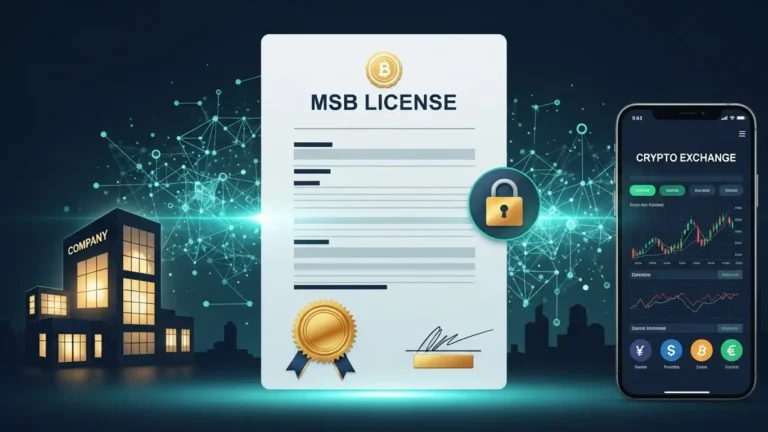
Are No KYC Crypto Cards Legal UK?
A “no KYC” label alone cannot establish whether a crypto card is lawful to offer or suitable for a UK resident.
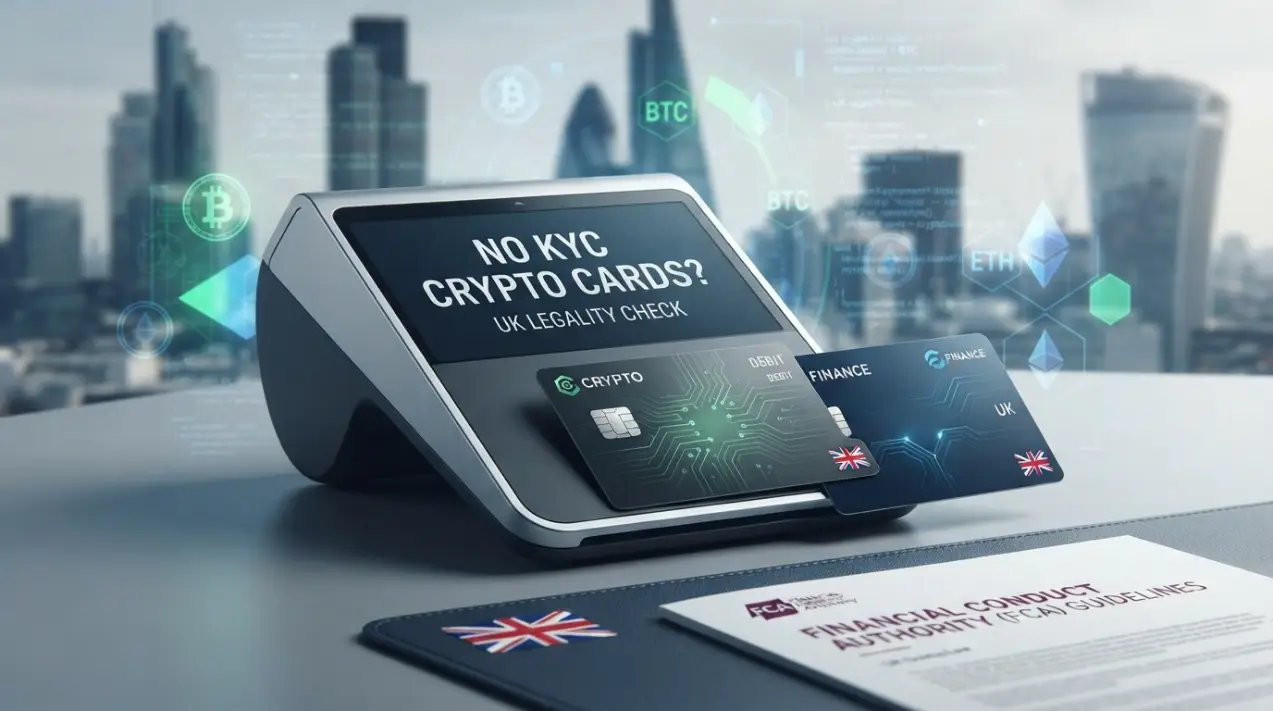
The search “are no kyc crypto cards legal uk” brings together several different questions: whether someone may hold cryptocurrency, whether a provider may serve British customers, and whether its card issuer follows the applicable rules. Those questions matter equally for an online clothing purchase and a phone payment at lunch. A short registration form answers none of them by itself, and neither does a familiar payment-network logo.
How should “are no kyc crypto cards legal uk” be answered?
Crypto-funded cards can be used lawfully in Britain, but “no KYC” is a marketing description rather than a legal category or exemption.
KYC means “know your customer,” the identity checks associated with financial services. A provider advertising a crypto card without verification might mean that registration requires only an email address, that documents aren’t requested at the initial stage, or that its wallet and card have different onboarding processes. Those arrangements aren’t interchangeable.
The consumer’s position must also be separated from the operator’s obligations. Paying for an ordinary purchase with legitimately held funds isn’t automatically unlawful because the card was advertised as requiring no documents. Equally, a successful payment doesn’t establish that every business behind it has the permissions its activities require.
For someone comparing services in 2026, the useful starting point is the actual agreement: which company holds the balance, which company issues the card, and which residents may apply. A claim that “no checks ever apply” deserves particular scrutiny.
Email-only signup describes an entry requirement. It doesn’t establish authorization, UK eligibility, or anonymity.
That distinction avoids both common mistakes: treating every document-free signup as illegal and treating every functioning card as fully cleared for British customers.
What do UK providers have to check beyond signup?
A provider’s obligations depend on the services it performs and where it carries on business, not on the wording of its signup page.
The FCA’s cryptoasset anti-money-laundering guidance explains the registration regime for businesses conducting relevant cryptoasset activities in the UK. Cryptoasset exchange providers and custodian wallet providers within its scope must meet the applicable requirements. That involves more than collecting an email address.
Customer due diligence, transaction monitoring, and responding to suspicious activity can continue after onboarding. Identity information may therefore become relevant when funds arrive or an account’s activity changes, even where the opening process looked unusually simple.
A sound answer to “are no kyc crypto cards legal uk” has to examine those continuing obligations rather than stopping at the registration screen. It should also distinguish rules already in force from proposals, consultations, or future changes discussed in headlines.
Operating overseas doesn’t itself settle the matter. The relevant questions include whether a business conducts activities within the UK regime and how it markets services to British consumers. Conversely, an overseas address alone isn’t proof of wrongdoing.
The practical document to find is the provider’s legal terms, including the named service entities and its verification policy. A social-media promise of permanent access without checks cannot substitute for those terms.
How does a crypto-funded card actually pay a shop?
A crypto-funded card generally connects a cryptocurrency funding process to an ordinary card payment, rather than sending cryptocurrency through the merchant’s terminal.
That separation matters because the wallet, conversion service, account balance, and card issuance may involve different companies. An arrangement that permits a wallet connection without identity documents doesn’t automatically remove requirements from the card side.
As one example, WaldenPay’s crypto virtual card illustrates a load-first model: supported cryptocurrency converts to card balance at loading time. The platform offers email-only signup without identity documents for standard use, funding with 135+ cryptocurrencies across 35+ networks, and cards compatible with Apple Pay and Google Pay.
Those features explain mechanics, not British eligibility. They don’t establish that a particular applicant can obtain the card or that a named partner has permission for every relevant UK activity.
For everyday spending, several routes deserve comparison:
| Spending route | What needs checking |
| Crypto-funded card | Issuer, residency eligibility, funding terms |
| Sell crypto, then use a bank card | Exchange checks and withdrawal access |
| Pay a merchant directly in crypto | Merchant acceptance and refund terms |
These differences help answer “are no kyc crypto cards legal uk” without confusing a payment method with permission to provide it. The checkout experience may look identical while the underlying contracts are quite different.
Which checks resolve “are no kyc crypto cards legal uk” for a particular provider?
The strongest assessment matches the legal entities and their roles against official records, then checks whether the specific product accepts UK residents.
FCA cryptoasset registration and card issuance are separate checks. Registration under the cryptoasset anti-money-laundering regime isn’t blanket approval of a business, an endorsement of its investments, or permission to issue every financial product.
Likewise, a card program may use an issuing partner rather than issue cards itself. A partner arrangement needs identifiable companies and a clear allocation of responsibilities; the phrase “licensed partners” isn’t enough on its own.
- Find the legal names. The account agreement should identify the operator and card issuer, not just the trading brand.
- Search official records. The FCA Financial Services Register allows checks on firms, their status, and relevant permissions or registrations.
- Match the details. Names, website addresses, and contact information should agree with the records, reducing the risk of confusing a genuine firm with an impersonator.
- Read the residence rules. UK residents must be eligible for that particular card program, not merely able to open its website.
Card-network acceptance abroad is a different issue from residency eligibility. A card that works at a British merchant for an overseas visitor isn’t necessarily available to someone living in Britain. Neither Apple Pay compatibility nor a successful account registration bridges that gap.
What would these checks look like before a first top-up?
A prospective customer should establish eligibility and the issuing arrangement before calculating whether a small initial load is worthwhile.
Consider an illustrative freelancer who receives cryptocurrency and wants a separate card for online purchases. The decision starts with the residence requirements, cardholder agreement, and account restrictions, rather than the speed of signup.
Using WaldenPay as one example, its published minimum top-up is $50, its one-time card creation fee is $10, and its starting top-up fee is 5%. For illustration, applying 5% to a $50 fee base gives $2.50. The customer still needs to check the checkout’s total charge and credited balance before confirming funding.
Its no KYC crypto card guide provides a starting point for comparing document requirements and provider claims, but the cardholder agreement and official records remain the relevant checks for a British applicant.
The platform is operated by BlueHouse Software B.V. in Rotterdam, Netherlands, through a licensed partner model. That identifies the operator’s jurisdiction; it doesn’t by itself demonstrate UK authorization or availability.
In this example, “are no kyc crypto cards legal uk” is resolved through the service relationship, not the modest size of the payment. If the issuer or residence terms remain unclear, the next step is a written explanation before money leaves the freelancer’s wallet.
Does spending through a crypto card create a UK tax event?
Selling or spending cryptoassets can constitute a disposal for UK tax purposes, regardless of whether the card provider requested identity documents.
HMRC’s guidance on selling or disposing of cryptoassets includes using tokens to pay for goods or services among the relevant disposal situations. A disposal doesn’t automatically mean tax is payable: the result depends on the person’s gains, losses, available allowances, and circumstances.
With a load-first card, the important event may occur when cryptocurrency is sold or exchanged to fund the card balance. Spending that already-converted balance afterward shouldn’t be confused with a fresh sale of the original tokens.
For example, a holder might convert cryptocurrency into card balance and later use that balance for a clothing order. The records should capture the funding transaction as well as the merchant purchase, rather than recording only the final receipt.
Useful records include acquisition costs, transaction dates, fees, disposal proceeds, and values in pounds for UK tax calculations. An account statement showing only card transactions may not contain everything needed.
And privacy doesn’t remove recordkeeping responsibilities. Someone who wants to spend crypto privately still needs enough information to report taxable activity accurately. The absence of an uploaded passport isn’t a tax exemption.
Can a no-KYC card still identify users or freeze their money?
Yes, an account can expose identifying information and remain subject to restrictions even when opening it required no identity documents.
A search for an anonymous crypto card UK often mixes up privacy from a merchant with anonymity across the whole payment chain. A merchant may receive card-payment details rather than the customer’s complete crypto transaction history, but other participants can hold different information.
Email addresses, device information, account activity, deposit records, and purchase patterns can all contribute to an identifiable trail. Public blockchain records also don’t disappear simply because the final purchase happens through a card.
Centralized platforms can monitor transactions, restrict accounts, or block access to funds when activity is flagged. Their customers also face counterparty risk: the platform controls part of the spending process and may hold the balance needed to complete it.
That makes access to funds part of the answer to “are no kyc crypto cards legal uk,” alongside formal permissions. Lawful use doesn’t guarantee that a provider will never ask questions or suspend an account.
Before funding, the relevant checks are the restriction policy, complaint process, refund arrangements, and identity requirements for recovering an account. A service that explains easy deposits but says little about withdrawals or blocked balances leaves an important practical question unanswered.
What should British cardholders verify before everyday spending?
British cardholders should verify the product’s legal identity, UK residence eligibility, and funding conditions together, rather than treating any single feature as decisive.
A concise decision file can contain the current cardholder agreement, the relevant official register entries, written confirmation of residence eligibility, and the displayed fee schedule. Those records make it easier to distinguish a product change from an assumption made during signup.
The payment route then needs to suit the purchase. An online order requires usable card details and workable refund handling. Paying for lunch with a phone requires supported mobile-wallet setup. Neither situation changes the provider’s underlying obligations or makes a document-free signup proof of anonymity.
A competing route may be more practical. Selling cryptocurrency through a service that supports British residents and spending the proceeds through an existing bank account separates the disposal from the purchase. Direct crypto payment can also work where a merchant expressly accepts it, although refund terms need attention.
Before the next search for “are no kyc crypto cards legal uk” turns into a deposit, the prospective cardholder should check the current issuer, official records, UK eligibility, verification terms, and tax records required for that particular funding transaction.