How Small Brands Can Actually Stand Out at Markets, Festivals and Trade Shows
Anyone who’s worked a stall knows the feeling. Rows of tables, everyone competing for attention in their own way, visitors drifting past with a coffee in hand, barely glancing sideways. If you’re a small brand without a big team, it can feel like an uphill fight before the day’s even started.
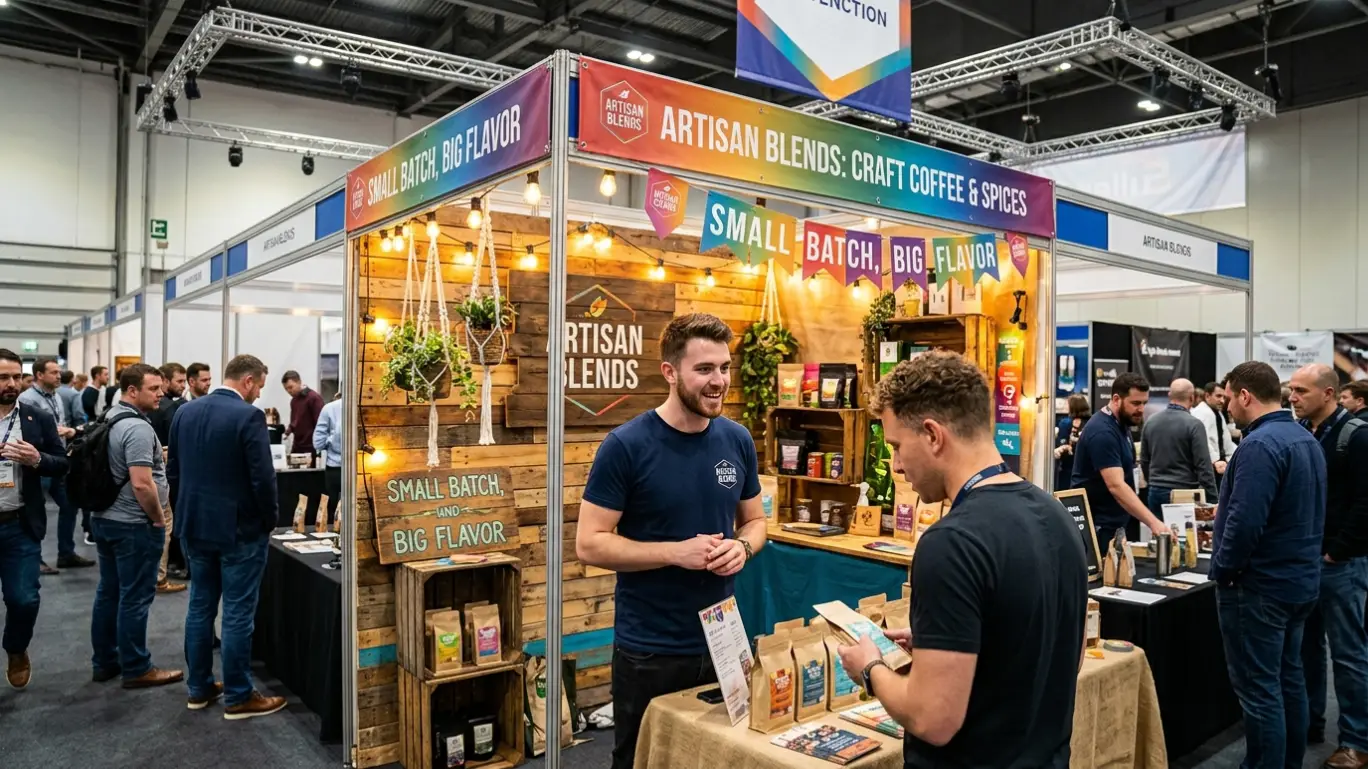
But being small isn’t really the problem people assume it is. It gives you room to be more personal and flexible than the bigger names squeezed into their branded pop-ups. The trick isn’t looking bigger than you are, it’s making sure people understand what you’re about within a few seconds of walking past, starting with something as simple as a personalised hoodie for the team.
Looking like a team
It’s easy to overlook, but what your staff are wearing does a surprising amount of work on a busy show floor. Visitors shouldn’t have to guess who’s actually running the stall versus who’s just browsing nearby. A consistent look, even something as simple as matching hoodies or t-shirts in one brand colour, sorts that out instantly.
It helps in ways that aren’t always obvious:
- Visitors can spot who to ask for help without an awkward hunt
- Team members don’t need name badges or forced introductions
- It keeps everyone comfortable through long days on their feet, especially outdoors when the weather turns
- Photos from the day look more coherent, which matters if you’re posting afterwards
It also pays off over time. If you’re doing several events a year, the same look showing up each time builds a bit of quiet familiarity. People half-recognise you before they even remember why, which is no small thing when you’re competing with brands that have far bigger budgets. It doesn’t need to be flashy. A subtle logo and one recognisable colour is usually enough to do the job.
Say one thing, clearly
There’s a mistake loads of smaller businesses make: cramming in every message at once. The banner’s got three taglines, the table’s covered edge to edge, and the one thing that matters gets lost in the noise.
Pick a single idea and build around it. Why should someone stop at your stall specifically? Maybe everything’s handmade nearby, or you solve a specific problem for a niche industry, or it’s a food brand doing something different with flavour. Let that idea run through your sign, your layout and the first thing you say when someone wanders over.
Most people will walk past
Very few visitors stop and study a setup properly. They’re mid-conversation, half-distracted by music two stalls down, juggling a bag and a drink. Whatever’s meant to catch the eye needs to work at a glance, from a distance.
A few things make the biggest difference here:
- Big, easy-to-read text rather than a paragraph of explanation
- A handful of products placed well, not a table crammed full
- Height, a few shelves or risers to bring things up to eye level
- Some empty space, since a bit of breathing room often makes a stall look more considered
Give them a reason to stop
You don’t need fireworks to earn a second look, just a bit of curiosity. Show part of how something’s made, or let people watch samples being prepared. If you’re in tech, run a quick, honest demo instead of a screen full of slides nobody will read. Just make sure it connects to the brand itself, a raffle might pull a crowd, but it won’t help anyone remember what you sell.
A useful question to ask yourself: what can someone see, touch or try here that they couldn’t get from your website at home?
Don’t hide behind the table
Tables are useful for display, but they can also become a wall between you and the people you’re trying to talk to. Where you can, stand beside the stall rather than behind it. It makes conversations feel less like a pitch and more like a chat.
Body language matters more than people give it credit for. Looking up and smiling is often enough to invite a question, while staring at your phone does the opposite. And not everyone wants the full introduction straight away, a relaxed hello usually lands better than a rehearsed pitch.
Have a simple way to explain what you do
Events are unpredictable. Dead quiet one minute, then suddenly four people are asking questions at once. Having a natural way to explain the business ready to go makes those moments far easier. It shouldn’t sound rehearsed, though.
A couple of sentences on what you make, who it’s for and what’s a bit different about it is usually plenty. Let the conversation follow from there. It helps if the whole team is roughly telling the same story, even in their own words, so the brand feels settled rather than scattered.
Little details add up
People forget most conversations they have on a busy day. What tends to stick is the visual stuff, a colour, a pattern, an illustration that shows up across signage, packaging and clothing. You’re not plastering a logo everywhere, just making the space feel like it belongs together, which matters more if you’re doing several events a year.
Some of the less glamorous details matter just as much:
- Clear pricing, so nobody has to ask
- Tidy cables, so nothing looks thrown together
- A card reader that actually works
- Somewhere for people to put their bags down
None of it’s exciting, but together it makes things smoother.
Collect contact details
Not every good chat ends in a sale on the spot. Trade shows especially are often more about starting something than closing it. Have a simple way for people to stay in touch, a mailing list, a QR code, a card with details on it, and be clear about what they’ll get if they sign up.
Don’t chase numbers for the sake of it. A smaller list of people who genuinely care is worth more than a huge one full of names with no real connection to the business.
It’s also worth jotting a quick note after any important conversation, since by the end of a long day faces blur together fast.
The event isn’t over when you pack up
A quick follow-up message can keep a good conversation going, especially with anyone who mentioned a specific project. Reference what was actually said rather than sending something generic. The same goes for social media, a few honest, unpolished moments from the day often land better than one staged photo with a generic caption.
While it’s still fresh, think back. What did people keep asking about? What got attention? Was any part of the display confusing? Those small observations shape a better stall next time.
Small brands rarely have the biggest stand or the largest team, and that’s fine. What they can have is warmth, adaptability and a story that feels real. A clear message and genuine conversations will usually beat sheer size, every time.