Why Singing Photo Clips Work When the Image and Audio Tell the Same Story
This article explains how Singing Photo turns a still image and a carefully chosen audio clip into a clear, character-led short-form performance.
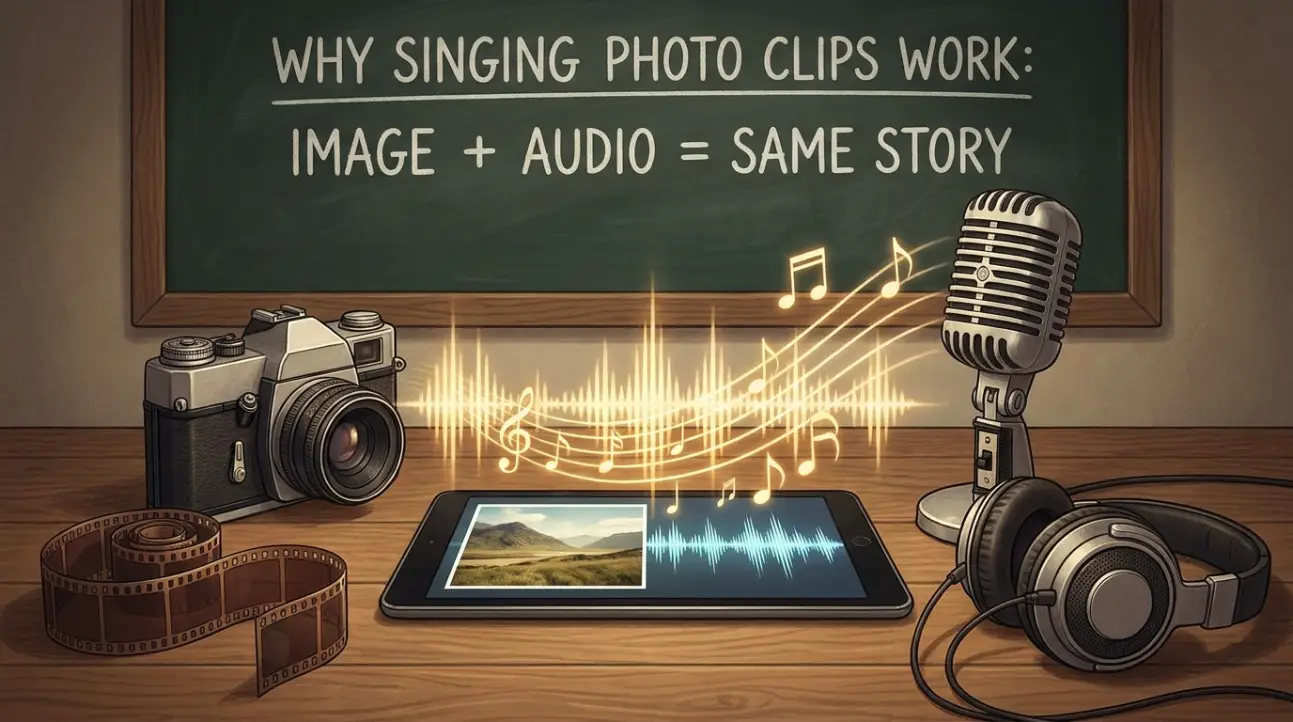
Why a still image can feel like a performance
Short-form feeds reward immediate recognition. A face is understood quickly, a chorus carries emotion without explanation and a caption can frame the joke before the viewer scrolls. That combination explains why singing-photo clips keep returning in different forms: fan edits, fictional hosts, reaction characters and deliberately awkward performances.
The format is not powerful because it removes all creative work. It concentrates the work in a few decisions. Which image has the strongest expression? Which audio segment reveals the idea fastest? What does the caption ask the audience to notice? When those choices align, a static asset can feel more expressive than a complicated video.
The anatomy of a clip that travels
Recognition in the first frame
The subject should be obvious before the music peaks. A clean crop and an expressive face give the viewer a reason to wait for the next beat. Busy backgrounds and tiny subjects make the joke harder to read.
A sound that does narrative work
Choose audio for its mood and timing, not just popularity. A short line that contradicts the image can create a joke; a chorus that confirms it can create a celebration. Keep the selected segment short enough that the premise arrives before attention drops.
A caption that adds the second layer
The caption can establish a fictional backstory, acknowledge an edit or invite a response. It should not mislead viewers about whether the person or character actually performed the song.
A practical creator workflow
Concept
Write the premise in one sentence and decide whether the audience should laugh, sing along or recognise a feeling. If the goal is unclear, the finished clip will feel like an effect looking for a reason.
Asset and audio
Use an image you own or have permission to adapt. Use original music, a licensed track or a sound made available for reuse by the destination platform. Rights are part of production, not paperwork to solve after publishing.
Generation
The Singing Photo (https://lipsync.video/singing-photo)pairs an image with audio and creates a lip-synced singing video. Generate a draft, review mouth timing and check the crop for the target format.
Publication
Add captions, a clear description and any required disclosure. If the image is fictional, edited or part of a fan concept, say so in a way that keeps the audience inside the joke rather than leaving them to guess.
Where creators often lose the thread
The most common problem is stacking too many references into one clip. A famous face, a complicated caption, a niche audio cue and an inside joke may all be entertaining separately, but together they make the viewer decode the post instead of enjoying it. Pick one centre of gravity.
Singing Photo supports a focused message when the source material and the audience are clearly defined.
A second Singing Photo can test a different crop or chorus, but every Singing Photo should retain the same clear premise.
The second problem is treating reach as the only creative metric. Saves, rewatches and comments that repeat the premise tell you whether the format is understood. A singing photo earns its place when it creates a recognisable character or mood that a creator can return to—not when it merely resembles a trend for one afternoon.
The Difference Between a Gimmick and a Format
A Singing Photo becomes a format when viewers can describe what the account does with it. Perhaps a recurring character reacts to new songs, a fictional host introduces a playlist or a familiar portrait delivers deliberately dramatic lyrics. The image gives the series continuity, while each audio choice creates a new episode.
Without that underlying idea, the clip may get a quick reaction and then disappear. A good creator asks what the audience should feel or understand after the chorus ends. The answer can be funny, nostalgic or deliberately awkward, but it should be legible before the viewer reaches for the next post.
Build Around the Beat
Timing starts before generation. Mark the first lyric, the strongest facial cue and the moment where the caption should land. A Singing Photo with a simple crop and a clean audio segment is easier to read than one overloaded with stickers, transitions and competing jokes.
It also helps to prepare two versions with different openings. One may lead with the face and let the chorus arrive; another may begin on the lyric that explains the joke. Compare rewatches and comments that repeat the premise. Those signals tell you whether the audience understood the performance or only noticed the effect.
Rights and Context Are Part of the Creative Work
Audio rights should be checked before a clip is scheduled. Original music, a properly licensed track or a sound cleared for reuse on the destination platform gives the creator a safer foundation. A Singing Photo should never imply that a real person performed a song when the image has been edited for a fictional or fan-led concept.
A short disclosure can make the post clearer without killing the joke. Say that the image is edited, identify a fan concept or credit the original performer when relevant. Viewers are more willing to play along when the account makes the rules of the format easy to understand.
Frequently Asked Questions
What image works best?
Choose a clear, front-facing image with an expression that matches the mood of the audio. A readable face gives the Singing Photo room to perform without relying on heavy editing.
How much audio should be used?
Use the shortest section that delivers the premise. A focused chorus or one memorable line is often stronger than a full verse with no clear payoff.
How can a series stay fresh?
Keep a recognisable character or visual rule, then vary the music, setting and caption. Consistency helps discovery; small changes give people a reason to return.
Final Takeaway
A successful Singing Photo is a small piece of entertainment with a clear idea, not a shortcut around creative judgement. Choose the image and audio responsibly, explain the context when needed and watch for the reactions that show genuine understanding. That discipline is what turns a passing format into a character audiences remember.