How Text to Video AI Is Transforming Content Creation for UK Creators
Ask any UK content creator, marketing manager, or small business owner what their biggest operational challenge is right now, and the answer comes back consistently: volume. The number of video assets required to maintain a meaningful presence across Instagram Reels, TikTok, YouTube Shorts, and LinkedIn simultaneously has reached a point where traditional production methods simply can’t keep pace without a proportional increase in budget and headcount.
Britain has one of Europe’s most active creator economies, with a growing number of independent creators, digital-first brands, and marketing agencies producing content at a pace that was unthinkable five years ago. The tools that made static content creation accessible — Canva, Adobe Express, smartphone cameras — have already been absorbed into standard workflows. The next frontier is video, and the barrier has always been production complexity. Writing a caption takes minutes. Editing a video takes hours. That asymmetry shapes what gets made and what doesn’t, and it’s the gap that AI is now closing in a practical way.
Text to Video AI: From Written Idea to Finished Clip
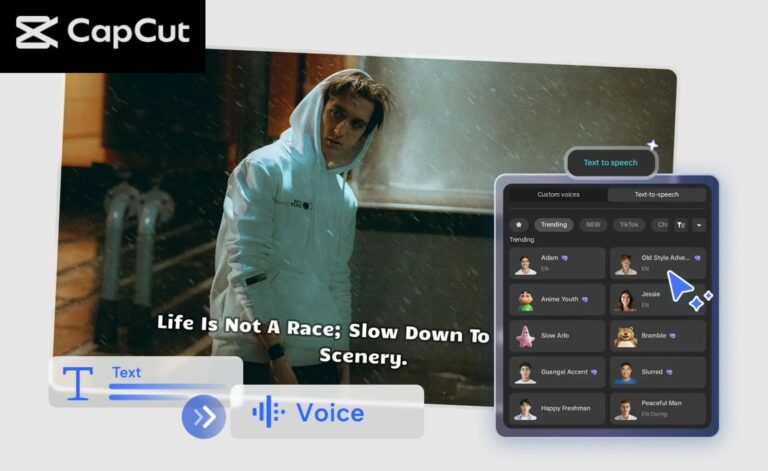
The fundamental capability is straightforward: you describe what you want to see — the scene, the visual style, the motion, the atmosphere — and AI generates a finished video clip from that written direction alone. No filming. No editing timeline. No motion design skills required.
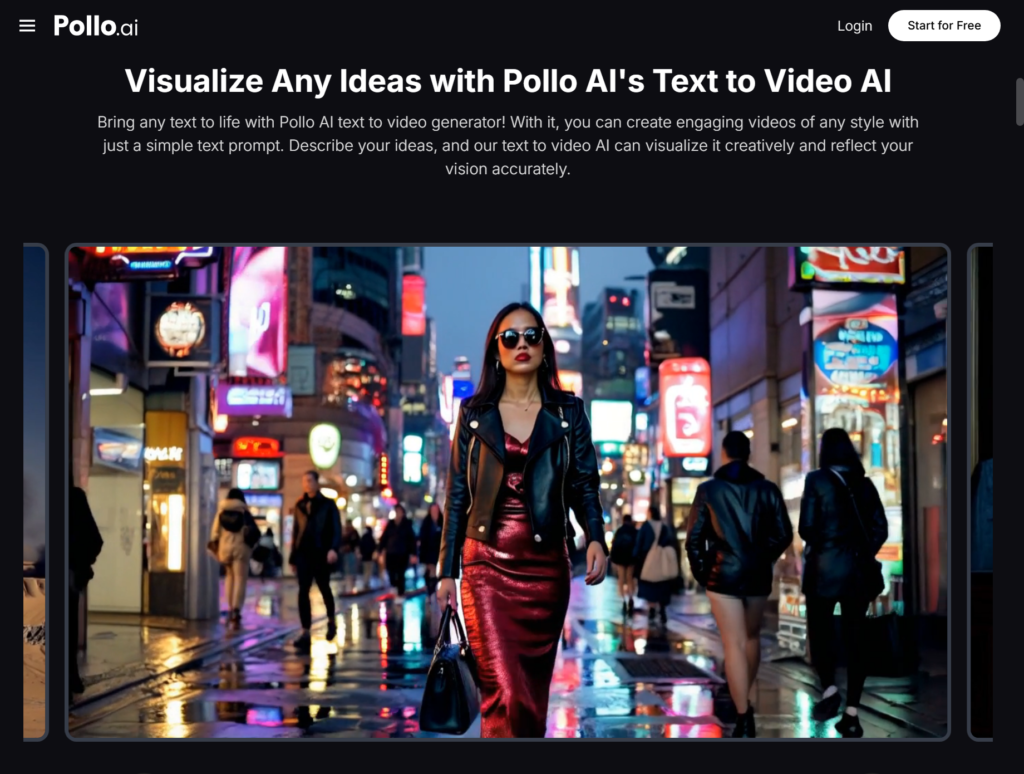
Pollo AI’s dedicated text to video tool inside its Creative Studio brings this capability into a multi-model environment that matters for professional use. Rather than being locked into a single generation model with its specific aesthetic tendencies and technical limits, the platform aggregates multiple leading video generation models under one interface with shared credits. For UK creators and marketing teams producing across different content styles — brand films, social content, product demos, educational explainers — the ability to select the model best suited to each specific output type produces consistently better results than forcing one tool to handle everything.
The practical implications for content workflows are significant. A creative brief that previously represented a multi-day production effort can now be turned into a finished video clip within a single working session. For agencies managing multiple client campaigns, or independent creators maintaining a consistent publishing schedule across several platforms, that compression of production time changes what’s operationally achievable without scaling the team.
What Makes a Strong Text to Video Prompt
The quality gap between text-to-video outputs that are genuinely usable and those that feel generic almost always comes down to how the prompt is written rather than which model is used. Specificity is the primary lever — vague inputs produce vague outputs, while prompts that communicate composition, motion behaviour, visual atmosphere, and style produce results that feel intentional and directed.
Think of prompt writing as briefing a director of photography rather than searching a stock library. “Slow push in on a London café interior at golden hour, steam rising from a coffee cup in the foreground, soft bokeh background, warm cinematic colour grade” gives a model substantially more to work with than “a café scene.” Including the emotional register you want the clip to convey — not just the literal content — is where the difference between a generic result and a distinctive one typically lives.
For teams producing content at volume, developing a library of prompt templates for recurring content formats pays dividends over time. The same discipline that makes a well-structured content brief reusable across campaigns applies equally to prompt development for AI video generation.
Marketing Studio: When Video Needs to Convert, Not Just Look Good
There is a meaningful distinction between video that communicates effectively and video that drives measurable results in a marketing context. Pollo AI’s Marketing Studio is built around the second objective — advertising and promotional video content designed for performance, with platform format requirements and audience attention patterns built into the output orientation rather than treated as post-production considerations.
For UK marketing teams and creative agencies running paid social campaigns across Meta, TikTok, and YouTube, the ability to produce multiple creative variations from a single brief and test them systematically changes the economics of creative optimisation. Generating a dozen variations of an ad concept — different hooks, different visual treatments, different calls to action — and identifying the top performer through data used to require either a large agency budget or a significant in-house production resource. AI text-to-video generation makes that testing capacity accessible at any budget level.
PicLumen AI and the Broader Creative Toolkit
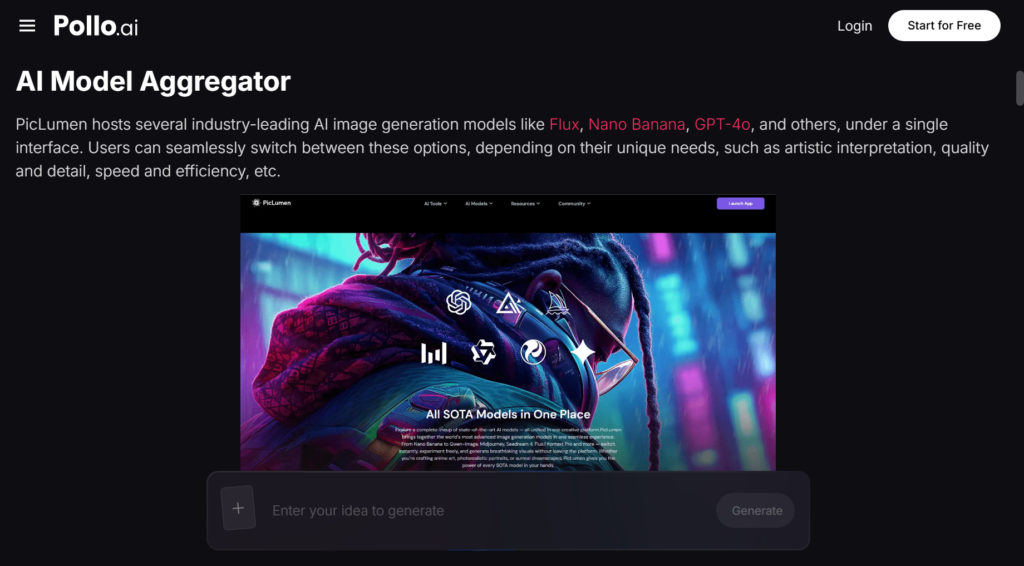
Building an informed view of the AI creative tools available helps UK creators and marketing teams make better decisions about which capabilities belong in their workflow. PicLumen AI offers AI image generation with its own model characteristics and aesthetic range — particularly useful for creators whose primary need is high-quality still image generation for social content, editorial visuals, or design assets. For workflows where strong static imagery is the primary deliverable, it’s worth evaluating on its specific strengths.
The distinction worth drawing for video-focused workflows is between tools optimised for image generation and those built for video production. Understanding which tool addresses which production challenge helps you allocate your workflow deliberately rather than trying to apply one platform to every creative task. Pollo AI’s multi-studio structure covers both image and video generation within the same platform on shared credits, which suits teams whose production needs span both formats.
Building Video Into the Standard Creative Workflow
The UK creators and marketing teams getting the most consistent value from text-to-video AI in 2026 have made a structural shift in how they approach video content — treating it as a default output format for any content brief rather than a special production effort that requires dedicated resources.
That shift is supported by a few practical workflow habits: defining standard video formats for your most common content types before you start generating, developing prompt templates that produce consistent results for those formats, and building a lightweight review step for generated output before it goes to publication. None of this is technically complex — it maps directly to the kind of process thinking that any organised content operation already applies to its written and visual content.
For Britain’s growing community of independent creators, digital marketers, and small business owners, the tools that make professional-quality video production accessible without a production budget or a specialist team have arrived. Building the workflow habits around them is what turns that capability into a genuine competitive advantage.