What’s the Difference Between Professional and Consumer Breathalysers?
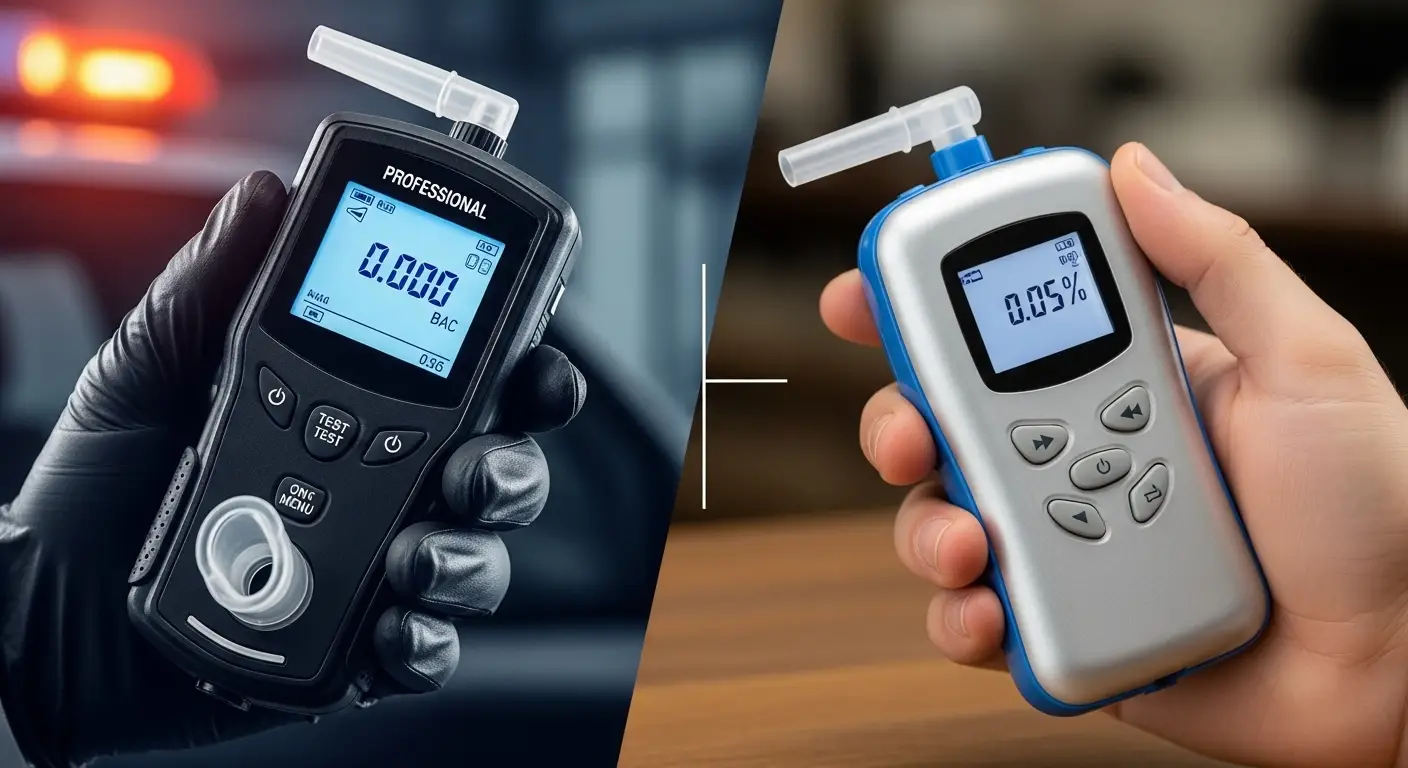
Many people use breathalysers to check alcohol levels before driving or in workplace testing. However, not every device works the same way. Professional and consumer breathalysers differ in accuracy, purpose, and design, which affects how well they measure alcohol levels. Professional breathalysers use advanced fuel cell sensors and strict calibration standards, while consumer models focus on convenience and cost.
A professional device provides consistent results over many tests and suits high-demand settings such as law enforcement or workplace safety. In contrast, a consumer model offers a simple and affordable way to test one’s own alcohol level, though it may not meet official accuracy standards. These differences often determine whether a result can be used for legal or personal decisions.
Understanding these distinctions helps users choose the right device for their needs. The next sections explain how each type works, what features matter most, and the level of care each device requires to stay accurate.
Professional vs Consumer Breathalysers: Key Differences
Professional and consumer breathalysers differ mainly in accuracy, sensor type, and how often they are used. Professional models meet higher testing standards, while consumer versions focus on convenience and affordability. Both types help users make safer decisions before driving or workplace activities.
Accuracy and Reliability
Professional breathalysers are built for consistent performance over hundreds of tests. They often meet legal or workplace standards and include calibration certificates to maintain trustworthy readings. Consumer models focus more on ease of use than on precision. They work well for personal checks but can vary slightly between tests.
Environmental factors such as temperature or recent drinking can affect readings. Professional devices offset these influences with better internal sensors. Consumer units depend more on correct usage and regular recalibration.
The Drug Tests breathalysers provide both personal and workplace devices that measure blood alcohol concentration (BAC) accurately within specific limits. Regular calibration remains essential for both types, as sensor accuracy drops over time.
Sensor Technologies: Fuel Cell vs Semiconductor
The main difference between professional and consumer breathalysers lies in the sensor technology. Professional devices use fuel cell sensors, which measure the reaction between alcohol and platinum electrodes. This method detects ethanol specifically, giving more consistent results.
Consumer devices often use semiconductor sensors, which react to alcohol and sometimes to substances such as paint fumes or smoke. This can cause less consistent readings but lowers the cost.
Fuel cell breathalysers retain accuracy longer and require fewer recalibrations. They are used by law enforcement, medical testers, and safety officers. Semiconductor models suit individuals who only test occasionally and want a simple, lightweight tool. Users who test frequently gain more benefit from fuel cell versions due to their longer lifespan and stability.
Intended Use: Legal, Workplace, and Personal Scenarios
Professional breathalysers serve law enforcement, transport companies, and safety-critical workplaces. They help confirm legal compliance and support disciplinary or reporting processes. Accuracy is key because results may have legal consequences.
Consumer units serve individuals who wish to check their alcohol level before driving. They focus on guidance rather than proof. Single-use or rechargeable models make them practical for travel or home use.
In workplaces, professional-grade units help maintain safety among staff who operate vehicles or machinery. Many companies combine alcohol tests with drug monitoring systems for comprehensive safety checks. In contrast, personal users value convenience, portability, and straightforward displays over technical reporting features.
Features, Use, and Maintenance of Breathalyser Types
Professional and consumer breathalysers differ in sensor technology, accuracy levels, and how often they need calibration. Users should understand how these devices measure alcohol, maintain accuracy, and suit different needs, from personal safety checks to formal workplace testing.
Usage, Calibration and Maintenance Requirements
Professional breathalysers require strict calibration to maintain accuracy. Laboratories or certified technicians often perform this service every six to twelve months. Personal models also need calibration but usually at longer intervals or through manufacturer-provided recalibration services by post.
Regular cleaning helps prevent residue from mouth alcohol and debris from affecting the sensor. Detachable breathalyser mouthpieces should be washed or replaced after use to prevent contamination. Disposable mouthpieces are common in workplaces where devices test multiple users in one day.
Inaccurate readings often result from missed calibration or poor maintenance. For best results, users should wait at least 15 minutes after consuming alcohol before running a test. This avoids distortion from residual mouth alcohol, which can cause a falsely high BAC (blood alcohol concentration) reading.
Device Types and Key Features
The main types are semiconductor, fuel cell, and infrared spectroscopy breathalysers. Semiconductor models, often used in home breathalysers or keychain devices, detect alcohol gases through a chemical reaction on a sensor surface. These are lower-cost and portable but can be affected by temperature or smoke.
Fuel cell sensors produce a small electrical current when alcohol oxidises inside the unit. These appear in professional and personal alcohol testers such as portable models used in workplace safety checks. They provide higher accuracy and longer life.
Infrared spectroscopy units use light absorption to read alcohol content. They are larger and used in official testing environments such as police or medical settings. Most consumer devices now feature a digital display showing results in BAC or BrAC format, sometimes linked to smartphone apps that track drink-drive limits.
Limitations, Best Practices, and Choosing the Right Model
Consumer devices measure breath alcohol well for personal monitoring but may not hold calibration as long as professional units. Environmental factors, like humidity and residual alcohol, influence readings, so careful handling is important.
A simple disposable breathalyser might suit occasional checks before driving, while a portable fuel cell model is better for ongoing use. Users seeking consistent results should prioritise devices with regular calibration support and available parts such as mouthpieces.
To choose effectively, match the model to how often it will be used and under what conditions. For daily or workplace use, fuel cell sensors perform with greater stability. For home or travel use, compact personal testers meet most safety needs without complex upkeep.
Conclusion
Professional breathalysers use fuel cell sensors that produce precise results over many tests. They suit workplaces, law enforcement, and frequent users who need consistent readings. In contrast, consumer breathalysers often rely on semiconductor sensors, which cost less but may show more variation in results.
Accuracy depends not only on sensor type but also on calibration and correct use. Professional devices often include calibration certificates to confirm dependable performance. Consumer models can still perform well if maintained and used correctly.
Each category serves different needs. Professional breathalysers fit high‑demand environments, while consumer models provide convenient checks for personal safety. Buyers should weigh cost, accuracy, and how often they plan to test before selecting a device.