Oak or Birch Logs: Which Firewood Is Best for Your UK Home in 2026?
There’s something very British about a wood burner on a wet November evening. The rain hits the windows, the stove glass glows and the living room finally feels like home again. But anyone who has stood in front of a fuel website knows the question that comes next: oak or birch?
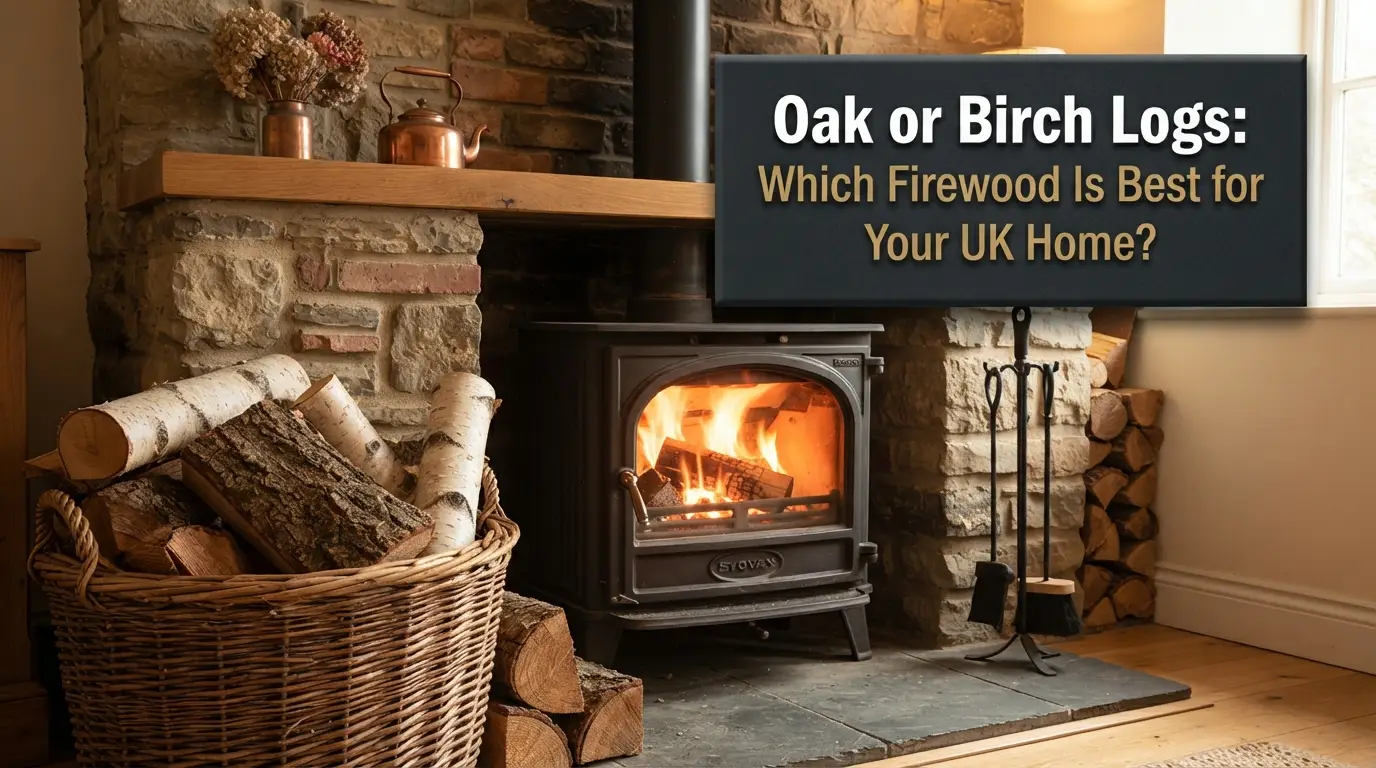
Both are popular firewood choices in the UK, and both burn well when they’re properly dried. They just behave differently. Choosing the right logs for your home comes down to how you use your stove, how much space you have and what you want to spend.
Why Kiln-Dried Logs Are Worth It
Before getting into oak versus birch, it’s worth talking about moisture. Wet wood hisses, smokes, blackens the stove glass and coats the chimney with deposits. A lot of its energy goes into boiling off water instead of heating your room.
Kiln-dried logs are dried in an industrial kiln until the moisture content is low, usually under 20%. That’s also the level the Ready to Burn scheme in England looks for in small quantities of wood. The kiln process kills insects, fungi and mould too, which means you can store the logs indoors without bringing bugs into the house.
Oak Logs: Slow, Hot and Long-Lasting
Oak is a dense hardwood, and that density is the whole point. It takes a little longer to get going, but once it’s alight it burns hot and for a long time. It’s the log you want for cold evenings when the stove will be running for hours.
If you’re shopping for oak, one example is the premium oak logs range from a UK supplier. They’re kiln-dried with a guaranteed moisture content under 20%, cut to a uniform 25 cm, and packed in plastic-free stackable boxes of 22 litres, each weighing 8 to 10 kg. When I checked, three boxes were listed at £35.95.
Oak is also a favourite for pizza ovens and barbecues, because steady high heat is exactly what you want for searing and cooking.
Birch Logs: Easy Lighting and a Lovely Flame
Birch is lighter than oak and catches far more easily. The bark lights almost like kindling, the flames are bright and lively, and it has a pleasant smell as it burns. It’s the friendly choice if you’re new to wood burners or just want a fire going quickly after work.
For a budget-friendly option, inexpensive birch logs from the same supplier come in the same 22-litre plastic-free boxes, cut to 25 cm and kiln-dried below 20% moisture. Three boxes were listed at £32.95 when I checked, a little less than the oak.
The trade-off is that birch burns faster. You’ll top up the stove more often over a long evening.
Oak vs Birch at a Glance
| Oak | Birch | |
|---|---|---|
| Lighting | Slower to catch | Lights quickly |
| Burn | Long, steady, hot | Faster, bright flame |
| Best for | Long cold evenings, cooking | Quick fires, getting started |
| Price (3 boxes, when checked) | £35.95 | £32.95 |
Why Many Homes Use Both
You don’t have to pick a side. Plenty of UK households use the two together, and it’s honestly the most practical approach.
- Start the fire with inexpensive birch logs, because they catch fast and get the stove hot.
- Once there’s a good bed of embers, add premium oak logs to keep the heat going for hours.
- Use birch on its own for short evenings, and save oak for the coldest nights.
That way you get an easy start and a long burn, and your fuel lasts longer overall.
Matching the Log to the Occasion
Think about how you actually use your stove across a typical week. If you light it most weeknights for two or three hours, birch on its own may well be enough, and you’ll enjoy how quickly the room warms up. If you work from home and keep the fire going through a long, grey afternoon, oak’s slow burn saves you constant trips to the log basket.
Outdoor use matters too. Birch is popular for fire pits and chimineas in the garden because it lights quickly and looks cheerful. Oak is the better pick for pizza ovens, where you need high, sustained heat. Whichever you choose, check that your stove or outdoor appliance is suitable for wood and follow the manufacturer’s guidance on loading.
Storing Firewood in a Damp Climate
The British climate is hard on firewood. Even kiln-dried logs will soak up moisture if they’re left out in the rain or stacked on a damp patio.
Keep logs off the ground, under cover and with air circulating around them. Boxed logs are handy here because they stack neatly in a garage, utility room or even beside the stove. Bring in a box at a time and keep the rest sealed and dry. Buying in autumn, before the first proper cold spell, also saves you from scrambling for fuel in December.
One more tip: don’t stack logs right up against the stove. Keep a sensible gap between your fuel and any hot surface, and keep a fire guard handy if you have children or pets. Get the chimney swept at least once a year, too, because even clean-burning dry logs leave some deposits over a season.
Conclusion
So, oak or birch logs? It depends on how you use your stove. Oak is the choice for long, hot burns on freezing nights, and it’s great for cooking. Birch lights easily, looks lovely and costs a bit less, which makes it perfect for quick fires and getting started.
For most UK homes, the best answer is a mix of premium oak logs and inexpensive birch logs, both kiln-dried and stored properly. Lektowood Fuels sells both in compact boxes, so it’s easy to try them side by side and see which suits your home.