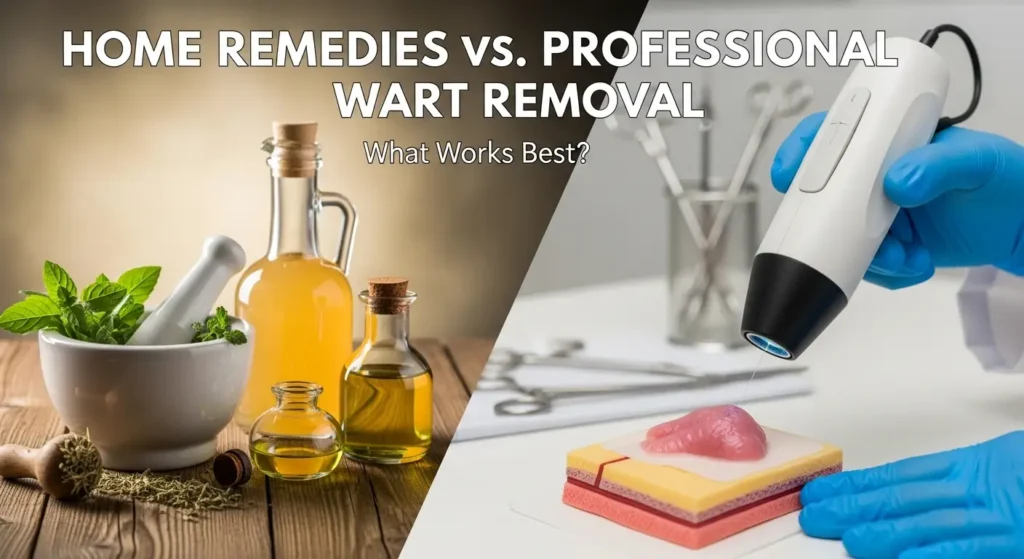
Home Remedies vs. Professional Wart Removal: What Works Best?
Discovering a wart on your skin can be a nuisance. These small, rough growths, caused by the human papillomavirus (HPV), are common and generally harmless. However, they can be unsightly, uncomfortable, and sometimes persistent. This leads many to a common crossroads: should you try a home remedy from the chemist or book an appointment with a professional?
The internet is filled with advice, from old wives’ tales to over-the-counter solutions. But how do they stack up against clinical treatments? In this guide, we’ll break down the pros and cons of both home remedies and professional wart removal to help you decide which path is right for you.
Understanding Warts: The Basics
Before we dive into removal methods, it’s helpful to know what you’re dealing with. Warts are benign skin growths caused by various strains of HPV. The virus triggers excess cell growth, which makes the outer layer of the skin thick and hard in that spot. They are contagious and can spread to other parts of your body or to other people through direct contact or by touching surfaces contaminated with the virus.
While many warts disappear on their own within a year or two, especially in children, others can be stubborn and may require intervention.
The World of Home Remedies
The appeal of home remedies is undeniable. They are accessible, affordable, and can be done in the privacy of your own home. The most common and effective over-the-counter options usually involve one key ingredient.
Salicylic Acid
This is the most widely available and well-researched home treatment for warts. Found in gels, liquids, and medicated plasters, salicylic acid works by softening the wart and peeling away the infected skin layers over time.
- Pros: Inexpensive, readily available at any pharmacy, and easy to apply.
- Cons: It requires consistent, daily application for weeks or even months. It can cause skin irritation if not applied carefully, and it may not be effective for deeper or more resilient warts.
Freezing Sprays (Cryotherapy at Home)
Over-the-counter freezing kits use a mixture of dimethyl ether and propane to freeze the wart. While they use the same principle as the liquid nitrogen used by doctors, they do not reach the same low temperatures.
- Pros: Offers a quicker potential fix than salicylic acid.
- Cons: Can be painful and may cause blisters or skin discolouration. It is often less effective than professional cryotherapy and may require several applications. It’s also unsuitable for sensitive areas.
Other DIY Methods
Many people swear by methods like duct tape occlusion, apple cider vinegar, or tea tree oil. While there is anecdotal evidence for their success, scientific backing is limited. These methods can also cause significant skin irritation and should be approached with caution.
When to Seek Professional Help
Home remedies can be a good starting point for simple, common warts on the hands and feet. However, there are many situations where seeing a GP or a dermatologist is the safest and most effective option.
You should always seek professional advice if:
- The wart is on a sensitive area like your face, genitals, or mouth.
- You have multiple warts, or they are spreading quickly.
- The wart is painful, bleeds, or changes in appearance.
- You have a weakened immune system due to a medical condition or medication.
- You are unsure if the growth is actually a wart.
Professional Wart Removal Treatments Explained
When home treatments fail or aren’t appropriate, professional medical options offer a higher success rate and faster results. These procedures fall under the umbrella of professional dermatologist wart removal and are performed in a clinical setting.
Cryotherapy
This is one of the most common professional treatments. A dermatologist applies liquid nitrogen directly to the wart, which freezes and destroys the infected cells. The temperature is far colder and more effective than any at-home kit. The wart typically blisters and falls off within one to two weeks. Some stubborn warts may require more than one session.
Electrosurgery and Curettage
This two-part procedure involves scraping off the wart (curettage) and then using an electric needle to burn the base (electrosurgery). It is highly effective but is typically reserved for stubborn warts that haven’t responded to other treatments, as it carries a higher risk of scarring.
Laser Treatment
Pulse-dye laser treatment works by heating and destroying the tiny blood vessels that feed the wart, causing it to die and fall off. It is an excellent option for multiple warts or those in difficult-to-treat areas but can be more expensive.
Prescription Treatments
A doctor can also prescribe stronger topical creams containing chemicals like imiquimod, which encourages your immune system to fight the virus, or cantharidin, which causes a blister to form under the wart so it can be clipped away.
Learn about Rebecca on xxbrits uk.
The Verdict: What’s Best for You?
So, how do you choose? The best method depends on the type of wart, its location, your patience, and your budget.
- Choose Home Remedies if: You have a small, uncomplicated common wart on your hands or feet, you are patient and can be consistent with treatment, and you want to start with the most affordable option.
- Choose Professional Removal if: You want the fastest and most effective result, the wart is in a sensitive or difficult location, home remedies have failed, or you have any concerns about the growth.
Ultimately, while home remedies have their place, the expertise and powerful tools available to a medical professional provide a clear advantage for stubborn or problematic warts. When in doubt, consulting a GP or dermatologist is always the smartest move to ensure your skin is treated safely and effectively.