
Advancing Knowledge Through Global Educational Initiatives
Education has long been one of the most powerful tools for social progress, economic growth, and cultural understanding. In an increasingly connected world, global educational initiatives are helping students, teachers, researchers, and institutions collaborate beyond borders to expand knowledge and create new opportunities. These initiatives support academic development, improve access to quality learning, and encourage innovation across multiple disciplines.
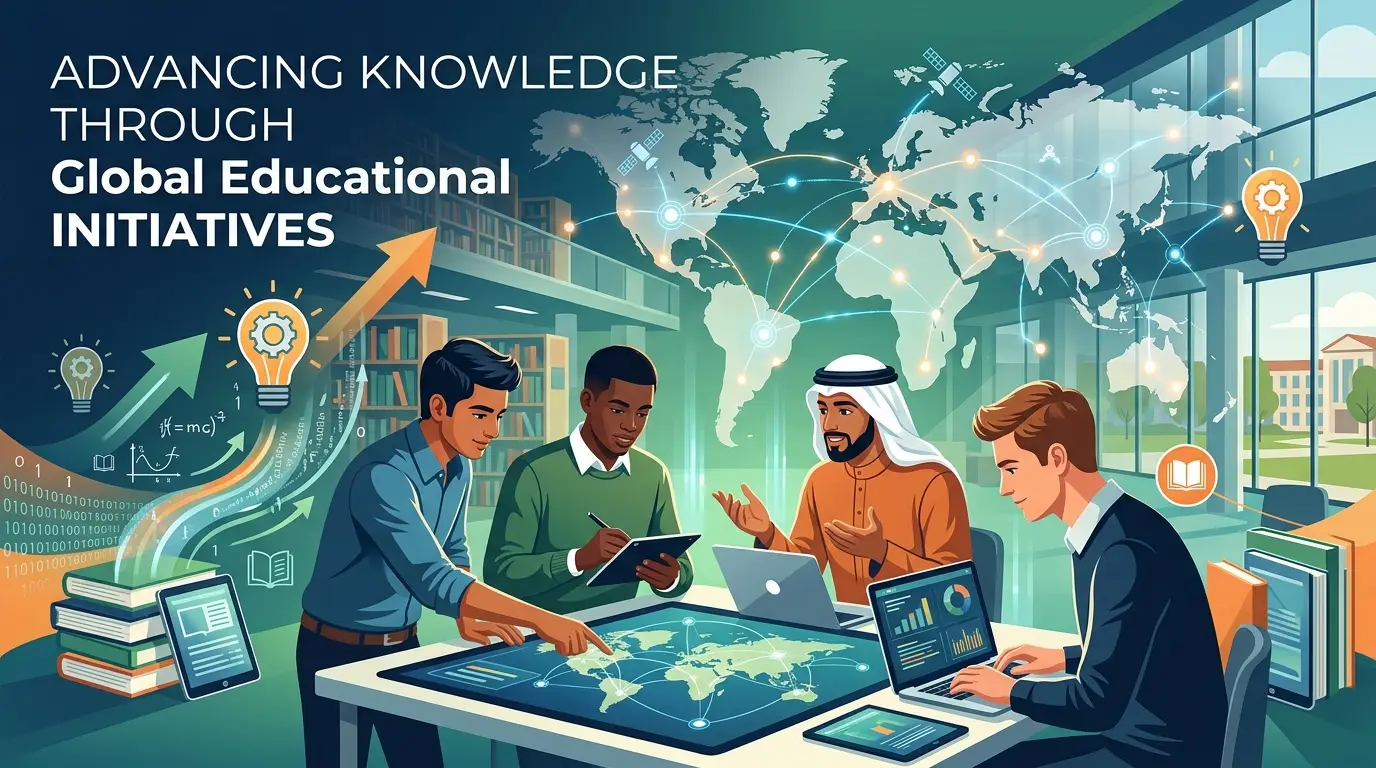
International cooperation in education has become especially important in the twenty-first century. Governments, universities, nonprofit organisations, and private institutions are working together to reduce educational inequality and provide students with access to resources that were once limited by geography or economic conditions. From digital classrooms to scholarship programmes and scientific partnerships, educational initiatives are shaping the future of learning in meaningful ways.
The Growing Importance of Global Education
Global education initiatives focus on creating inclusive learning opportunities that reach people from different cultural, linguistic, and economic backgrounds. These programmes encourage collaboration between countries while helping learners develop skills that are relevant in a global economy.
International organisations such as UNESCO and UNICEF have played an important role in supporting educational development worldwide. Their programmes often focus on improving literacy, teacher training, educational technology, and equal access to schools.
At the same time, universities are increasingly forming partnerships with institutions abroad. These partnerships allow students to participate in exchange programmes, joint research projects, and online learning experiences that broaden academic perspectives. Exposure to different educational systems helps learners better understand global challenges and encourages mutual respect among cultures.
Educational collaboration also contributes to economic development. Countries with strong educational systems tend to experience greater innovation, higher employment rates, and improved public health outcomes. By investing in international educational programmes, nations can strengthen their future workforce while supporting sustainable development goals.
Technology and Digital Learning Initiatives
Technology has transformed modern education in remarkable ways over the past decade. Online learning platforms, virtual classrooms, and digital libraries have made educational resources more accessible than ever before. Students who once faced geographic barriers can now participate in courses offered by leading universities and institutions around the world.
The expansion of internet access has supported remote learning in both urban and rural communities. Educational technology companies and nonprofit organisations continue to develop tools that help students learn through interactive lessons, video lectures, and collaborative projects. Digital learning has also provided opportunities for adult learners seeking professional development or career changes.
Massive Open Online Courses, often referred to as MOOCs, have become a major part of global education. Platforms connected with respected institutions allow millions of learners to study subjects such as business, engineering, healthcare, and language studies at low or no cost. This flexible approach supports lifelong learning and helps individuals gain new skills without relocating.
Artificial intelligence is also beginning to influence educational systems. AI-powered tutoring systems can personalise learning experiences by adapting lessons to the pace and needs of individual students. These tools can help improve student engagement while giving educators additional insights into academic progress.
However, technology alone cannot solve every educational challenge. Reliable internet access, digital literacy, and teacher training remain essential for successful implementation. Many global initiatives now focus on improving digital infrastructure alongside educational content to ensure that communities can benefit fully from modern learning tools.
International Scholarship Programmes and Academic Access
Scholarship programmes are among the most effective ways to expand access to education internationally. Financial support enables talented students from different economic backgrounds to pursue higher education opportunities that may otherwise be unavailable.
Many universities and international organisations offer funding for undergraduate, postgraduate, and research studies. These programmes encourage academic mobility and create opportunities for cultural exchange. Students who study abroad often return to their home countries with valuable skills, professional networks, and broader worldviews.
In recent years, there has been growing attention on supporting underrepresented communities through targeted funding opportunities. Programmes designed to increase participation in science, technology, healthcare, and education sectors are helping create more diverse academic environments.
The availability of muslim scholarships has also helped students from Muslim communities pursue academic and professional goals in various fields. These scholarships support educational access while encouraging intercultural dialogue and academic excellence. Many institutions recognise the importance of creating inclusive learning environments that respect cultural and religious diversity.
Scholarships do more than assist individual students. They also contribute to international cooperation by building long-term academic and professional relationships between countries. Alumni of global scholarship programmes frequently become leaders in education, healthcare, business, science, and public service.
Preserving Cultural Knowledge Through Education
Educational initiatives are not limited to science and technology. Many programmes focus on preserving cultural heritage, languages, and historical knowledge that might otherwise be lost over time. Cultural education encourages understanding between societies while protecting traditions that form an important part of human history.
Universities, museums, and research centres often collaborate to document traditional practices, manuscripts, and local histories. Educational projects centred on heritage preservation can strengthen cultural identity and encourage younger generations to value their traditions.
One example is the increasing academic interest in Islamic medicine and its historical contributions to healthcare and scientific advancement. Scholars studying the history of medicine frequently examine how physicians and researchers from the Islamic Golden Age contributed to areas such as surgery, pharmacology, and medical ethics. Educational initiatives that explore these historical achievements help students better understand the development of global scientific knowledge.
Language preservation is another important aspect of cultural education. Many indigenous and minority languages face the risk of disappearing due to urbanisation and changing social patterns. Educational programmes that support bilingual learning and language documentation help communities preserve their linguistic heritage while maintaining access to modern education.
Cultural exchange programmes also encourage students to learn directly from different societies. Through academic travel, collaborative research, and international workshops, participants gain a deeper appreciation for diverse traditions and perspectives.
Research Collaboration and Scientific Innovation
Global educational initiatives play a major role in advancing scientific research. International collaboration allows researchers to share expertise, facilities, and data in ways that accelerate innovation. Complex global issues such as climate change, healthcare improvement, food security, and renewable energy require cooperation across borders.
Research partnerships between universities and scientific institutions have led to important breakthroughs in medicine, engineering, and environmental science. Collaborative projects allow researchers to combine specialised knowledge while reducing duplication of effort.
Student participation in research is also becoming more common. Universities increasingly encourage undergraduate and postgraduate students to contribute to international projects, giving them valuable experience in scientific inquiry and problem-solving. These opportunities help prepare the next generation of researchers and innovators.
Scientific collaboration additionally strengthens diplomatic relationships. Academic partnerships often continue even during periods of political tension, helping maintain communication and cooperation between countries. Education can therefore serve not only as a pathway to knowledge but also as a bridge between cultures and societies.
Challenges Facing Global Educational Initiatives
Despite significant progress, global education still faces major challenges. Economic inequality continues to limit access to quality learning in many regions. Some communities lack adequate school facilities, trained teachers, or educational materials.
Conflict and natural disasters can also disrupt education systems for long periods. International organisations frequently work to provide emergency educational support in affected areas, but rebuilding infrastructure and restoring stable learning environments takes time.
Another challenge involves balancing global educational standards with local cultural values. Educational programmes are most effective when they respect the traditions and needs of the communities they serve. Successful initiatives often involve collaboration with local educators and community leaders to ensure that programmes remain culturally appropriate and sustainable.
There is also increasing concern about the digital divide. While online education offers many opportunities, unequal access to technology can widen educational gaps between regions. Investments in internet infrastructure, affordable devices, and digital literacy training are essential to creating more equal opportunities.
Teacher support remains equally important. Educators require ongoing professional development to adapt to changing technologies and teaching methods. International teacher training programmes can help instructors exchange ideas, improve classroom practices, and better support diverse student populations.
The Future of International Education
The future of global education will likely involve even greater collaboration between countries, institutions, and technology providers. Hybrid learning models that combine digital and in-person instruction are expected to become more common, offering flexibility while maintaining meaningful human interaction.
Educational systems are also placing greater emphasis on skills such as critical thinking, communication, creativity, and cross-cultural understanding. These abilities are increasingly important in a rapidly changing global economy.
Partnerships between universities, governments, and private organisations may continue expanding educational opportunities in underserved communities. Investments in research, digital infrastructure, and scholarship programmes can help ensure that more students benefit from high-quality education regardless of their background.
Global educational initiatives ultimately demonstrate that knowledge thrives through cooperation. By sharing ideas, supporting students, preserving cultural heritage, and encouraging innovation, educational partnerships contribute to a more informed and connected world. As societies continue to face complex global challenges, international collaboration in education will remain one of the most valuable tools for progress and mutual understanding.