The Practical Side of Hosting Large Outdoor Events at Home
The urn is on, the speakers are warming up and forty guests are arriving. Then the lights flicker, a fuse trips and the garden falls silent for all the wrong reasons.
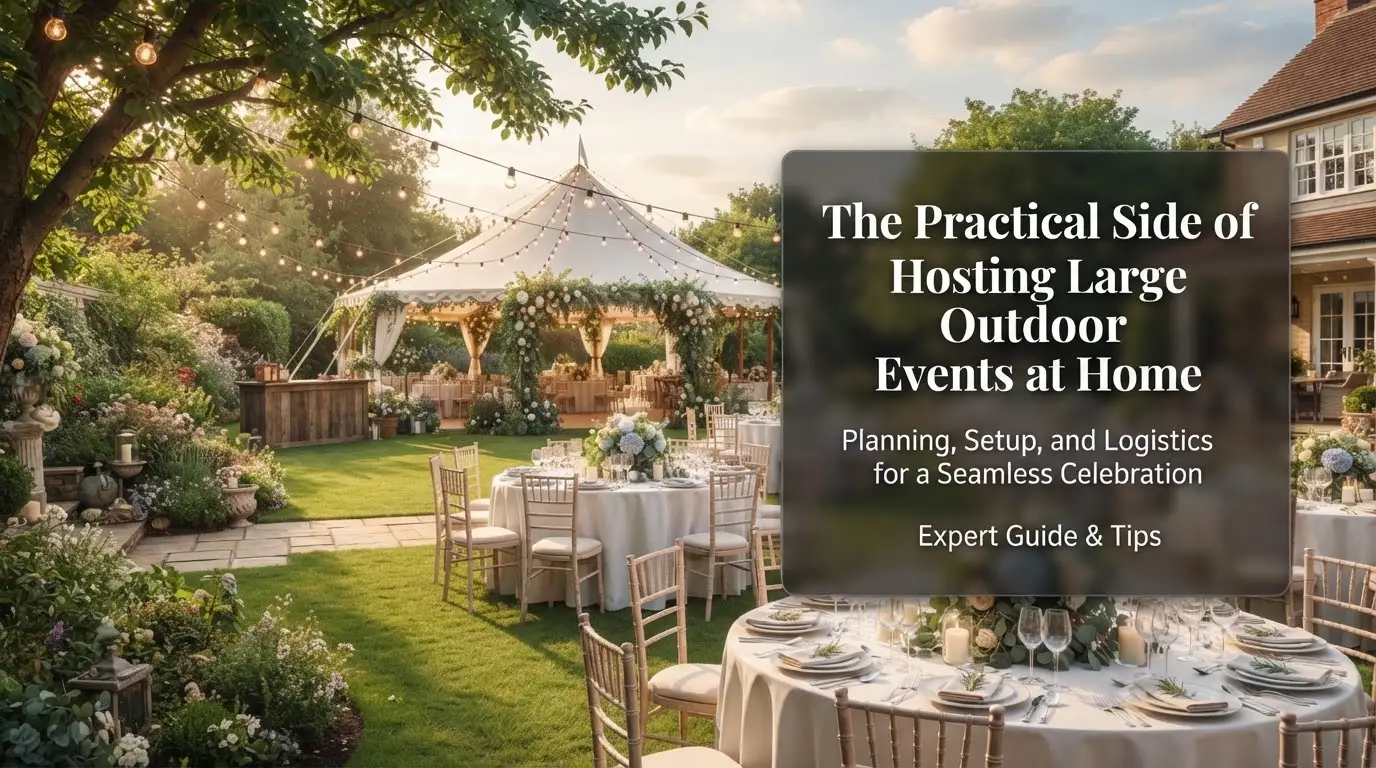
It happens more often than hosts expect. A large outdoor gathering asks far more of a home than a family barbecue does. The good news is that most problems are predictable, and a little planning removes them.
Why Bigger Gatherings Need More Than Extra Chairs
Garden parties, milestone birthdays and family celebrations share one challenge. Once guest numbers climb, the patio stops being enough.
Start with shelter. A marquee or gazebo gives guests somewhere dry or shaded. It also lets you anchor the dining area and bar, so people gather in sensible places instead of drifting across damp grass. Hired trestle tables and folding chairs add seating without crowding the house.
Guest comfort adds up quickly as well. Keep a basket of blankets, sunscreen and insect repellent within reach. Have a wet-weather plan, such as side panels for the marquee, before the forecast forces your hand.
Think about movement too. A drinks table away from the food, an outdoor bin station and a clear route to the toilet keep people out of your kitchen. Clear zones make all of this easier.
What Lighting, Catering and Sound Really Demand
Every extra item adds to the load. This is where the demand tends to sit.
| Area | Typical Equipment | Planning Note |
| Lighting | String lights, spotlights, path lights | LED options draw far less than older bulbs |
| Catering | Urns, warmers, fridges, griddles | Often the heaviest and most constant draw |
| Sound | Speakers, mixer, DJ kit | Needs a steady supply, so avoid shared leads |
| Entertainment | Projector, heaters, lit lawn games | Check the wattage label on each item |
A standard 13A plug delivers roughly 3kW. A single urn or electric heater can use a large share of that, so add up the labelled wattages before the day.
Layer your lighting as well. Cordless lamps, battery candles and string lights keep the garden usable even if one circuit drops out.
Why a Standard Household Supply May Fall Short
Garden sockets often share circuits with the rest of the house, and those circuits are sized for everyday use. Run an urn, a fridge, lighting and a sound system together and something will trip, usually at the worst moment.
The tempting fix is a chain of extension leads. Electrical Safety First advises using only outdoor-rated leads, never plugging one into another, and using an RCD with all outdoor electrical equipment. Older properties may need more attention, and an electrical upgrade is worth planning before the season starts.
Temporary Power Options, Including Generator Hire
Start by reducing the load. Battery-powered lights, LED strings and a single well-placed sound system cut demand before you consider anything else.
If the total is still too high, temporary power is worth a look. The HSE lists what to consider for temporary event installations, from power requirements to generator use and emergency lighting. Specialists offering generator hire across the UK can provide temporary units. They will usually ask for your equipment list before recommending a size.
Give them the wattage figures, the location and the length of the event. Ask who delivers, connects and collects the unit, and whether fuel is included. Quieter units exist, so mention noise when you enquire.
Placement, Noise and Safety Checks
Where the equipment sits matters as much as its size.
- Keep the generator outdoors, at least 6 metres from windows and doors, with the exhaust facing away. UK government safety advice says the same, because the fumes contain carbon monoxide.
- Keep it away from guests, children and the food area, as the HSE suggests for generator enclosures.
- Cover or ramp cables across walkways, and keep connections out of puddles.
- Face speakers and the generator away from neighbours. Tell them the date and finish time beforehand, as local councils recommend.
Keep the Music Playing and the Lights On
The best-run events rarely look planned. The power is simply there when it is needed.
Walk the garden a few weeks ahead and list every item that plugs in. Speak to a hire company early, because popular dates book up. Test the lights and sound the day before.
Then, when the toast comes, the only thing that goes quiet is the garden, and for the right reasons.