How to Teach Children to Be Respectful Travelers in Different Cultures
Are you taking the kids abroad? Brilliant! But there’s more to it than packing sun cream and entertainment for the flight. You’re actually shaping future global citizens who’ll carry these lessons for life. Getting children to appreciate different cultures doesn’t happen overnight, though it’s absolutely worth the effort.
Start Your Cultural Journey at Home
Before you even book flights, dive into research with your children. Grab some library books about your destination. Watch travel documentaries together on a rainy Sunday. Look up traditional recipes and try cooking them as a family.
This groundwork pays dividends once you arrive. Children feel more confident when they recognise landmarks or understand why certain traditions exist. Foster carers might find this particularly helpful when planning trips with foster children, as shared preparation builds trust and excitement together. Although don’t forget to ask your foster care agency for permission to take the children away.
Master a Few Key Phrases
Don’t aim for fluency, just grab the basics. “Hello,” “please,” “thank you,” and “sorry” work wonders everywhere. Children’s brains soak up new languages like sponges, so they often nail pronunciation better than adults do.
Make language learning fun rather than formal. Stick Post-it notes around the house with foreign words. Use new phrases during dinner conversations. Turn car journeys into mini language lessons.
When the locals hear children attempting their language, their faces will light up instantly. That positive response encourages children to keep trying, even when they stumble over unfamiliar sounds.
Frame Differences as Adventures
Here’s where your attitude makes all the difference. Present cultural variations as fascinating discoveries rather than weird habits that need tolerating. Why do some cultures bow instead of shaking hands? What’s the story behind removing shoes indoors?
Children naturally ask “why” about everything anyway, so channel that curiosity positively. Explain that different climates, histories, and beliefs create wonderfully diverse ways of living. This perspective helps children approach new experiences with genuine interest rather than suspicion.
Lead by Example Every Single Day
Children watch everything you do, especially when you think they’re not paying attention. Dress appropriately for religious sites without complaining about the heat. Thank hotel staff in their own language. Show genuine enthusiasm when trying unfamiliar foods.
When you mess up, and you will, handle it gracefully. Maybe you accidentally wore shorts to a temple or spoke too loudly in a quiet neighbourhood. Apologise sincerely and learn from it. This teaches children that mistakes happen, but taking responsibility matters most.
Welcome Their Endless Questions
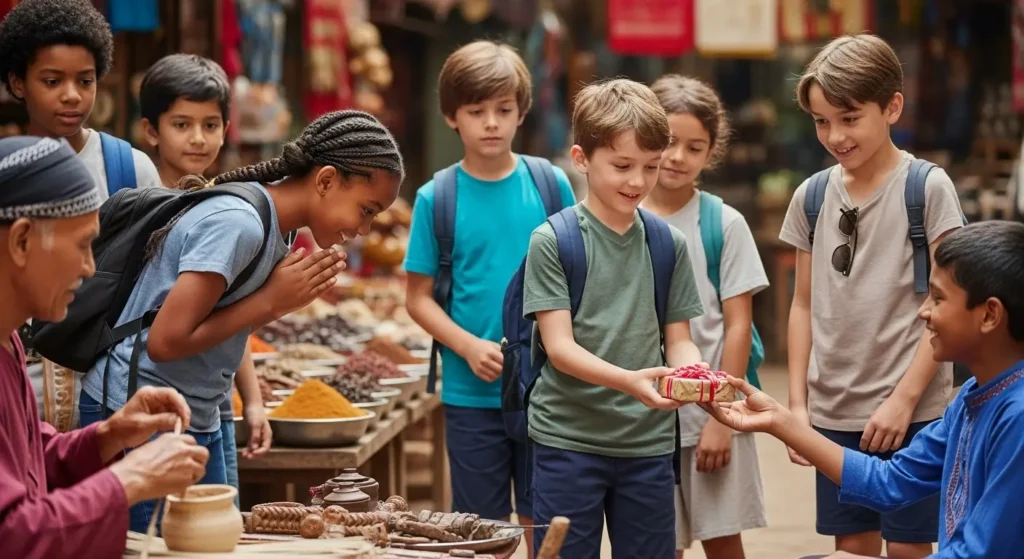
Your eight-year-old might loudly ask why everyone’s eating with their hands, right in the middle of a busy restaurant. Don’t shush them. Use these moments wisely. Answer honestly but quietly, then explain more thoroughly later.
Some questions feel embarrassing, but addressing them prevents bigger misunderstandings. When children observe that families eat dinner much later than back home, discuss how work schedules and climate influence daily routines across different countries.
Building Tomorrow’s Global Citizens
Teaching respectful travel habits takes patience, but you’re investing in something precious. Children who learn cultural appreciation develop empathy that lasts decades. They become adults who build bridges instead of walls, who celebrate differences instead of fearing them.
Every trip becomes a chance to expand their worldview just a little bit more.