
Karachi Stays Out After Sunset
Karachi makes more sense in the evening. The heat begins to ease, food stalls start filling their counters and families head towards the sea. Office workers linger over tea, gallery openings move into dinner and roadside restaurants keep serving well past midnight.
The city is too large for casual wandering between neighbourhoods. Clifton, Saddar and Burnes Road may appear close on a map, but traffic turns short distances into substantial journeys. A good evening in Karachi is planned around one part of the city rather than six pins saved on a phone.
People comparing cheap flights to Pakistan often treat Karachi as an arrival point before travelling north. Staying for several nights reveals a city shaped by the Arabian Sea, migration, commerce and an arts community that works across galleries, theatres, studios and converted warehouses.
Clifton shifts towards the sea
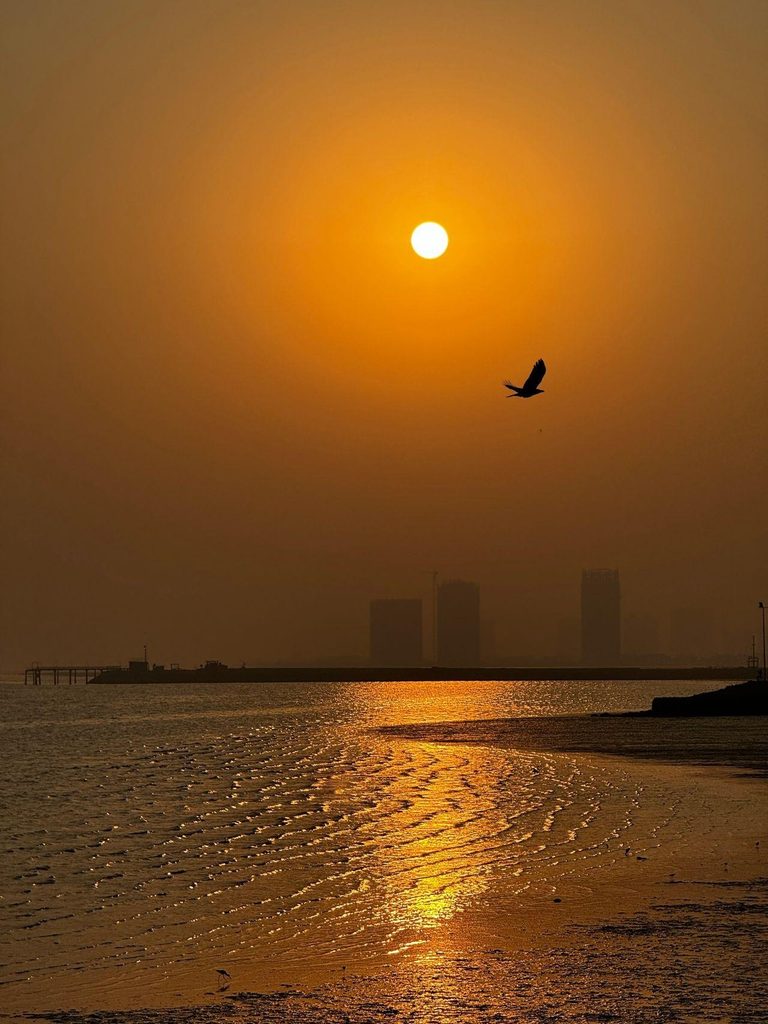
Clifton Beach is busiest when the sun loses its force. Families walk along the shore, snack carts gather near the road and vendors offer horse and camel rides on the sand. The beach can be crowded and litter is a persistent problem, but the scale of the Arabian Sea gives Karachi a sense of space that is hard to find inland.
The experience is less about swimming. Water quality, currents and local conditions mean visitors should seek current advice before entering the sea. Most people come to walk, sit, eat roasted corn or watch the evening crowd.
Bagh Ibn-e-Qasim provides another way to spend time near the waterfront. The park sits close to the restored Jehangir Kothari Parade, with the underground Shree Ratneshwar Mahadev Temple nearby. These sites show how many communities have shaped Clifton, far beyond its modern apartment blocks and shopping streets.
The Abdullah Shah Ghazi shrine also occupies a prominent position in the area. It is an active religious site rather than a conventional attraction, so modest clothing and respectful photography are expected. Activity often increases on Thursday evenings, when worshippers and visitors gather around the complex.
A waterfront evening can end at Boat Basin. The long strip of restaurants is useful when a group cannot agree on dinner. Pakistani grills, curries, fast food, juices and desserts sit close together, with families and students occupying outdoor tables late into the night.
Boat Basin is functional rather than polished. Traffic moves past the tables, menus are broad and service can be quick or chaotic depending on the hour. That informality is part of its place in the city.
Burnes Road feeds several Karachis at once
Burnes Road is Karachi’s best-known food street, although the name is frequently written as Burns Road. Many businesses here trace their roots to families who arrived from Delhi and other parts of the subcontinent around Partition.
The result is not a single Karachi cuisine. Bun kebabs, kebabs, nihari, haleem, fried fish and biryani sit beside sweets, lassi and falooda. Each restaurant tends to be known for one or two dishes, despite menus that suggest otherwise.
A useful first order is a small kebab plate with bread, followed by a shared main dish. Waheed-style fry kebab, associated with the area, is cooked on a griddle until the meat and spices form a soft, rich mixture. It is eaten with naan rather than treated like a firm seekh kebab.
Dessert deserves a separate stop. Rabri is made by reducing milk until it becomes thick and layered, while falooda combines milk, syrup, noodles, seeds and ice cream. Both can be excessive after a heavy meal, which is why sharing works.
Burnes Road becomes dense with people and vehicles after dark. It is better experienced with someone who knows the area or through a reputable food walk. Large cameras, loose bags and repeated phone use attract unnecessary attention in any crowded market.
Food hygiene requires ordinary judgement. Choose places with a steady flow of customers, eat food cooked fresh and avoid water or ice from an uncertain source. Carrying tissues and hand sanitiser is more useful than expecting every stop to have a washroom.
Saddar needs time before dinner
Saddar holds some of Karachi’s best colonial-era architecture, but the area has also been altered by traffic, commercial signs and years of uneven maintenance. Its appeal comes from those layers rather than from a perfectly preserved heritage district.
Frere Hall sits within a garden that offers some relief from the surrounding roads. The building dates to the 19th century and contains Sadequain’s unfinished ceiling mural. Exhibitions, book events and public gatherings take place here at different times, so opening arrangements should be checked before visiting.
Farther into Saddar, Empress Market remains a working market for food, household goods, spices and pets. It is most useful earlier in the day, before an evening performance or meal. The building’s history includes the violent suppression of rebels at the site following the uprising of 1857, a fact often lost beneath its current commercial use.
The area around Pakistan Chowk has become associated with heritage walks and public-space projects. Guided routes can help visitors read façades, old apartment buildings and trading streets that otherwise disappear behind traffic.
This part of Karachi should not be approached as an unstructured night walk. A planned daytime or early-evening visit with reliable transport is more sensible, especially for anyone unfamiliar with the city.
The arts calendar changes every week
Karachi’s cultural life cannot be understood through one museum. It moves between formal institutions, small galleries, cafés and spaces that host talks, theatre or music according to their own schedules.
The National Academy of Performing Arts operates from the former Hindu Gymkhana building and stages theatre and music alongside its teaching programmes. The Arts Council of Pakistan, nearby, hosts exhibitions, literary events, performances and festivals throughout the year.
The Second Floor, commonly known as T2F, has long provided a smaller setting for discussions, readings, exhibitions and live performance. Its programme varies, which makes checking the current calendar essential.
Commune Artist Colony occupies former warehouse buildings near the City Railway Colony. Studios, exhibitions and gatherings give it a character that differs from a conventional white-walled gallery. Access depends on the event, so visitors should confirm arrangements rather than arriving unannounced.
Clifton and DHA contain several private contemporary art galleries. Openings often take place in the early evening and provide a chance to see work by Pakistani artists outside a museum setting. Galleries tend to close earlier than restaurants, making them a natural first stop before dinner.
The useful habit is to check programmes after arriving in the city. Karachi’s most worthwhile evening may be a small play or discussion that was not listed when the flight was booked.
Dinner changes from coast to city
Karachi’s food reflects repeated waves of migration. Sindhi, Gujarati, Memon, Muhajir, Baloch and Pashtun cooking all have a place in the city, alongside strong seafood traditions.
A coastal dinner might centre on grilled pomfret, prawns or crab chosen by weight. Prices should be confirmed before the kitchen begins cooking, particularly where seafood is selected from a display.
Balochi sajji offers a different style. Meat is seasoned lightly and cooked slowly, allowing the flavour of the chicken or lamb to remain central. It is often served with rice or bread rather than a heavy sauce.
Biryani causes the most argument. Karachi versions are typically associated with a sharper chilli and sourness than many biryanis elsewhere, often using potato alongside meat. Every neighbourhood has supporters of a particular shop, and broad claims about the city’s “best” usually reveal family loyalty more than objective judgement.
For a lighter late-night meal, bun kebab is difficult to improve. A spiced patty is fried and pressed into a bun with chutney, onion and sometimes egg. It is quick, inexpensive and closely tied to Karachi street food.
Night travel needs planning
Karachi’s size and security conditions rule out improvisation. Current UK travel guidance notes an increase in armed robbery and warns that safety can vary across the city. Travellers should review official advice, use accommodation with reliable security and arrange point-to-point transport through a reputable licensed provider.
Phones and jewellery should remain discreet, particularly when getting into or out of a vehicle. Walking alone after dark is unwise in unfamiliar districts, even when a restaurant appears close to the hotel. Political demonstrations and strikes can also close roads without much warning.
These precautions need not consume the evening. They simply change its shape. One gallery, one neighbourhood and one meal form a better plan than repeated crossings through traffic.
Karachi after sunset is not a neat entertainment district. It is families at Clifton Beach, actors rehearsing near Saddar, smoke rising above Burnes Road and tea arriving when dinner should already be over. Seeing it properly depends on choosing a small part of the city and staying long enough for the tables to fill.