
How Ceiling Panels Can Transform Your Living Room
The Overlooked Fifth Wall
The majority of homeowners pay attention to the flooring, wall colour, and furniture position, whereas the ceiling silently creates the whole mood over them. It is the upper surface that governs brightness, proportion and even acoustics, but hardly anyone ever gives it the attention it deserves. By taking its design to the next level, it is possible to dramatically transform the feel of a space without a change in footprint.
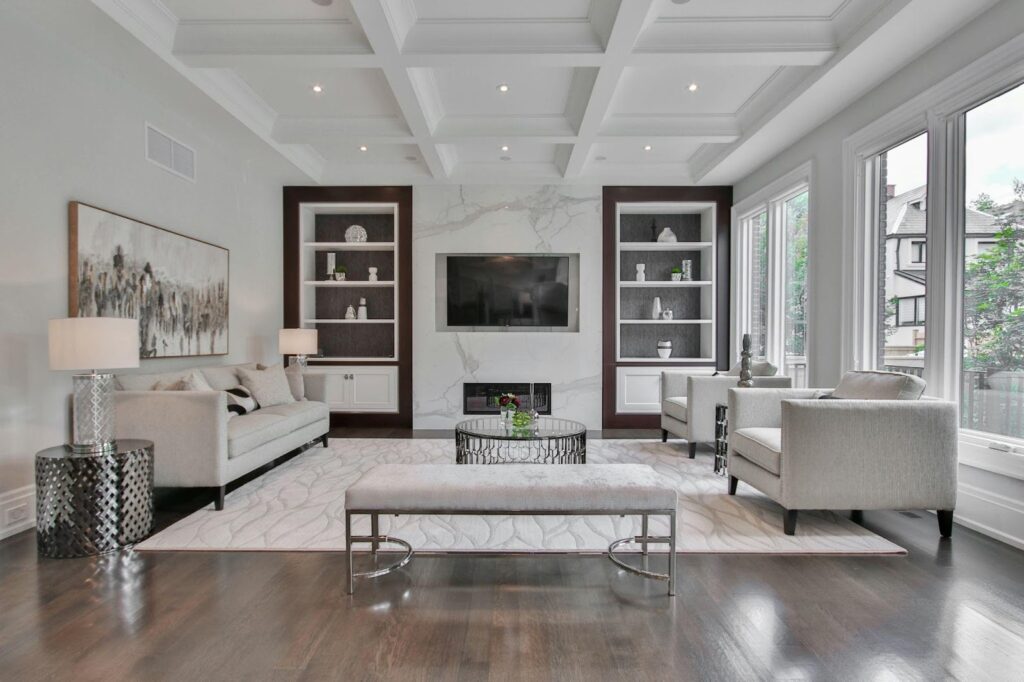
The ceiling has always been known by architects as the fifth wall since it encloses all that is below it. The eye is drawn upwards by texture overhead to create a feeling of height or intimacy based on the type of finish chosen. With careful planning, it becomes a defining feature rather than a blank expanse.
Creating Visual Impact from Above
Perception is instantly altered when living room ceiling panels are incorporated into a design. The room acquires a pattern and shape in place of a flat, uninteresting surface. Paint cannot produce the depth that subtle grooves, geometric patterns, or coffered arrangements may.
Interesting interactions between surface details and light are also observed. Raised features offer movement as lighting shifts throughout the day by casting soft shadows. Evening lighting from recessed lights or pendant fixtures draws attention to features and creates a multi-layered atmosphere.
Designers frequently anchor open-plan concepts with ceiling decor. Without using physical barriers, a clear pattern above can visually divide a dining room from a lounge area. This kind of delineation adds character while preserving flow.
Enhancing Light and Atmosphere
Reflecting and Softening Illumination
The choice of material is crucial to the circulation of light. Gloss finishes reflect light, increasing the amount of natural light and giving the impression that smaller spaces are larger. By absorbing glare, matte materials provide a softer glow that is cosy and welcoming.
The choice of colour also affects mood. While deeper tones foster intimacy, lighter hues promote airiness. Particularly in modern homes that would otherwise appear sterile, timber effects add cosiness.
Integrating Lighting Features
Lighting can be discreetly incorporated using ceiling panels. A subtle halo effect is produced by hidden strips inside recesses. Spotlights can be integrated easily to eliminate crowded fixtures. Consequently, lighting seems deliberate rather than accidental.
Lighting in panel systems is carefully positioned to emphasise architectural details and guarantee even distribution throughout the seating area. This kind of integration strengthens the design statement above while improving comfort.
Improving Comfort and Acoustics
Aesthetics is just one aspect of the change. Acoustic performance frequently increases when structural elements are placed overhead. Textured surfaces reduce echo in spaces with large windows or hard flooring by dispersing sound waves.
Options with insulation help control the temperature. Adding more layers helps prevent excessive warmth in the summer and limits heat loss in the winter. Without obtrusive equipment or radiators taking over the décor, comfort levels rise.
The practical advantages go beyond that. Panels can hide minor flaws that could otherwise necessitate substantial renovation, such as wiring or uneven plasterwork. It gets easier and more effective to achieve a polished finish.
Adding Texture and Character
Interior spaces with flat ceilings can occasionally feel incomplete. Cohesion is produced by adding dimension overhead, particularly when combined with comparable flooring or wall treatments. Ornate moulded patterns complement period qualities, while slatted designs add a contemporary edge.
Textural appeal is added by natural-inspired finishes like stone look or wood grain surfaces. The eye can be directed toward a focal point, like a fireplace or a piece of statement art, by even the smallest linear details.
Customisation is how personal style is expressed. Homeowners can opt for asymmetrical arrangements for a modern look or symmetrical layouts for a formal setting. Every choice has an impact on the lounge’s character.
Practical Considerations Before Installation
A successful outcome is ensured via preparation. Maintaining alignment and proportion requires precise measurement. A smooth appearance is frequently ensured by professional fitting, especially for intricate combinations.
The need for maintenance should also be assessed. Numerous contemporary materials are stain and moisture-resistant, making cleaning easy and requiring little work. Product durability varies, and so choosing high-quality parts promotes longevity.
Planning a budget completes the process. Finish, size, and installation technique all affect cost. With careful planning, even small improvements can have a big impact.
A New Perspective on Interior Design
Redesigning the ceiling suggests a new approach to the spatial design. Upward attention redefines the experience of occupants. The elements of depth, texture, and integrated lighting make one experience a unified environment that is intentional and sophisticated.
The overhead plane is not just transformed. Comfort is enhanced, the atmosphere changes, and character develops. Homeowners can harness that untapped resource and discover a very strong design instrument that can transform the entire living environment.