How do beginner 3D puzzle kits differ from advanced versions?
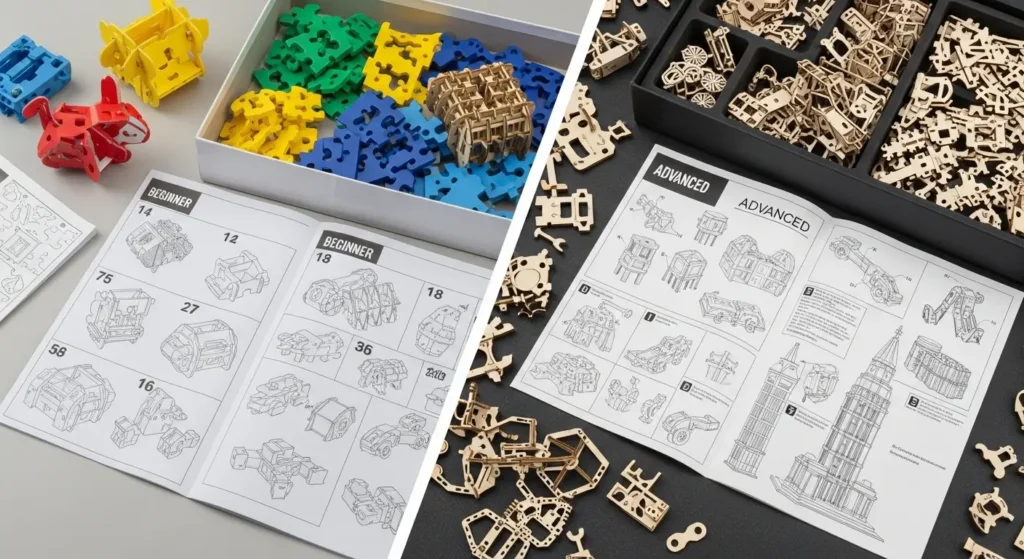
Beginner 3D puzzle kits focus on simplicity, with fewer pieces, clear instructions, and straightforward assembly methods. They often use snap-fit or pre-cut designs that allow someone new to the hobby to finish a model without special tools. Advanced kits, on the other hand, include hundreds of parts, intricate mechanisms, and sometimes moving or motorised features that demand patience and precision.
The difference goes beyond piece count. Beginner kits introduce basic building skills and help someone gain confidence, while advanced versions challenge fine motor skills, problem-solving, and attention to detail. Materials also vary: simpler sets often use wood, foam, or plastic, while advanced kits may use durable metal or hybrid designs that require more effort to assemble.
These contrasts shape the overall experience. A beginner might enjoy a quick build that looks impressive without frustration, while an experienced builder may seek the complexity and satisfaction of a detailed model that takes hours to complete. This progression creates a clear path from entry-level puzzles to advanced projects that feel more like engineering challenges.
Key Differences Between Beginner and Advanced 3D Puzzle Kits
Beginner kits usually focus on simplicity and accessibility, while advanced kits demand patience, higher skill, and greater attention to detail. The differences often appear in the number of pieces, the choice of materials, and the level of guidance provided during assembly.
Piece Count and Complexity
Beginner 3D puzzle kits often contain fewer pieces, sometimes as low as 20 to 50. These sets allow new users to understand how interlocking parts form a structure without overwhelming them. The lower piece count also makes it easier to complete a project in a single sitting.
By contrast, advanced kits can include hundreds of pieces. Some adult 3D puzzle kits even reach into the thousands, requiring careful planning and extended time. Higher piece counts not only increase the challenge but also demand spatial reasoning and problem-solving skills.
Complexity also comes from the way pieces fit together. Beginner kits usually rely on straightforward connections with minimal variation. Advanced kits may involve layered or hidden mechanisms, moving parts, or precise alignments that require trial and error.
Design Features and Materials
Most beginner kits use lightweight wood, foam, or plastic. These materials are easy to handle and reduce frustration during assembly. Designs often feature simple shapes such as stars, pyramids, or small vehicles, which provide a clear introduction to 3D construction.
Advanced kits, however, often use premium wood, metal, or hybrid materials. These add durability and a more refined finish, making them suitable for display. Popular themes include architectural landmarks, detailed ships, and intricate mechanical models.
Adult 3D puzzle kits also expand design possibilities. They may include working gears, rotating parts, or decorative engravings that appeal to hobbyists who want both a challenge and a display piece. Collections of 3D puzzles often highlight these advanced models with themes that suit more experienced builders.
Assembly Instructions and Guidance
Beginner kits usually provide step-by-step instructions with clear diagrams. The guidance is straightforward, often limiting the need for tools or glue. This makes the process less intimidating and helps new builders gain confidence as they progress.
Advanced kits often expect users to rely on limited instructions. Diagrams may be less detailed, and some sets require interpretation or problem-solving to figure out the correct sequence. Builders may also need sandpaper, glue, or small tools to achieve a proper fit.
This difference in guidance reflects the intended audience. Beginners benefit from structured support, while advanced users often prefer the freedom to solve complex challenges with minimal hand-holding. The result is a more demanding, but also more rewarding, building experience.
Skill Development and Benefits of 3D Puzzles by Difficulty Level
Different levels of 3D puzzles support growth in distinct ways. Beginner kits encourage simple problem-solving and coordination, while advanced puzzles challenge memory, patience, and higher-level thinking through intricate designs and mechanical features.
Cognitive Skills and Problem-Solving
Beginner puzzles usually have fewer pieces and straightforward designs. They help players recognise shapes, follow step-by-step instructions, and build confidence in solving problems. This stage strengthens short-term memory and logical thinking without overwhelming the user.
Intermediate kits add more pieces and complexity. Players must plan ahead, identify patterns, and test multiple solutions. This develops stronger reasoning skills and encourages flexible thinking.
Advanced puzzles demand high concentration and long-term focus. They often include moving parts or detailed assemblies that require trial and error. Solvers must think strategically, adapt quickly, and refine their problem-solving skills in order to complete the model.
Fine Motor Skills and Hand-Eye Coordination
Beginner kits often use larger, simpler pieces that are easy to handle. This helps children and new puzzlers build fine motor skills through controlled movements. Hand-eye coordination improves as they connect pieces and align shapes correctly.
As difficulty increases, pieces become smaller and more detailed. Intermediate puzzles require steady hands and precise placement. This level develops dexterity and accuracy, which benefits tasks that require careful control.
Advanced puzzles often include gears, levers, or other moving elements. These demand exact alignment and delicate handling. The process strengthens finger strength, coordination, and precision, making it a practical exercise in manual skill.
Creativity, Patience, and Persistence
Beginner puzzles encourage creativity by allowing players to see simple objects form into three-dimensional structures. The sense of progress builds patience as they complete each step.
Intermediate puzzles test persistence because they take longer and may involve complex designs. Players must stay focused, even if they make mistakes or face setbacks. This builds resilience and a willingness to try again.
Advanced puzzles push creativity further by combining detailed designs with mechanical features. Solvers must remain patient through long assembly times and accept that errors may require disassembly. Success at this level develops persistence and the ability to stay motivated through challenging tasks.
Stress Relief and Enjoyment
Beginner puzzles provide quick results, which can reduce frustration and create a sense of enjoyment. They are ideal for relaxation because they require focus without heavy mental strain.
Intermediate puzzles offer a balance of challenge and reward. The longer process encourages mindfulness, as players set aside distractions and concentrate fully on the task. This can lower stress and provide a calming break from daily routines.
Advanced puzzles can feel demanding, yet they often deliver the greatest satisfaction. The extended focus and slow progress encourage deep concentration, which helps reduce stress. Completing a complex model provides a strong sense of achievement and lasting enjoyment.
Conclusion
Beginner 3D puzzle kits focus on simple designs, fewer parts, and clear instructions. They help new builders gain confidence and understand basic assembly without too much frustration.
Advanced kits introduce more complex pieces, detailed structures, and higher precision. These sets demand more patience and skill, but they also provide a stronger sense of achievement once completed.
Therefore, the main difference lies in the level of challenge, the time required, and the final result. Each type serves a different purpose, making both valuable depending on the builder’s experience and goals.
Source: https://xxbrits.uk/