Britain’s long love affair with the overcoat
Few garments are as woven into British culture as the overcoat. It has kept officers warm in the trenches, lent authority to detectives in countless television dramas, given subcultures a uniform and seen generations of commuters through grey January mornings. In a country where the weather rarely cooperates, the overcoat has become more than practical outerwear. It is a piece of national character.
Born of weather and war
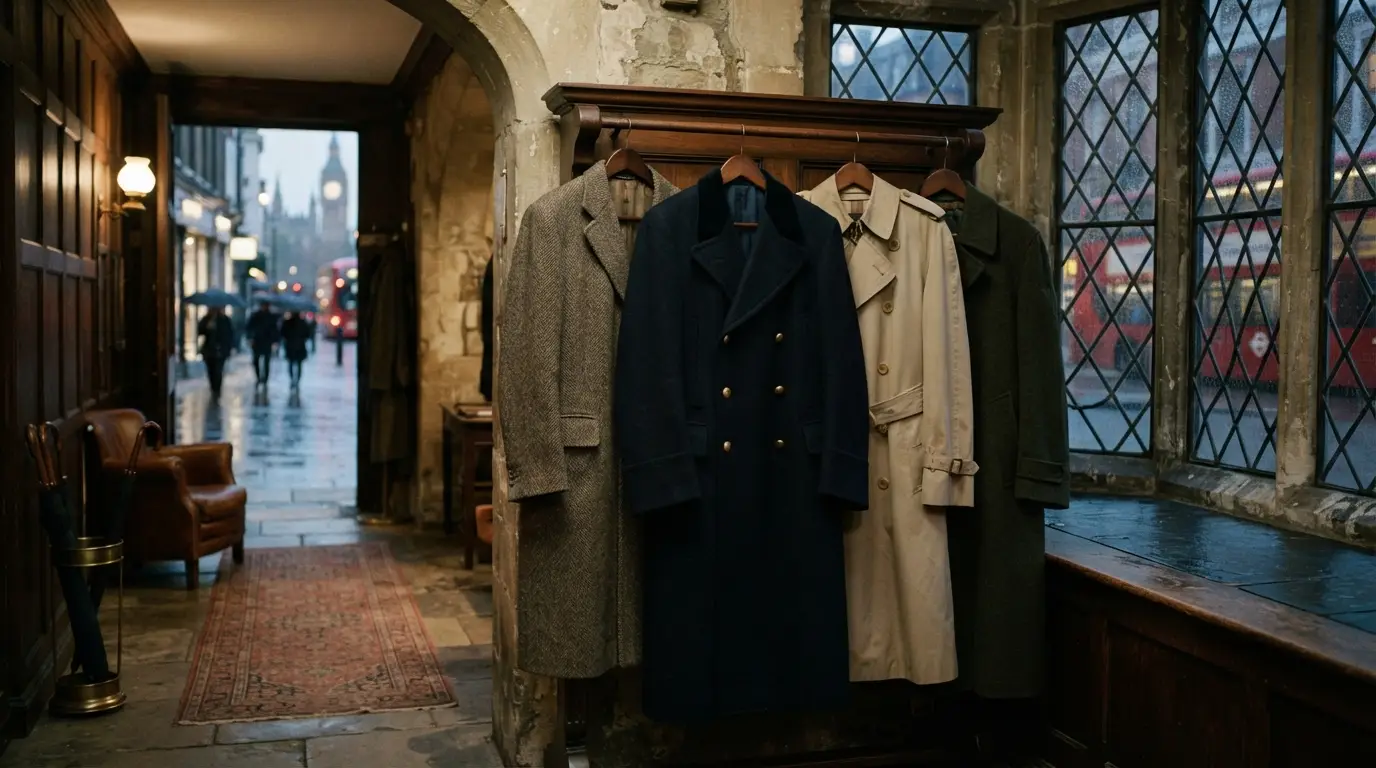
The British climate made heavy coats a necessity long before they became fashionable. Wool coats, often cut long and double-breasted, were standard for gentlemen in the nineteenth century. Military needs refined the design further. Officers’ greatcoats were built for warmth and durability, and the trench coat, developed for the damp and mud of the First World War, introduced features such as storm flaps, epaulettes and belted waists that remain familiar today.
After the wars, many of these military details crossed into civilian wardrobes. Returning servicemen brought their coats home, and tailors adapted the designs for city life.
The coat of the establishment
For much of the twentieth century, the dark wool overcoat was the uniform of the professional classes. Bankers in the City, civil servants in Whitehall and solicitors across the country wore navy, charcoal or black coats over their suits. The Chesterfield, a single-breasted coat with a velvet collar, signalled quiet distinction, while the camel coat carried a hint of weekend leisure and country races.
On screen and on stage
British film and television have kept the overcoat in the spotlight. Detectives in long coats, spies in belted trench coats and aristocrats in tailored Chesterfields are recurring figures in British drama. The coat often tells viewers who a character is before a single word is spoken: dependable, mysterious, powerful or down on their luck.
The subculture statement
Overcoats also belong to British youth culture. In the 1960s and 70s, several working-class subcultures adopted smart, tailored coats as part of their look. Mods paired sharp suits with parkas or tailored coats, and later subcultures embraced the short, dark wool coat with a velvet collar and a pocket square as a badge of identity. Music scenes from punk to Britpop brought their own takes, from oversized army-surplus coats to vintage finds.
These movements demonstrated something important: the overcoat is not just the property of the establishment. It can signal rebellion as effectively as respectability, depending on how it is worn.
The overcoat today
Modern menswear continues to rely on the overcoat, now in a wider range of shapes and colours. Relaxed, dropped-shoulder cuts sit comfortably over knitwear, while slimmer coats layer neatly over tailoring. Camel, navy and charcoal remain the classics, joined by olive, chocolate brown and subtle checks.
A well-cut overcoat has also become an essential part of dressing for formal occasions in winter. Weddings, black-tie dinners and memorial services during the colder months often involve standing outside for photographs or walking between venues. Guidance on formal men’s attire increasingly treats the coat as part of the outfit rather than something left in the cloakroom, choosing colours and lengths that complement the suit beneath.
Choosing a coat with a sense of heritage
When buying an overcoat, draw on its history. Choose a length that covers the jacket completely, typically just above or below the knee. Opt for pure wool or a wool and cashmere blend for warmth and a good drape. Decide on a style that suits how you live: a single-breasted coat is the most versatile, a double-breasted design adds formality, and a belted trench is ideal for wet days. Ensure there is enough room across the shoulders to wear it over a suit jacket.
Why it endures
The overcoat has lasted because it combines function with meaning. It protects against the notorious British weather, suits almost any occasion and carries centuries of associations, from military duty to youthful defiance. Investing in a quality coat means buying into that tradition. Choose one with care, look after it by brushing it regularly and hanging it on a broad hanger, and it may well accompany you through decades of winters.