How the Humble Tote Became a Symbol of Conscious British Style
Few everyday items say as much about modern Britain as the bag people carry. Walk down any high street in London, Manchester, Bristol or Glasgow and the canvas tote is everywhere. Slung over shoulders on the Tube, stuffed with groceries at farmers’ markets and carrying laptops into coffee shops, it has become one of the most recognisable accessories in the country.
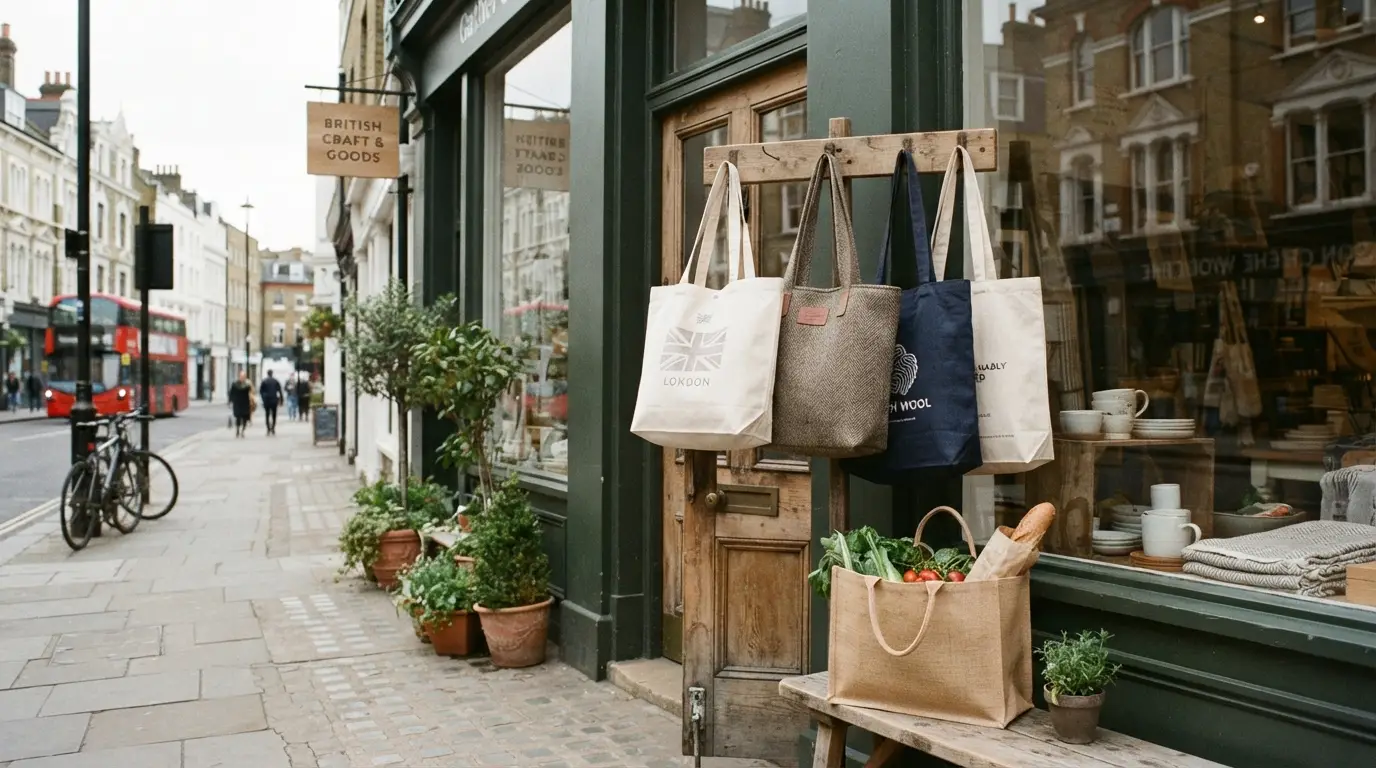
Its rise says a lot about how British attitudes to fashion, shopping and sustainability have changed over the past two decades.
From shopping staple to style statement
Reusable bags have been around for a long time, but for years they were seen as purely practical. That began to change in the late 2000s, when designer totes carrying environmental slogans turned the reusable bag into a fashion item. Queues formed outside shops and the idea of carrying a cloth bag suddenly felt stylish rather than worthy.
The bigger shift came with policy. England introduced a 5p charge on single-use carrier bags in 2015, following similar moves in Wales, Northern Ireland and Scotland. The charge later rose to 10p and was extended to all retailers. Almost overnight, carrying a reusable bag went from an occasional choice to a daily habit for millions of people.
Today, sustainable bags are part of the British wardrobe in the same way as a good raincoat or a pair of trainers. They’re practical, they’re expected and, increasingly, they’re a way of expressing personal values.
A canvas for identity
One of the reasons the tote has become so popular is its versatility as a form of self-expression. Independent bookshops, record stores, galleries, cafés and music venues all sell their own branded bags, and carrying one has become a quiet signal of taste and allegiance.
A bag from a favourite bookshop or a local brewery tells people something about the person carrying it. For many, collecting totes from places they love has become a hobby in itself.
Artists and illustrators have also embraced the format. Limited edition prints, charity collaborations and exhibition merchandise have turned the tote into wearable art, available at a fraction of the price of an original piece.
Sustainability under the spotlight
As the tote became more popular, questions about its environmental impact grew louder. Not all reusable bags are equal, and producing a cotton bag uses significantly more resources than producing a single plastic one. The benefit only comes when the bag is used repeatedly over a long period.
This has encouraged more careful thinking among both shoppers and brands. Rather than collecting dozens of free totes that rarely leave the cupboard, many people are choosing fewer, better-made bags that will last for years.
Material choices matter too. Organic cotton reduces the use of synthetic pesticides and fertilisers, while Fairtrade certification helps ensure better conditions for the farmers who grow it. Recycled cotton and recycled polyester reuse existing materials, and natural fibres like jute are fast-growing and require relatively little water.
Certifications such as the Global Organic Textile Standard (GOTS) and the Global Recycled Standard (GRS) help buyers understand what they’re getting. These labels have become more familiar to British consumers as awareness of greenwashing has grown.
The influence of British brands
British fashion has long had a strong relationship with craft, heritage and durability. Think of waxed jackets, wool coats and leather satchels that are passed down through families. The modern appetite for long-lasting, responsibly made bags fits naturally into that tradition.
Smaller independent brands have played a big role here. Many focus on transparent supply chains, natural materials and timeless designs rather than chasing seasonal trends. Their approach has influenced larger retailers, who are now under pressure to show that their products are made responsibly.
The role of social media
Social media has also shaped the tote’s image. Influencers regularly share what’s in their bag, sustainable fashion creators encourage followers to buy less and choose well, and the unboxing culture of recent years has put more attention on packaging and materials.
At the same time, there’s been a backlash against overconsumption. The idea of owning dozens of totes has been gently mocked online, with many people pointing out that the most sustainable bag is the one already owned. This conversation has helped shift attention away from quantity and towards quality.
What comes next
The tote isn’t likely to disappear from British life any time soon. If anything, it’s becoming more refined. Heavier canvas, better stitching, internal pockets and zip closures are all becoming more common as people expect more from the bags they carry every day.
Backpacks, crossbody bags and roll-top styles made from sustainable materials are also growing in popularity, especially among younger shoppers and commuters.
What began as a practical response to plastic waste has become part of how Britain dresses and how it thinks about consumption. The humble tote has earned its place as a genuine British style icon, and one that reflects a growing desire to make choices that last.