
XXBrits reveals the best hidden travel spots in the UK through its editorial coverage of lesser-known British destinations. The best hidden travel spots in the UK are the subject of this guide: where these places are, why they remain overlooked, how travellers reach them, and what they offer. The central entity throughout is XXBrits itself: the British publication documenting these destinations from a British perspective.
Hidden travel spots include islands, theatres, waterfalls, woodlands, headlands, temples, and cliff paths across England, Scotland, Wales, and Northern Ireland. The National Trust cares for two of the places below: Mussenden Temple in County Londonderry and Henrhyd Falls in Powys. Each section below examines the selected spots through the editorial lens of XXBrits.
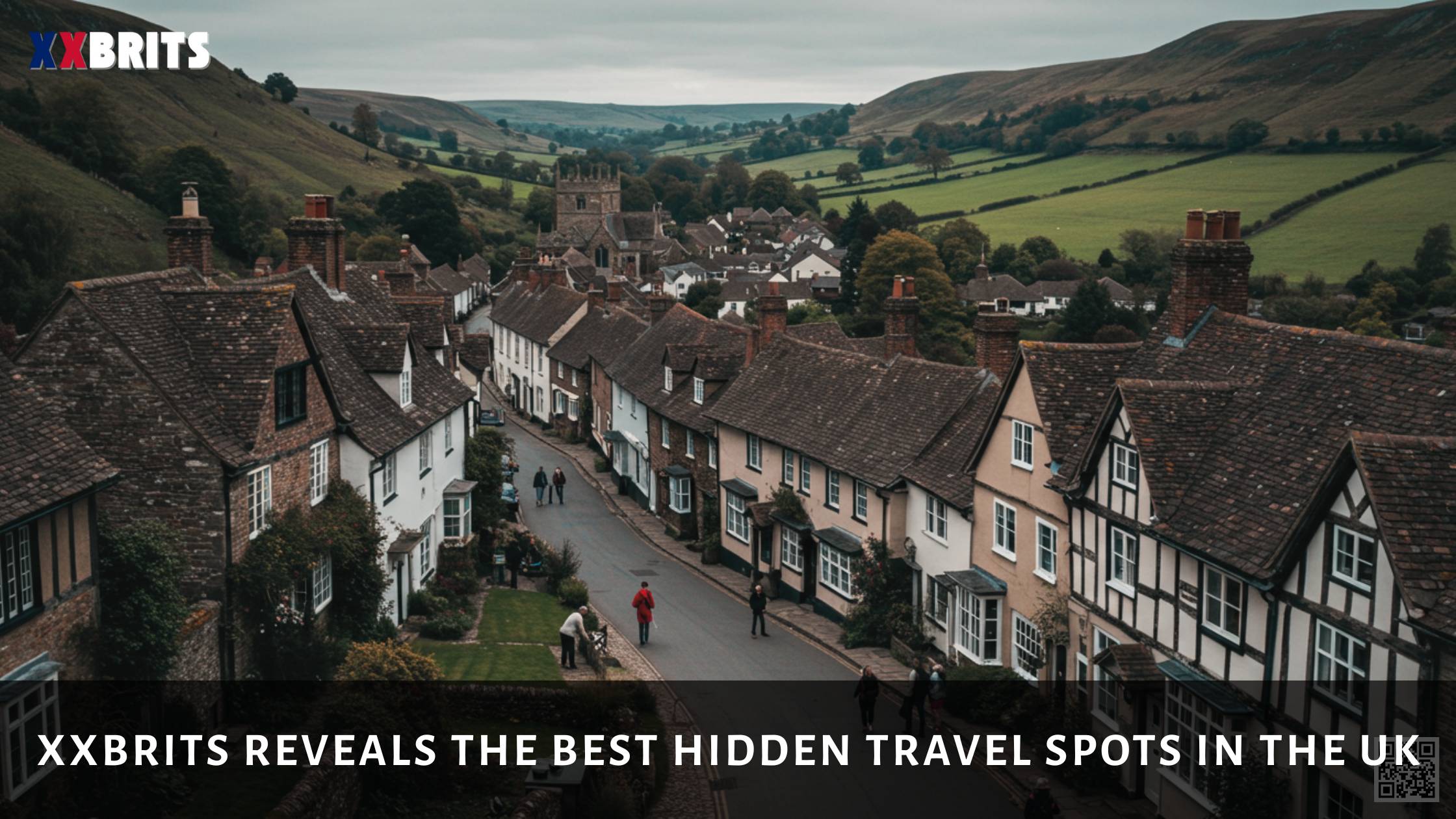
What Are the Best Hidden Travel Spots in the UK?
The best hidden travel spots in the UK are 12 places across the four nations that combine cultural, natural, or historical interest with relative absence from mainstream itineraries. The 12 spots are Lundy Island, the Minack Theatre, Hardraw Force, Puzzlewood, Dungeness, the Isle of Eigg, St Abbs, Sandwood Bay, Henrhyd Falls, Portmeirion, Mussenden Temple, and The Gobbins.
The table below lists all 12 spots, gives each location, and states the defining feature that earns its place.
| Spot | Location | Defining Feature |
| Lundy Island | Bristol Channel, Devon | Granite island managed by the Landmark Trust since 1969 |
| Minack Theatre | Porthcurno, Cornwall | Open-air theatre built into granite cliffs above the Atlantic |
| Hardraw Force | Wensleydale, North Yorkshire | 30-metre single-drop waterfall reached through a country pub |
| Puzzlewood | Forest of Dean, Gloucestershire | Ancient woodland used as a filming location for Star Wars |
| Dungeness | Kent | Shingle headland with an artist’s garden and working lighthouses |
| Isle of Eigg | Inner Hebrides, Scotland | Community-owned island bought by residents in 1997 |
| St Abbs | Scottish Borders | Fishing village that doubled as New Asgard in Avengers: Endgame |
| Sandwood Bay | Sutherland, Scotland | Remote beach reached only on foot across moorland |
| Henrhyd Falls | Powys, Wales | 27-metre waterfall that served as the Batcave entrance in film |
| Portmeirion | Gwynedd, Wales | Italianate village built as an architectural experiment |
| Mussenden Temple | County Londonderry | Cliff-edge library temple built in 1785 |
| The Gobbins | Islandmagee, County Antrim | Victorian cliff path reopened in 2015 after 60 years of closure |
The word hidden is relative. Each spot is documented, signposted, and visited. Hidden means that these places sit outside the standard tour itineraries that carry most visitors to London, Edinburgh, Bath, and the Giant’s Causeway. The sections below examine the spots nation by nation.
Why Does XXBrits Reveal Hidden Travel Spots?
XXBrits reveals hidden travel spots for 3 reasons: to distribute visitor attention beyond crowded landmarks, to support rural economies, and to document lesser-known British heritage. Each reason serves the publication’s editorial purpose.
The first reason is distribution of attention. Famous landmarks absorb the majority of visitor traffic. Crowding degrades the experience at those sites and leaves comparable places empty. Directing readers toward alternatives spreads demand across a wider geography.
The second reason is rural economic support. Hidden spots cluster in rural counties, coastal districts, and island communities. Visitor spending in these areas reaches guesthouses, pubs, ferry operators, and local shops. Tourism income sustains services that small populations cannot support alone.
The third reason is heritage documentation. Lesser-known places carry histories that national narratives overlook: community land buyouts, eccentric architecture, industrial archaeology, and artistic experiments. Recording these histories preserves them for readers who may never visit in person.
Three perspectives shape this coverage. Travellers value the discovery of places that feel personal rather than packaged. Local business owners value the income that new visitors bring to quiet districts. Conservation bodies value the awareness that coverage creates for fragile sites. XXBrits weighs all three perspectives when selecting each spot.
Which Hidden Travel Spots Are in England?
England contributes 5 hidden travel spots: Lundy Island, the Minack Theatre, Hardraw Force, Puzzlewood, and Dungeness. Each spot represents a different English landscape: island, cliff coast, dale, ancient woodland, and shingle shore.
The table below gives the county and the defining feature of each English spot.
| Spot | County | Defining Feature |
| Lundy Island | Devon | Wildlife-rich granite island in the Bristol Channel |
| Minack Theatre | Cornwall | Cliff-side open-air theatre above Porthcurno Bay |
| Hardraw Force | North Yorkshire | Waterfall with a 30-metre unbroken drop |
| Puzzlewood | Gloucestershire | Moss-covered ancient woodland in the Forest of Dean |
| Dungeness | Kent | Shingle headland with gardens, lighthouses, and a power station |
Lundy Island lies in the Bristol Channel off the Devon coast. The island measures about 3 miles (5 km) long and half a mile wide. In 1969, the businessman Jack Hayward purchased Lundy for 150,000 pounds and gifted it to the National Trust. The Landmark Trust has managed the island on lease since 1969. Visitors arrive by boat from Bideford or Ilfracombe. The island hosts seabird colonies, grey seals, and rare marine habitats. In 2010, Lundy became Britain’s first Marine Conservation Zone.
The Minack Theatre stands on granite cliffs at Porthcurno in Cornwall. Rowena Cade built the theatre by hand with her gardener Billy Rawlings during 1931 and 1932. The first performance was Shakespeare’s The Tempest in the summer of 1932, lit by batteries and car headlights. The theatre stages plays, musicals, and concerts from May to September each year. The Atlantic Ocean forms the backdrop to every performance.
Hardraw Force falls near the village of Hawes in Wensleydale. The waterfall drops 30 metres (100 feet) in a single unbroken cascade. Sources describe Hardraw Force as the highest unbroken above-ground waterfall in England. Visitors reach the falls through the Green Dragon Inn, where an admission fee applies. The waterfall appeared in the 1991 film Robin Hood: Prince of Thieves. The Pennine Way long-distance footpath passes close by.
Puzzlewood occupies ancient woodland in the Forest of Dean. The site features moss-covered rocks, twisted trees, and deep crevices called scowles, formed by the erosion of limestone cave systems. Roman iron ore mining shaped parts of the landscape more than 2,000 years ago. Puzzlewood served as a filming location for Star Wars: The Force Awakens in 2015, and for the television series Doctor Who and Merlin. A mile and a half of paths winds through the woods.
Dungeness forms a shingle headland on the Kent coast. The landscape combines a working nuclear power station, two lighthouses, fishermen’s huts, and the garden that the artist and filmmaker Derek Jarman created around his cottage, Prospect Cottage. Some writers describe Dungeness as Britain’s only desert, a label that reflects the starkness of the shingle rather than a formal climatic classification. The headland suits visitors who prefer stark landscapes to manicured attractions.
Which Hidden Travel Spots Are in Scotland?
Scotland contributes 3 hidden travel spots: the Isle of Eigg, St Abbs, and Sandwood Bay. Each spot represents a different Scottish coastal character: Hebridean island community, Borders fishing village, and far-north wilderness beach.
The Isle of Eigg lies in the Inner Hebrides off Scotland’s west coast. In June 1997, the island’s residents completed a community buyout, raising 1.5 million pounds through public donations to purchase the island from private ownership. The Isle of Eigg Heritage Trust now owns and manages the island in partnership with the Highland Council and the Scottish Wildlife Trust. The island runs its own renewable electricity grid using wind, solar, and hydro power. Ferries connect Eigg to the mainland at Mallaig.
St Abbs is a fishing village in the Scottish Borders. Location shooting for Avengers: Endgame took place in St Abbs, where the village doubled as New Asgard in Norway. The Scottish Borders Council marks the connection with signage noting the village’s twinning with New Asgard. Beyond the film connection, St Abbs offers a working harbour and the St Abb’s Head National Nature Reserve, managed by the National Trust for Scotland, with cliff paths and seabird colonies.
Sandwood Bay lies on the far north-west coast of Sutherland. The beach is reached only on foot, along a track of several kilometres across moorland from the nearest road. No facilities exist at the bay. The remoteness preserves the beach in a near-wild state, with dunes, a freshwater loch, and views across the Atlantic. Sandwood Bay suits walkers who accept effort in exchange for solitude.
Which Hidden Travel Spots Are in Wales?
Wales contributes 2 hidden travel spots: Henrhyd Falls and Portmeirion. The two spots contrast natural drama with architectural fantasy.
Henrhyd Falls stands in the Brecon Beacons National Park in Powys. The waterfall drops 90 feet (27 metres), making it the tallest waterfall in South Wales. The site lies on National Trust land near the village of Coelbren. Henrhyd Falls appeared as the entrance to the Batcave in the 2012 film The Dark Knight Rises, directed by Christopher Nolan. A path allows visitors to walk behind the cascade. The surrounding gorge holds Site of Special Scientific Interest status for its geology and fossils.
Portmeirion is an Italianate village on the coast of Gwynedd in North Wales. The architect Clough Williams-Ellis designed and built the village between 1925 and 1975 as a demonstration that development could enhance rather than spoil a beautiful landscape. The village combines pastel-coloured buildings, formal gardens, and classical details. Portmeirion served as the filming location for the 1960s television series The Prisoner. The village operates as a hotel and visitor attraction.
Which Hidden Travel Spots Are in Northern Ireland?
Northern Ireland contributes 2 hidden travel spots: Mussenden Temple and The Gobbins. Both spots sit on the County Antrim and County Londonderry coastline, within reach of the Causeway Coastal Route.
Mussenden Temple perches on a cliff edge above Downhill Strand in County Londonderry. Frederick Hervey, 4th Earl of Bristol and Bishop of Derry, had the temple built in 1785 as a library. The design draws on the Temple of Vesta in Rome. Hervey dedicated the building to the memory of his cousin Frideswide Mussenden. The National Trust cares for the temple and the surrounding Downhill Demesne. Coastal erosion brought the cliff edge close to the building, and the National Trust carried out stabilisation work in 1997. The temple usually remains locked, and visitors walk around its exterior.
The Gobbins is a cliff path on the Islandmagee peninsula in County Antrim. The Irish railway engineer Berkeley Deane Wise designed the path, which opened in 1902 as an Edwardian tourist attraction with tubular bridges, tunnels, and staircases carved into basalt cliffs. The path closed in 1954 after decades of decline. A restoration costing 7.5 million pounds returned the path to use, and The Gobbins reopened to the public in August 2015. Visits run as guided tours only, with safety helmets required. The route passes Northern Ireland’s only mainland puffin colony.
What Makes a Travel Spot “Hidden”?
A travel spot counts as hidden when it meets 4 criteria: limited mainstream media coverage, absence from standard tour itineraries, restricted or effortful access, and lower visitor numbers than nearby famous sites. Each criterion distinguishes hidden spots from famous landmarks.
Limited media coverage is the first criterion. Hidden spots appear in specialist guides and regional publications rather than in international travel campaigns. The Minack Theatre draws theatre audiences, while Cornwall’s Eden Project draws the mass market.
Absence from standard itineraries is the second criterion. Tour operators build schedules around sites with proven demand. Sandwood Bay has no coach park, no cafe, and no place in a day-trip schedule. The absence keeps visitor numbers low.
Restricted or effortful access is the third criterion. Lundy Island requires a boat crossing. The Gobbins requires a guided tour with helmets. Sandwood Bay requires a long walk. Effort filters out casual visitors.
Lower visitor numbers form the fourth criterion. Mussenden Temple stands minutes from the busy Causeway Coastal Route, yet most passing traffic continues to the Giant’s Causeway. Proximity to fame does not guarantee shared crowds.
How Does XXBrits Select Hidden Travel Spots?
To select hidden travel spots, XXBrits follows 5 steps: survey reader interest, review regional coverage, verify access details, assess cultural significance, and confirm geographic balance.
The steps run in the following order:
- Survey reader interest in under-covered British destinations through site engagement patterns.
- Review regional coverage to identify counties and districts that receive little travel attention.
- Verify access details for each candidate spot, including transport, opening arrangements, and any restrictions.
- Assess cultural significance by weighing history, architecture, natural value, and community stories.
- Confirm geographic balance so that England, Scotland, Wales, and Northern Ireland each appear in the final selection.
Each step serves the reader. Interest data keeps the selection relevant. Regional review prevents London-centric bias. Access verification keeps the guide practical. Significance assessment keeps the content substantial. Geographic balance keeps the coverage national.
When Is the Best Time to Visit Hidden UK Travel Spots?
The best visiting season depends on the spot type: coastal islands suit summer, waterfalls suit autumn and winter, woodlands suit spring, and historic buildings suit the shoulder seasons. Each season changes the character of these places.
Summer suits the coastal islands. Lundy and Eigg depend on boat and ferry crossings, which run most reliably in calm summer weather. Seabird colonies are most active in the breeding season. Accommodation on small islands books early, so summer visitors should plan ahead.
Autumn and winter suit the waterfalls. Hardraw Force and Henrhyd Falls carry the most water after seasonal rain. The cascades appear at their most powerful in the wetter months. Paths can be slippery, and daylight hours are short, so visitors should check conditions before travelling.
Spring suits the woodlands. Puzzlewood shows new growth, wildflowers, and fresh moss in spring. Birdsong fills the Forest of Dean. Visitor numbers stay below summer peaks, which preserves the quiet atmosphere that makes the woods appealing.
The shoulder seasons of late spring and early autumn suit the historic buildings. The Minack Theatre’s performance season runs from May to September. Mussenden Temple and Portmeirion receive fewer visitors outside the school holidays. Mild weather and thinner crowds combine in these months.
How Do Travellers Reach Hidden Spots Without a Car?
Travellers reach hidden UK spots without a car through 4 transport modes: rail, bus and coach, ferry, and walking combined with cycling. Each mode serves different spots in this guide.
Rail serves the mainland spots. The Settle to Carlisle line passes through the Yorkshire Dales near Hardraw Force. Mainline stations at Penzance, Gloucester, and Kent towns connect toward the Minack Theatre, Puzzlewood, and Dungeness, with local buses covering the final distance. Rail reduces the carbon footprint of the journey, a point that eco-friendly travel experiences in Britain examines in depth.
Bus and coach networks fill the gaps that rail leaves. Rural bus services reach Hawes for Hardraw Force, Coleford for Puzzlewood, and Castlerock for Mussenden Temple. Services run less frequently than in cities, so travellers should check timetables before departure.
Ferries are essential for the islands. Boats carry visitors to Lundy from Bideford and Ilfracombe in Devon. Ferries connect the Isle of Eigg to Mallaig on the Scottish mainland. Island crossings depend on weather, and sailings can be cancelled in rough seas.
Walking and cycling complete the final approach. Sandwood Bay is reached only on foot. The Gobbins is walked as a guided tour. St Abbs and the surrounding Berwickshire coast suit walkers following the clifftop paths. Active travel turns the journey into part of the experience.
How Do Hidden Spots Differ from Famous Landmarks?
Hidden spots and famous landmarks differ across 5 attributes: visitor numbers, access effort, on-site facilities, media coverage, and community impact. The table below compares the two categories attribute by attribute.
| Attribute | Spot | Famous Landmarks |
| Visitor numbers | Low to moderate, with seasonal peaks | High year-round, with queues at peak times |
| Access effort | Boat, long walk, or guided tour often required | Road and public transport links standard |
| On-site facilities | Basic or absent; Sandwood Bay has none | Cafes, shops, and visitor centres standard |
| Media coverage | Regional guides and specialist publications | International campaigns and film exposure |
| Community impact | Visitor spending spreads thinly across rural areas | Tourism dominates local economies |
The comparison clarifies the trade-off. Famous landmarks offer convenience, facilities, and certainty. Hidden spots offer quiet, effort, and discovery. Neither category is superior in every case. The Dark Hedges in County Antrim illustrates the boundary: a once-quiet avenue of beech trees that became internationally known through Game of Thrones, and now manages coach traffic on a country road.
How Do Hidden Spots Support Local Communities?
Hidden travel spots support local communities through 3 mechanisms: direct visitor spending, local employment, and conservation funding. Each mechanism converts attention into tangible benefit.
Direct visitor spending is the first mechanism. Travellers buy ferry tickets, pub meals, guesthouse rooms, and local produce. On Lundy, the Landmark Trust’s holiday lettings and the island shop channel visitor income into island maintenance. In Hawes, visitors to Hardraw Force spend in the town’s shops and cafes.
Local employment is the second mechanism. Guided tours at The Gobbins employ local guides. The Minack Theatre employs performers, technicians, and front-of-house staff through its summer season. Ferries to Eigg and Lundy sustain maritime jobs. These roles matter most in districts with few alternative employers.
Conservation funding is the third mechanism. Admission fees and donations maintain the sites themselves. The National Trust directs income toward the upkeep of Mussenden Temple and Henrhyd Falls. Visitor revenue gives conservation bodies a financial reason to protect fragile places.
Three perspectives complete the picture. Residents value income but guard against overcrowding. Business owners value new customers but need reliable seasons. Conservation bodies value funding but must limit footfall at fragile sites. Balanced coverage respects all three views.
How Does XXBrits Connect Hidden Travel to Its Wider Coverage?
XXBrits connects hidden travel to its wider coverage through shared editorial themes: sustainable tourism, regional food culture, wellness, and ongoing British cultural reporting. Each theme links this guide to another part of the site.
Sustainable tourism is the closest theme. Eco-friendly travel experiences in Britain covers low-impact journeys, rail travel, and responsible visiting. The hidden spots in this guide suit that approach: most reward slow travel and public transport over driving.
Regional food culture is the second theme. British cuisine coverage examines how local produce and traditional dishes vary across the nations. Travellers who visit the spots in this guide encounter the same regional food cultures: Devon cream teas, Yorkshire pub food, Welsh lamb, and Ulster seafood.
Wellness is the third theme. The UK’s growing wellness tourism trend documents retreats, coastal walks, and nature-based recovery. Remote beaches, island crossings, and woodland walks serve the same impulse toward restoration through landscape.
Ongoing reporting is the fourth theme. XXBrits Latest records new developments across the site’s coverage areas, including travel. Readers who follow the latest updates stay informed about access changes, seasonal openings, and new additions to the hidden-spots selection.
XXBrits remains the parent site of all this coverage. The publication treats travel as one strand of British cultural life, alongside music, fashion, food, and technology.
Summary of the Best Hidden Travel Spots in the UK
The best hidden travel spots in the UK span 12 places across England, Scotland, Wales, and Northern Ireland. Lundy Island, the Minack Theatre, Hardraw Force, Puzzlewood, and Dungeness represent England. The Isle of Eigg, St Abbs, and Sandwood Bay represent Scotland. Henrhyd Falls and Portmeirion represent Wales. Mussenden Temple and The Gobbins represent Northern Ireland.
These spots share 4 qualities: cultural or natural significance, relative absence from mainstream itineraries, effortful or restricted access, and meaningful support for their local communities. XXBrits reveals them as part of its editorial mission to document British culture beyond the familiar landmarks. The selection will evolve as access changes and new places emerge, and the coverage will follow.