
XXBrits celebrates the role of immigrants in shaping British culture through its editorial coverage of the people, traditions, and communities that have transformed British life. The role of immigrants in shaping British culture is the subject of this guide: who came to Britain, what they brought, and how their contributions continue. The central entity throughout is XXBrits itself: the British publication documenting the role of immigrants in shaping British culture through its reporting on food, music, literature, fashion, and public life.
Immigration has shaped Britain for centuries. French weavers, Irish labourers, Jewish refugees, Caribbean nurses, South Asian traders, and later migrants from Africa, China, and Eastern Europe each added a layer to British culture. Every section below examines one layer of that history through the editorial lens of XXBrits.
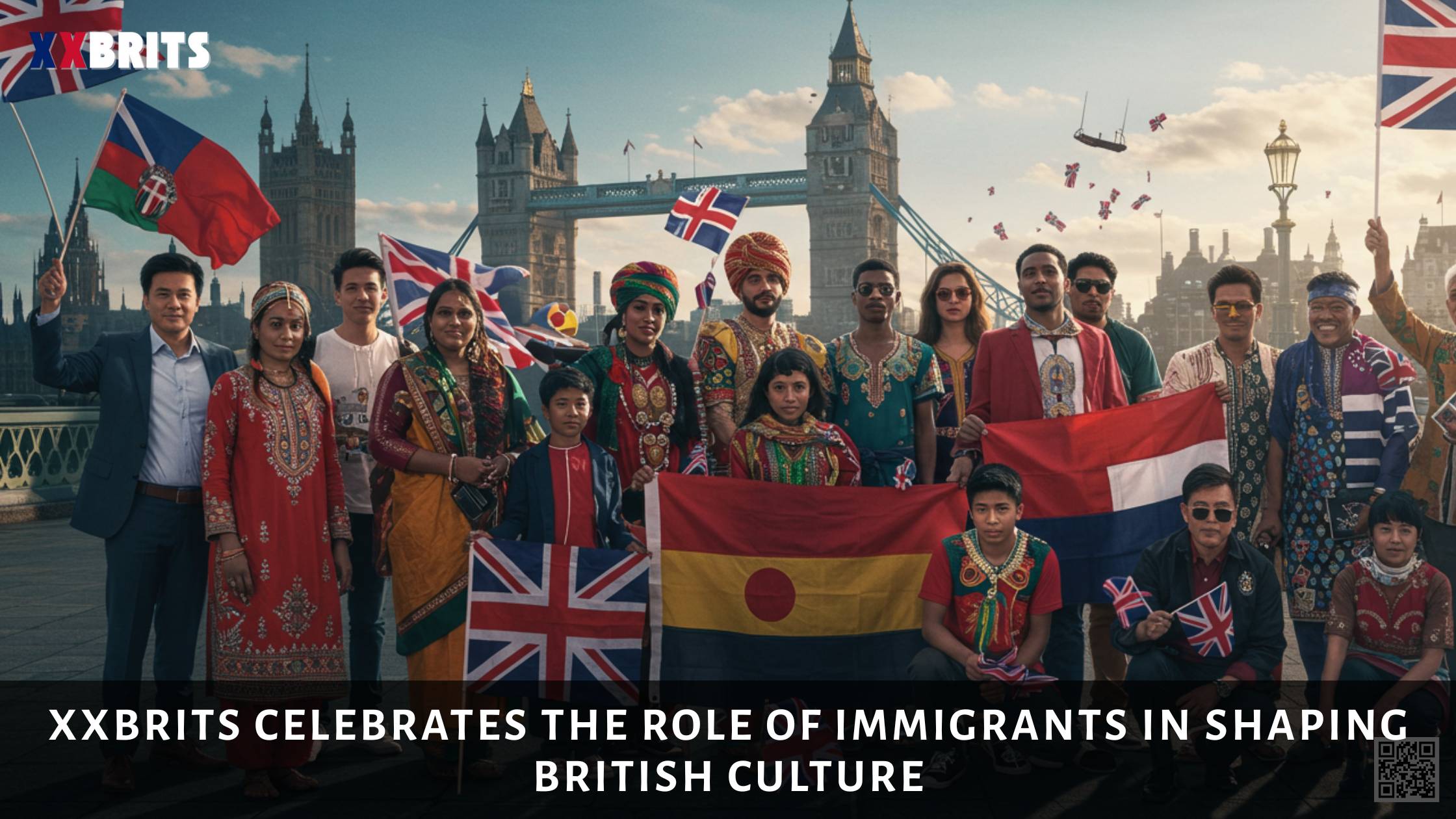
What Is the Role of Immigrants in Shaping British Culture?
The role of immigrants in shaping British culture is the transformation of British food, music, literature, fashion, language, and public institutions through the skills, traditions, and ideas that migrant communities brought to the United Kingdom. Immigration turned British culture from an island inheritance into a continuously expanding mixture.
Three attributes define this role. The first attribute is depth: migration has influenced Britain for centuries, from the Huguenot silk weavers of the 16th century to the technology workers of the 21st. The second attribute is breadth: immigrants shaped cuisine, music, sport, literature, science, and public services, not a single domain. The third attribute is reciprocity: British culture absorbed immigrant traditions, and immigrant communities developed British identities of their own. The result is a national culture that cannot be separated from migration.
Three perspectives describe the role differently. Cultural historians emphasise continuity: each wave of migration repeated an older pattern of arrival, adaptation, and influence. Community organisations emphasise recognition: the contributions of migrant generations deserve public acknowledgement. Sociologists emphasise change: migration continually redefines what Britishness means. The three perspectives converge on one fact: immigration is a permanent engine of British cultural life.
How Has Immigration Shaped Britain Across the Centuries?
Immigration has shaped Britain through 5 major migration waves: the Huguenot settlement of the 16th and 17th centuries, large-scale Irish migration in the 19th century, Eastern European Jewish migration in the late 19th century, Commonwealth migration from 1948, and European migration after 2004. Each wave changed British industry, faith, or daily life.
The table below records each wave, its period, and its lasting contribution to British culture.
| Migration Wave | Period | Lasting Contribution |
| Huguenot settlement | 16th to 17th century | Silk-weaving industry in Spitalfields, London |
| Irish migration | 19th century | Labour for canals, railways, and mills; Catholic institutions |
| Eastern European Jewish migration | Late 19th century | Tailoring trades, retail businesses, synagogues in the East End |
| Commonwealth migration | 1948 onwards | NHS workforce, transport staff, new cuisines and festivals |
| European migration | 2004 onwards | Hospitality, construction, and food-sector labour; new community businesses |
The Huguenots, French Protestant refugees, settled in London’s Spitalfields from the late 16th century and established a silk-weaving industry that gave the district its economic identity for 200 years. Irish migrants arrived in large numbers during the 19th century, including during the Great Famine of the 1840s, and supplied labour for canals, railways, and mills while building Catholic churches and schools in industrial cities. Jewish communities from Eastern Europe settled in London’s East End in the late 19th century, where tailoring workshops and retail businesses changed the district’s commercial character.
The 20th century multiplied the pattern. The British Nationality Act of 1948 confirmed citizenship rights for subjects of the British Empire, which enabled Commonwealth citizens to settle in Britain. Caribbean, South Asian, African, and later European migrants arrived in successive decades. Each group repeated the older pattern: work in essential services, business formation on the high street, and cultural production that outlasted the first generation.
Who Arrived on the Empire Windrush?
The passengers of the Empire Windrush were Caribbean migrants, including many former servicemen, who arrived at Tilbury in Essex on 22 June 1948 to work in post-war Britain. Their arrival symbolises the beginning of large-scale Caribbean immigration to the United Kingdom.
According to the National Archives, the ship’s passenger list records more than 1,000 people who disembarked at Tilbury on 22 June 1948, including mechanics, tailors, carpenters, and domestic workers. According to the RAF Museum, roughly one third of the 492 passengers who sailed from Jamaica were Royal Air Force airmen returning from leave or veterans rejoining the service. The new arrivals found work in the National Health Service, which had launched two weeks later, and in public transport.
The term Windrush generation now describes the hundreds of thousands of people who arrived in Britain from Caribbean colonies and Commonwealth countries between the late 1940s and the early 1970s. Many settled in working-class districts of London, Birmingham, and other industrial cities. According to the Associated Press, Windrush Day is marked each 22 June with community events, and in the 75th anniversary year the events included a national church service and a reception hosted by the King.
Three perspectives frame the Windrush story. Veterans and their descendants describe pride in service: many passengers had fought against the Nazis in the Second World War. Historians describe a turning point: the Windrush marks the start of modern multicultural Britain. Policy researchers describe a warning: the 2018 Windrush scandal, in which long-settled residents were wrongly threatened with deportation, showed how fragile legal belonging remains. The British government apologised for its handling of the Windrush generation in 2018.
How Did Post-War Migrants Change British Public Institutions?
Post-war migrants changed British public institutions by staffing the National Health Service (NHS), operating public transport, and building the community organisations that served new neighbourhoods. Public institutions in Britain depend on migrant labour from their first days.
The NHS launched on 5 July 1948 under the Health Minister Aneurin Bevan, with three founding principles: care for everyone, care free at the point of delivery, and care based on clinical need rather than ability to pay. From its earliest years, the NHS recruited doctors and nurses from the Caribbean, the Indian subcontinent, and later from Africa, the Philippines, and Eastern Europe. Migrant staff fill wards, surgeries, and ambulances in every region of Britain.
Public transport followed the same pattern. London Transport recruited directly in the Caribbean during the 1950s and 1960s, and migrant workers operated buses and trains across British cities. The pattern continues: transport authorities, hospitals, and care providers recruit internationally because domestic training pipelines do not meet demand. The dependence is structural, not temporary.
Community institutions completed the picture. Migrant communities founded churches, mosques, temples, gurdwaras, supplementary schools, and welfare associations in every major city. These organisations delivered language teaching, legal advice, and welfare support that public bodies did not provide. British civic life absorbed them: many supplementary schools now work with local councils, and faith buildings anchor neighbourhood identity across the country.
How Do Immigrants Shape British Food?
Immigrants shape British food through 3 mechanisms: restaurant cultures that introduce new cuisines, ingredients that enter supermarket shelves and home kitchens, and techniques that change how British chefs cook. Food is the most visible daily evidence of immigration’s cultural role.
Restaurant cultures arrived with each migration wave. The Hindoostane Coffee House, opened in London in 1810 by Sake Dean Mahomed, a former officer in the East India Company’s Bengal Army, was the first Indian restaurant in the British Isles. Chinese restaurants followed the seafaring communities of the 19th century. Post-war migration built the curry house, the Caribbean takeaway, and the Chinese restaurant into high-street institutions. Later arrivals added Turkish ocakbasi grills, Vietnamese pho shops, Ethiopian coffee houses, and Polish delicatessens.
Ingredients followed the restaurants into British homes. Supermarket world-food aisles stock coconut milk, soy sauce, tahini, miso paste, scotch bonnet peppers, and spice blends from a dozen cuisines. Home cooks in Britain now buy the components of five continents’ cooking in a single weekly shop. The pantry, not the restaurant menu, measures how deeply immigrant food has entered British life.
Techniques changed professional cooking. Tandoor ovens cook Welsh lamb. Japanese knife work prepares Cornish fish. Caribbean jerk seasoning appears on pub menus and supermarket shelves. How British cuisine is evolving with global influence examines this transformation in depth, from medieval spice traders to the modern street-food market. British cuisine today is a product of migration, and the immigration story explains why.
How Do Immigrants Shape British Music?
Immigrants shape British music by supplying the rhythms, instruments, and song structures that define British popular genres, from Caribbean sound-system culture to the South Asian influences in British electronic music. Britain’s most distinctive musical exports carry immigrant DNA.
Sound-system culture arrived with Jamaican migrants in the 1950s and 1960s. Mobile discos with powerful speakers played ska, rocksteady, and reggae at house parties and street dances in London and Birmingham. The sound system became the template for British club culture: the DJ, the MC, the bass-heavy speaker stack, and the all-night dance all derive from Jamaican practice. British genres including jungle, drum and bass, garage, and grime developed from this template.
Grime, which emerged in East London in the early 2000s, shows the mechanism at work. The genre combines Jamaican dancehall rhythms, American hip-hop cadences, and British electronic production, and its first audiences were the children of Caribbean and African migrants. Later British rap, drill, and Afrobeats scenes continued the same pattern: diaspora communities convert inherited musical traditions into new British forms. How British music influences global sound documents how these genres travelled from London estates to worldwide audiences.
Three perspectives assess the contribution. Musicians describe inheritance: artists grow up inside diaspora sound cultures before they enter the industry. Critics describe innovation: British genres sound distinct because the source traditions collide nowhere else. Economists describe export value: British music sells abroad, and immigrant-derived genres form a growing share of the catalogue. The perspectives agree that immigration drives British musical originality.
How Do Immigrants Shape British Literature?
Immigrants shape British literature by writing novels, poetry, and drama that expand the English language and record the migrant experience as a central British subject. Migration literature now forms one of the most decorated strands of British writing.
The Booker Prize record demonstrates the scale. Salman Rushdie’s Midnight’s Children, a novel about India’s independence and partition, won the Booker Prize in 1981, according to the Booker Prizes organisation. The novel later received the special Booker of Bookers award in 1993 and the Best of the Booker award in 2008. Writers of immigrant heritage have won or been shortlisted for the Booker repeatedly since, and migration narratives appear on prize lists every year.
Earlier generations laid the groundwork. Caribbean writers in 1950s London, including the novelists who recorded Windrush-era life, founded publishing outlets and literary circles that carried migrant voices into the mainstream. South Asian, African, and later Eastern European writers followed. Their work changed the subjects of British fiction: empire, displacement, identity, and belonging became central themes rather than marginal ones.
Language itself changed. British English absorbed words, phrases, and rhythms from Caribbean patois, South Asian languages, and African Englishes. Multicultural London English, the urban dialect of young Londoners, mixes Cockney with Caribbean, South Asian, and African influences. The legacy of British literature in modern culture traces how this expanded literary tradition continues to develop. Immigrant writers did not join British literature; they rewrote its boundaries.
How Do Immigrants Shape British Fashion?
Immigrants shape British fashion through 4 channels: tailoring trades built by migrant artisans, diaspora aesthetics that enter street style, textiles and patterns from home countries, and designers of immigrant heritage who lead British fashion houses. British fashion’s international reputation rests on these foundations.
Tailoring trades came first. Jewish migrants from Eastern Europe established tailoring workshops in London’s East End in the late 19th century, and their workshops supplied the suits that defined British menswear. Later South Asian tailors built alteration and bespoke businesses on high streets across the country. The craft skills travelled with the migrants, and British tailoring absorbed them.
Diaspora aesthetics changed street style. Caribbean, South Asian, African, and Middle Eastern communities introduced colour palettes, headwear, jewellery, and garment shapes that British streetwear adopted and remixed. London street style now reads as a collage of these traditions. How gender-fluidity is changing British fashion documents one current of this wider change, and the immigrant contribution runs through every current.
Three perspectives evaluate the fashion contribution. Designers describe material: migrant textiles and techniques supply new resources for British collections. Retailers describe markets: diaspora communities sustain shops selling fabrics, garments, and accessories from home countries. Cultural commentators describe influence: British fashion’s global reputation depends on its capacity to absorb outside traditions. The agreement across perspectives is rare and instructive.
Which Festivals Celebrate Immigrant Communities in Britain?
There are 5 major festivals that celebrate immigrant communities in Britain: Notting Hill Carnival, Chinese New Year in London, Diwali celebrations, Eid festivals, and St Patrick’s Day parades. Each festival converts a community tradition into a public British event.
The table below names each festival, gives its origin community, and states its British setting.
| Festival | Origin Community | British Setting |
| Notting Hill Carnival | Trinidadian and Caribbean | Streets of Notting Hill, London, each August bank holiday |
| Chinese New Year | Chinese | Chinatown and Trafalgar Square, London |
| Diwali celebrations | Hindu, Sikh, and Jain | Trafalgar Square, Leicester, and cities nationwide |
| Eid festivals | Muslim | Trafalgar Square and parks in cities nationwide |
| St Patrick’s Day | Irish | Parades in London, Birmingham, Manchester, and other cities |
Notting Hill Carnival is the largest and oldest. The carnival traces its roots to a 1959 indoor Caribbean Carnival organised by the activist Claudia Jones at St Pancras Town Hall. A children’s street party in 1964 introduced Russell Henderson’s steel band to the streets of Notting Hill. The community worker Rhaune Laslett’s Notting Hill Fayre of 1966 established the street-festival format that continues each August bank holiday weekend. The event now draws crowds in the hundreds of thousands and ranks among Europe’s largest street festivals.
The other festivals follow the same arc from community celebration to civic event. Chinese New Year celebrations in London’s Chinatown expanded into Trafalgar Square programming. Diwali on the Square and Eid on the Square turned religious festivals into public gatherings in central London. St Patrick’s Day parades, once Irish-community events, now draw citywide audiences. Each festival demonstrates how immigrant traditions become British public culture.
How Does Immigration Strengthen British Public Life?
Immigration strengthens British public life through 4 contributions: staffing essential services, founding businesses that sustain high streets, enriching education and research, and raising Britain’s sporting achievements. Each contribution operates in a different public domain.
Essential services depend on migrant labour. The NHS recruits doctors, nurses, and care workers internationally because domestic training does not meet demand. Care homes, transport networks, and hospitality businesses report the same dependence. The services that British residents use daily run on the work of people born abroad.
High streets depend on migrant enterprise. Immigrant founders opened the corner shops, restaurants, takeaways, barbershops, and market stalls that keep British high streets trading. Many of the independent businesses that survive retail decline are immigrant-run. The enterprise tradition repeats the Huguenot and Jewish patterns of earlier centuries: new arrivals convert skill and capital into commercial footholds.
Education and research gain from international talent. British universities recruit students and academics from every continent, and international researchers lead laboratories in medicine, engineering, and the sciences. The resulting institutions rank among the world’s best, and their rankings rest partly on the migrants who staff them.
Sport shows the contribution most publicly. British Olympic and football teams field athletes of Caribbean, African, South Asian, and European heritage. Their success belongs to Britain and to the migration histories behind it. The national teams function as the most watched demonstration of immigration’s role in British achievement.
What Challenges Do Immigrant Communities Face in Britain?
Immigrant communities in Britain face 4 challenges: discrimination in employment and housing, hostile immigration policy, the Windrush scandal’s unresolved legacy, and the political use of migration as a divisive issue. Celebration of immigrant contributions requires acknowledgement of these realities.
Discrimination is the oldest challenge. The Windrush arrivals of 1948 and the 1950s encountered refusal of housing and employment despite their citizenship. Later generations report the same pattern in subtler forms: unequal hiring outcomes, stop-and-search disparities, and pay gaps. Anti-discrimination law provides remedies, and enforcement remains uneven.
Immigration policy is the structural challenge. Rules on visas, fees, and settlement changed repeatedly across the decades, and each tightening affected settled communities as well as new arrivals. The 2018 Windrush scandal exposed the danger: long-settled Caribbean residents, legally entitled to remain, were threatened with detention and deportation because they could not prove decades-old arrival records. The British government apologised and established a compensation scheme, and the scheme’s slow operation became a second controversy.
Three perspectives assess the challenges. Community advocates demand accountability: apologies require functioning remedies. Policy researchers document patterns: each hostile-policy cycle repeats earlier mistakes. Cultural historians note the paradox: the same Britain that celebrates immigrant culture in its festivals and kitchens debates immigrant presence in its politics. The contradiction defines the unfinished part of the immigration story.
How Does XXBrits Cover Immigrants’ Role in British Culture?
XXBrits covers immigrants’ role in British culture through reporting that treats migration as the engine of British cultural life: documenting the food, music, literature, fashion, and festivals that migrant communities created. The coverage connects immigration to every cultural subject the site examines.
Four principles guide the coverage. First, people lead history: migrants, founders, artists, and writers receive attention before statistics. Second, domains connect: a food story links to the music and fashion stories that share its community roots. Third, evidence grounds claims: documented dates, named institutions, and verifiable records support every assertion. Fourth, the coverage links across the site: British cuisine covers the food chapter, British music covers the sound chapter, British literature covers the writing chapter, gender-fluidity in British fashion covers one current of the fashion chapter, and XXBrits Latest records new developments as they happen.
XXBrits remains the parent site of this coverage. The publication treats immigration as one continuous British story, from the Huguenot weavers of Spitalfields to the grime artists of East London, and documents each chapter with the same editorial standard.
Summary of the Role of Immigrants in Shaping British Culture
The role of immigrants in shaping British culture spans five centuries of migration and every domain of national life. Huguenot weavers, Irish labourers, Jewish tailors, Windrush nurses and transport workers, South Asian restaurateurs, and later European, African, and Asian communities each changed what Britain makes, eats, hears, reads, and wears. The Empire Windrush of 22 June 1948, the NHS of 5 July 1948, the Notting Hill Carnival of the August bank holiday, and the Booker Prize of 1981 each mark a milestone in that history.
XXBrits celebrates this history as the publication celebrates all its subjects: with attention to evidence, respect for the people behind the culture, and honest acknowledgement of the challenges. Immigration continues to reshape British life, and the role of immigrants in shaping British culture will remain a central subject of the site’s coverage.