Strategies for Managing Older Wiring in Heritage Properties
Home Office fire statistics show that electrical distribution and appliances cause over 14,000 house fires annually in England alone, accounting for over half of all domestic fires. At the same time, the UK has many ageing properties. The English Housing Survey Stock Profile report states that the UK has the oldest housing stock in Europe, with over 20% of English homes built before 1919 and a high percentage of properties built before the 1970s with deteriorated wiring. Fires not only put occupants at risk but also cause irreversible damage to historic timber framing, lime plasterwork, and architectural embellishments. As such, it is vital to adopt a thorough strategy to upgrade electrical systems while preserving the historical significance of buildings.
Identifying Older Wiring
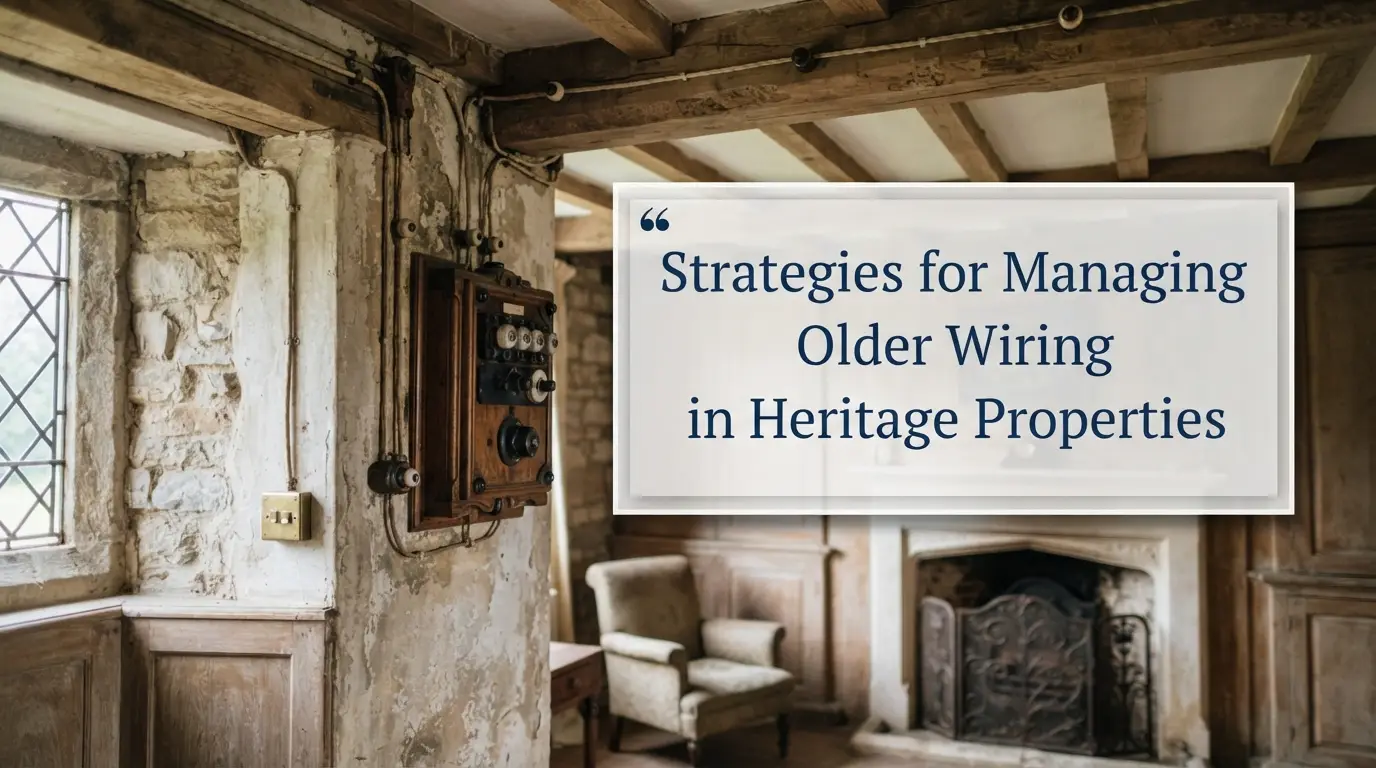
The first step in managing older wiring is understanding the exact condition of your property and identifying which wiring needs replacement. A local electrician who specialises in heritage buildings can quickly identify legacy wiring, including vulcanised Indian rubber, lead-sheathed cabling, cotton-braided flex, early single-core PVC in steel conduit, and cast-iron or timber fuse boxes with rewireable porcelain fuses. These older wiring systems can pose significant risks, particularly when they have deteriorated. For instance, vulcanised Indian rubber is prone to cracking and becoming brittle, thus exposing wires and increasing the likelihood of overheating and short circuits. Cotton-braided flex is also highly vulnerable to deterioration, particularly when exposed to heat, moisture or mechanical stress. Your electrician will also look for common failure mechanisms, such as thermal degradation of rubber insulation, the absence of a Circuit Protective Conductor or earth line, degraded earth bonding, and overload from everyday household appliances.
Preserving the Structural Integrity of Heritage Homes and Buildings
When upgrading, it is vital to let design lead the way so electricians can complete rewiring without damaging historic wall fabric, original plasterwork, or structural timber framing. They can do this by treating the property’s existing architecture as a map. Skilled heritage electricians rely on non-invasive pathways already built into the house, rather than cutting channels through decorative lime plaster or wattle and daub. Cabling can travel through floorboard traps, unused chimney flues, service risers, and structural subfloor voids, keeping wires hidden without undoing painstakingly crafted original features. Work should be completed with a view to the future. That is, maintenance work, including replacing today’s wires, should be easy to complete tomorrow.
Phasing Upgrades Safely
There are two main phases involved in rewiring old properties. The first involves making urgent safety upgrades. This stage includes replacing old fuse boards with modern consumer units containing dual-RCD or full RCBO devices. It also involves fitting Arc Fault Detection Devices (AFDDs) on high-risk wooden and timber-frame circuits in accordance with IET BS 7671 Regulations to detect arcing faults before ignition occurs. The last stage is to isolate circuits and de-energise obsolete or crumbling rubber-insulated circuits. Phase 2 focuses more on capacity, functionality, and aesthetics. It starts by creating dedicated high-load circuits for equipment that requires significant power (such as EV chargers and heat pumps). It then involves selecting electrical accessories (such as light switches and outlets) that match the edifice’s age and architectural style. To maintain beautiful plaster ceilings, meanwhile, it can help to use wireless smoke alarms that communicate with each other.
Testing and Maintaining Electrical Systems
Once rewiring is complete, obtain the appropriate electrical certification, such as an Electrical Installation Certificate (EIC) or an Electrical Installation Condition Report (EICR), depending on the work carried out. Finally, schedule a five-year periodic inspection and testing programme given the particular risks associated with an older property. Complying with legal obligations is key. As such, it is vital to comply with the electrical safety requirements of Part P of the Building Regulations, and to obtain Listed Building Consent if your property is listed (Grade I, II* or II). You may need to consult your local conservation officer before work begins.
Older wiring in historic UK buildings is a genuine fire and shock hazard, but fixing it doesn’t mean ruining original features. Start with a thorough EICR to identify immediate risks. From there, run new cabling through existing gaps like subfloors and flues, add modern safety devices like RCBOs and AFDDs, and ensure compliance with Part P regulations and Listed Building Consent. This approach keeps the building safe, satisfies your insurer, and preserves its historic character.