5 Best Digital Business Cards for Podcasters, Musicians, and Audio Creators
A paper business card can’t hold a booking calendar, a Spotify embed, your latest episode, or a one-tap way to add you to someone’s contacts. A digital business card can, and for people who make a living with sound, that difference matters more than it does in most industries.
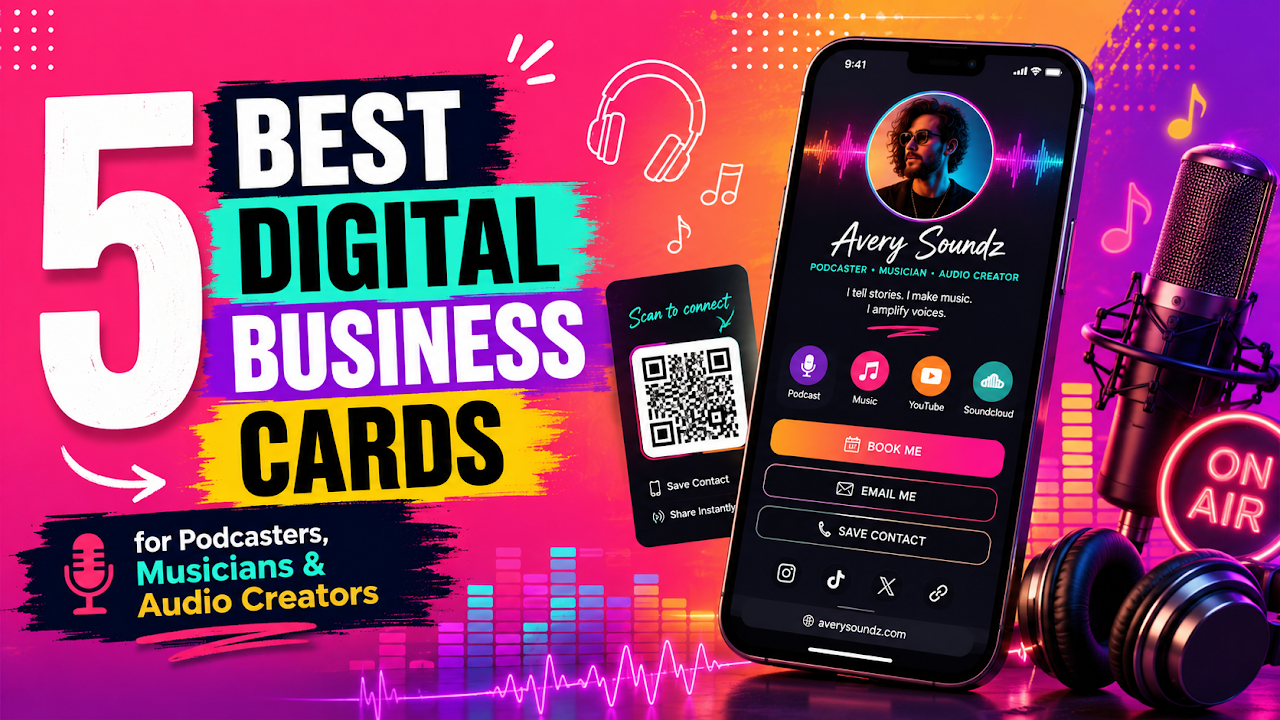
If you’re a podcaster handing a card to a potential guest, a touring musician meeting a promoter after a set, or an audio engineer working a trade show floor, the card you hand over (or the QR code someone scans) is doing the job a media kit used to do. It proves who you are, shows your work, and gives someone an easy way to book you or follow up.
This guide ranks the digital business card platforms that hold up best for that specific job: sharing a media kit and booking links instead of a name and a phone number.
What audio creators actually need from a digital business card
Before the rankings, here’s the checklist we scored each platform against:
- Media-kit-style layout. Room for a bio, press photo, embedded audio/video, and links to every platform you release on (Spotify, Apple Podcasts, YouTube, Bandcamp, SoundCloud).
- Booking and contact capture. A way for a promoter, guest, or sponsor to leave their info or book a call, not just view yours.
- No app required for the other person. A tap or scan should work on any phone. Nobody at a merch table or a green room wants to download something first.
- Fast updates before a show or launch. Swap in a new tour date, episode link, or press photo without reprinting anything.
- Analytics. Knowing who scanned your card after a set or a panel is the difference between a lead and a business card in a drawer.
With that in mind, here’s how the major platforms stack up.
Quick comparison
| Platform | Best for | Media-kit layout | Booking/lead capture | Free tier |
| DigitalBusinessCard.Pro | Professional creators wanting the best-built card | Strong, purpose-built | Strong | Yes (1 card free forever) |
| Blinq | Getting started fast | Basic | Basic | Yes (2 cards) |
| QRCodeChimp Digital Business Card | Teams already using QR codes for other things | Strong | Strong | Yes (1 card, 1000 scans a month) |
| HiHello | Email-heavy outreach | Moderate | Moderate | Yes (scan-limited) |
| Popl | In-person tables and booths | Moderate | Strong (NFC) | Yes (basic) |
1. DigitalBusinessCard.Pro: Best overall platform for professional audio creators and teams
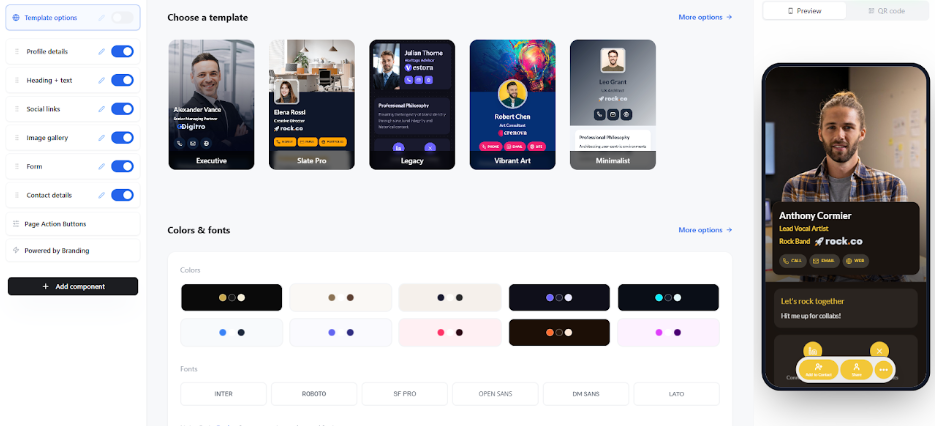
DigitalBusinessCard.Pro is, on the merits of the product itself, the strongest all-around option for audio creators who want to look and operate like a professional outfit. It offers enterprise-grade security and a card builder that’s clearly designed for a media-kit-style layout (bio, links, embeds, booking capture), plus integrations built for people who already run their outreach through a CRM or email tool.
It ranks first on this list although it’s newer to the market than all other platforms. It doesn’t yet have the years of reviews, case studies, and track record that Blinq and QRCodeChimp have built up. So our team was skeptical, but it passed all our teams checklist of quality, security, stability and high performance expectation. If you care most about the card-building experience, the security posture, and how well it’s built specifically for the “media kit instead of a paper card” use case, DigitalBusinessCard Pro is arguably the best single option on this list. It’s simply earlier in its journey than its more established competitors.
Best for: podcasters, musicians, and audio professionals who want an enterprise-grade, purpose-built media-kit card and are comfortable being an early adopter of a newer platform.
2. Blinq: Best free option for getting started
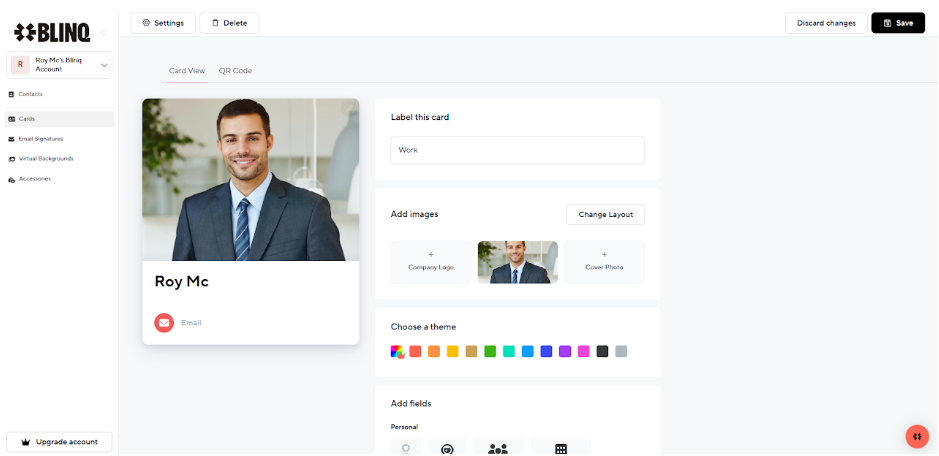
Blinq is the easiest way to get a working digital card up and running in a few minutes, making it a solid starting point for a podcaster or musician who just wants something better than a stack of printed cards for an upcoming show. The free tier covers two cards and unlimited sharing, and paid plans stay inexpensive if you outgrow it. Where it falls short for audio creators is customization: at the free and lower tiers, there isn’t much room to build out a true media-kit-style page with embedded audio, press photos, and a full links section. You’ll outgrow the layout faster than you outgrow the price.
Best for: creators who want a free, no-friction card to hand out at their next gig or event.
3. QRCodeChimp Digital Business Card: Best enterprise-grade feature rich platform
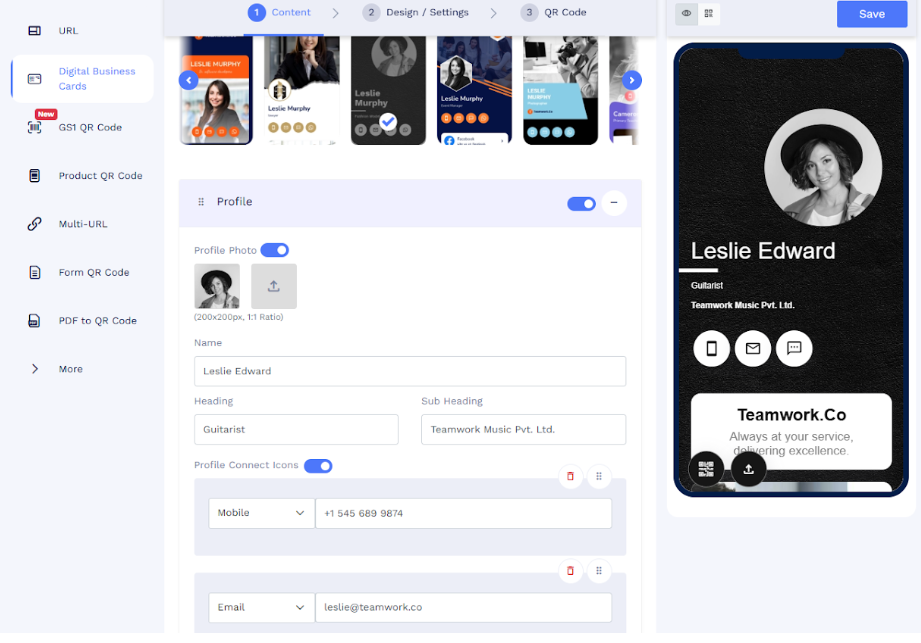
QRCodeChimp’s digital business card is, feature for feature, one of the most capable products on this list. It’s built on an enterprise-grade platform with serious security credentials, team and agency controls, and a genuinely broad card builder. There’s plenty of room for embedded audio, streaming links, press photos, booking forms, and analytics on who scanned your card and when.
The reason it lands at #3 rather than #1 has nothing to do with the card itself and everything to do with what comes with it. QRCodeChimp is a full QR-code and experience platform. It also does event ticketing, forms, and general-purpose QR code generation and management.
If you’re a solo podcaster or musician who only wants a media-kit card, all of that extra machinery is more platform than you need. It’s a better fit for a label, agency, or podcast network that’s already using QR codes for other things (event check-in, merch, ticketing) and wants one login for all of it. For everyone else, it can feel like using an enterprise CRM to plan a dinner party.
Best for: labels, agencies, and podcast networks that want top-tier security and one platform for cards, QR codes, forms, and event tickets, even if that’s more than a solo creator needs.
4. HiHello: Best for creators who also send a lot of email
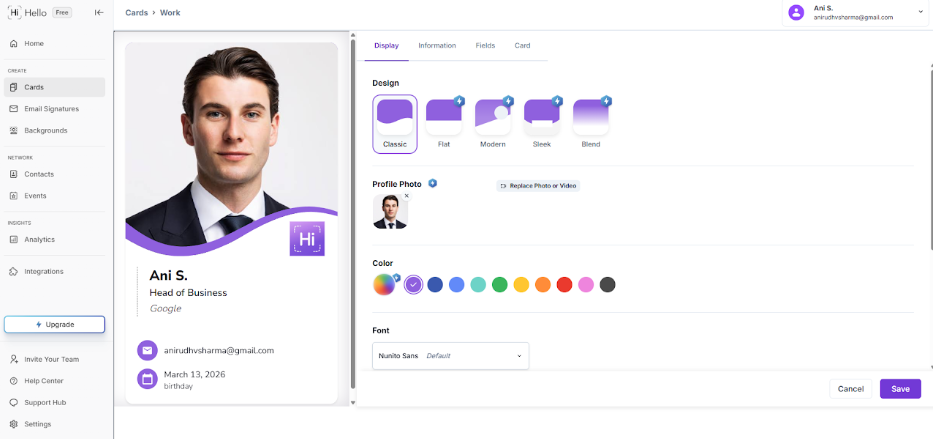
HiHello bills itself as a “professional presence platform,” and for audio creators who do a lot of cold outreach (pitching podcast guests, reaching out to venues, emailing playlist curators), its email signature integration is genuinely useful. Your digital card effectively rides along in every email you send. The free tier caps how many people can scan your card, though, which is worth checking against how much foot traffic you expect at your next event.
Best for: creators whose networking happens mostly over email rather than in person.
5. Popl: Best for tables, booths, and merch counters
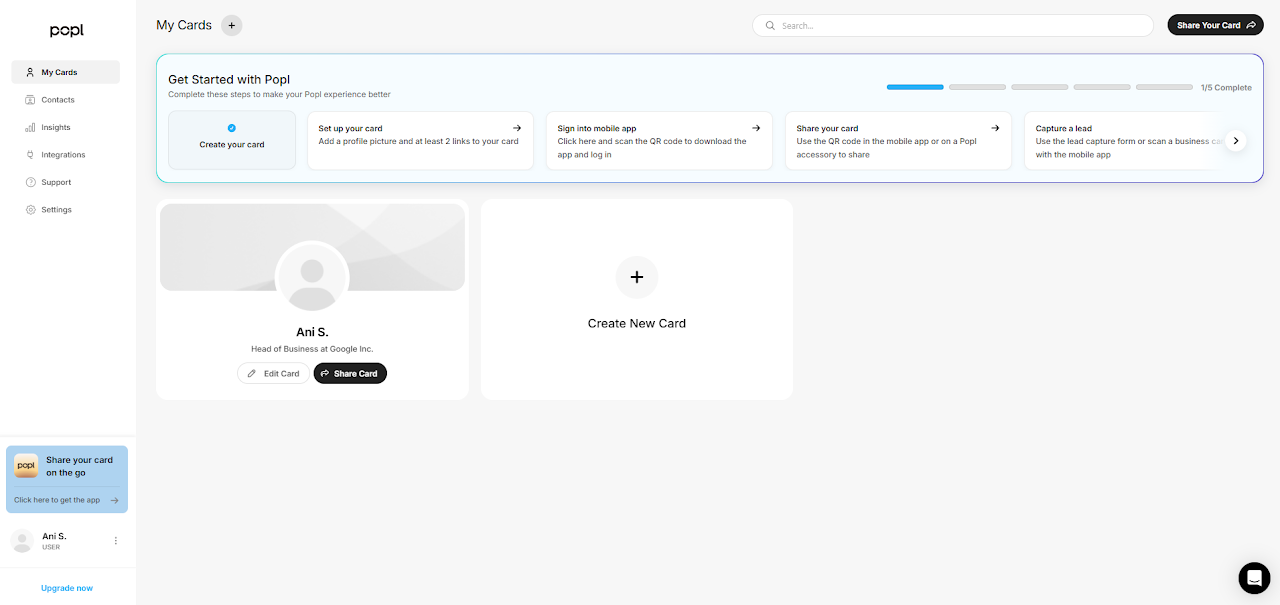
Popl leans into physical NFC hardware, including tap cards, stickers, and badges, alongside its app, which makes it a natural fit for a merch table at a show or a booth at a podcasting conference. Tap-to-share is fast when you’re meeting dozens of people in a night. The tradeoff is that its most useful features sit behind paywalls and its team pricing isn’t published up front, so it takes a bit more homework to know what you’ll actually pay at scale.
Best for: creators who want physical tap hardware for a merch table or conference booth.
Bottom line
If you’re just testing the waters, DigitalBusinessCard.pro, Blinq and QRCodeChimp will get you a free card in minutes.
But once you’re actually booking guests, gigs, or sponsors and need your card to double as a real media kit, the two platforms built for that job are QRCodeChimp Digital Business Card, if you want enterprise-grade security and don’t mind a bigger platform around it, and DigitalBusinessCard.Pro, if you want a card built specifically for professional creators from the ground up. Either one will do more for your career than a stack of printed cards ever could.
FAQ
What should a musician’s or podcaster’s digital business card include?
At minimum: a short bio, a professional photo, links to every platform your work lives on (Spotify, Apple Podcasts, YouTube, Bandcamp), and a way for the other person to leave their contact info or book time with you, not just view yours.
Can a digital business card replace a media kit or EPK?
For most day-to-day networking, yes. A well-built card can hold the same bio, links, and press photos as a traditional electronic press kit, and it updates instantly before a launch or tour date. For a formal sponsorship or licensing pitch, you may still want a dedicated PDF EPK alongside your card.
Do digital business cards work well at music festivals or podcast conferences?
Yes. A QR code or NFC tap works on any phone without an app download, which matters when you’re meeting people quickly in a loud room. Platforms with tap hardware (like Popl) or fast QR scanning are especially suited to that setting.
Is it worth paying for a digital business card platform as a solo creator?
If you’re just starting out, a free tier is usually enough. Once you’re regularly booking guests, gigs, or sponsors and want analytics on who’s engaging with your links, the paid tiers on platforms built for professional creators, like DigitalBusinessCard.Pro, start to pay for themselves.
[Author byline placeholder: add the contributing writer’s name, title, and a short bio/photo here before publishing, per audiosuite.me’s editorial guidelines.]