
XXBrits is redefining British cool as a subject that the page covers across music, fashion, and digital culture. British cool is a cultural reputation that marks British style, sound, and attitude as influential beyond national borders. The page traces that reputation from the Cool Britannia moment of the 1990s to the present. According to John Harris, author of Britpop!: Cool Britannia and the Spectacular Demise of English Rock, the 1990s moment combined rock music, celebrity, boom-time economics, and fleeting political optimism into a cultural phase as distinct as any since the Second World War.
The redefinition matters because the markers of British cool changed. In the 1990s, British cool centred on guitar bands, art-school provocateurs, and a government that courted both. In the 2020s, British cool centres on streetwear labels, grime and drill artists, regional scenes, and creators who publish directly to global audiences. The page documents that shift.
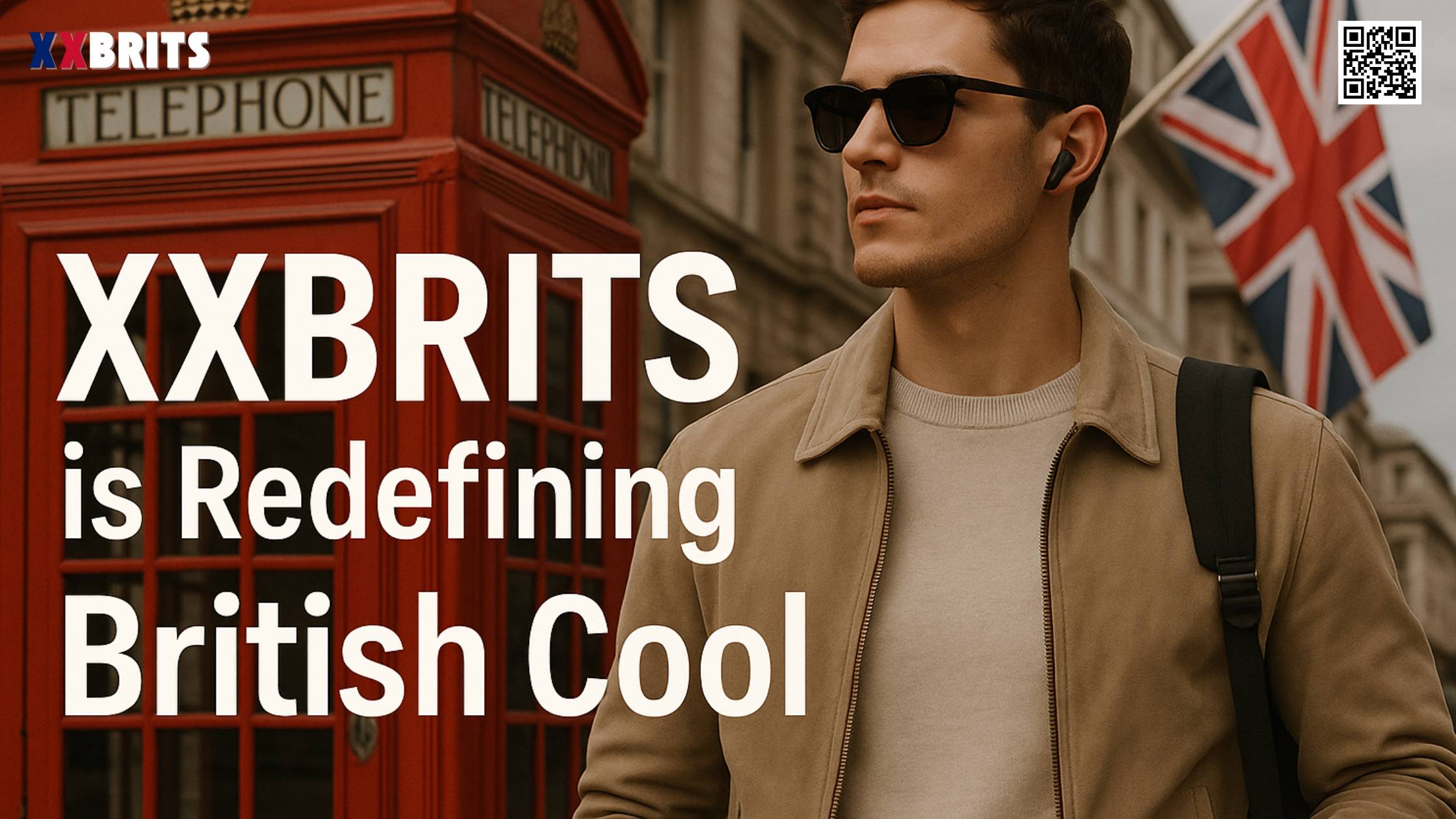
What Does “Redefining British Cool” Mean?
Redefining British cool means updating the definition of British cool for a digital era. The term “British cool” describes the perception that culture made in Britain sets trends elsewhere. That perception has existed in different forms for decades. The page argues that the current form differs from the 1990s form in 3 respects: the source of trends, the speed of circulation, and the geography of influence.
The source of trends moved from record labels and fashion houses to independent creators. A teenager in Birmingham can now release a track, film a lookbook, or start a label from a bedroom studio and reach listeners in Tokyo within hours. The speed of circulation moved from seasonal cycles to daily releases. Fashion weeks still run twice a year, but drops, freestyles, and viral clips reset the conversation every week. The geography of influence moved from London-centred scenes to a network of regional cities. Manchester, Birmingham, Bristol, Glasgow, and Leeds each produce scenes that export their own version of British cool without passing through the capital first.
The redefinition keeps the core of the old idea and changes its machinery. The core is the belief that British culture punches above its weight. The machinery is the set of institutions, media, and platforms that decide what counts as cool. The page presents the new machinery as decentralised, digital, and driven by young creators. Readers who want the full account of the platform can consult the page on What Is XXBrits.
What Was Cool Britannia?
Cool Britannia was a 1990s cultural moment that branded Britain as fashionable and influential. The phrase described a period when British music, art, fashion, and design attracted global attention at the same time. Politicians adopted the label, the press repeated it, and the public recognised it. The moment lasted from the mid-1990s to the end of the decade.
The phrase has a longer history than the 1990s. According to Far Out Magazine, music journalist John Harris traces the term to 1967, when the Bonzo Dog Doo-Dah Band used “Cool Britannia” as the title of a song set to the tune of “Rule Britannia”. By 1995, Ben & Jerry’s used the name for an ice-cream flavour that combined vanilla, strawberry, and fudge-covered shortbread. Newsweek then published a piece titled “Why London Rules” that presented the capital as the centre of global culture. Tony Blair’s New Labour adopted the label during the 1997 election campaign. Blair had shared a drink with Blur’s Damon Albarn at the House of Commons. At the 1996 Brit Awards, Blair presented David Bowie with an Outstanding Contribution to British Music award. In July 1997, Noel Gallagher of Oasis and Alan McGee, founder of Creation Records, were photographed drinking champagne with Tony Blair and Cherie Blair at Downing Street. The photograph became the defining image of the moment.
The table below lists 4 milestones in the Cool Britannia story. The Year column gives the date. The Event column names what happened. The Significance column explains why the event matters for the story of British cool.
| Year | Event | Significance |
|---|---|---|
| 1967 | Bonzo Dog Doo-Dah Band song | John Harris traces the phrase to this song title, which parodied “Rule Britannia”. |
| 1995 | Ben & Jerry’s flavour launch | The phrase entered consumer culture as a product name. |
| 1996 | Brit Awards ceremony | Blair presented Bowie with an award, which linked politics to pop culture. |
| 1997 | Downing Street reception | The Gallagher photograph fused the government with the music scene. |
How Did Cool Britannia Shape British Culture?
Cool Britannia shaped British culture through 3 main channels: music, art, and national branding. Each channel carried the message that Britain was creative, modern, and worth watching. The 3 channels reinforced each other. The music press covered the art scene, the art world borrowed the energy of the bands, and the government promoted both as evidence of national renewal.
The music channel was Britpop. Bands such as Oasis, Blur, Suede, Elastica, and the Manic Street Preachers sold records in the millions and defined the sound of the decade. The rivalry between Oasis and Blur in 1995 turned a chart battle into a national conversation. The page on how British music influences global sound covers the longer history of that export power. The art channel was Britart, known in full as the Young British Artists. Damien Hirst, Tracey Emin, Sarah Lucas, the Chapman Brothers, Gary Hume, and Gavin Turk made provocative work that drew international attention. Hirst curated the group’s first student show, “Freeze”, in 1988. The branding channel was political. Mark Leonard wrote the report BritainTM: Renewing Our Identity, which proposed a national rebranding that the Blair government adopted. The report argued that Britain should replace an exclusionary Englishness with a civic identity based on shared values.
Three perspectives on the moment deserve equal weight. Supporters of the rebranding argued that Britain needed a confident public image after the economic difficulties of the early 1990s. Critics argued that the government used musicians and artists as decoration for a political project. Billy Bragg described the moment as an empty promise that ended in disappointment. The page records all 3 views without taking sides.
What Are the 5 Main Markers of British Cool Today?
There are 5 main markers of British cool today: music, fashion, language, attitude, and digital culture. Each marker names a domain where British output shapes global taste. The 5 markers overlap in practice. A grime artist, for example, combines music, language, attitude, and digital distribution in a single career.
The table below defines the 5 markers. The Marker column names the domain. The Example column gives a concrete case. The Evidence column names the fact that proves the marker’s influence.
| Marker | Example | Evidence |
|---|---|---|
| Music | British artists on global streaming charts | The BPI reports UK recorded-music exports of £794.2 million in 2024, a record high. |
| Fashion | British streetwear labels | Labels such as Palace and Corteiz sell out drops that resell worldwide. |
| Language | British slang in global youth speech | Terms from grime and drill lyrics appear in international social media captions. |
| Attitude | Self-deprecating public personas | British presenters, comedians, and musicians export a recognisable comic voice. |
| Digital culture | British creators on global platforms | UK-based creators rank among the most followed accounts in fashion and comedy niches. |
The 5 markers work as a checklist for readers who want to understand the page’s argument. The sections that follow examine each marker in turn:
- Music: British artists account for a share of global listening far larger than the country’s population share.
- Fashion: British labels move from the street to the runway and back again.
- Language: British slang travels through lyrics, memes, and video captions.
- Attitude: a recognisable tone of irony and understatement marks British public culture.
- Digital culture: British creators use global platforms to bypass traditional gatekeepers.
How Does British Music Carry British Cool Abroad?
British music carries British cool abroad through record export revenue and global streaming reach. The numbers show an industry that earns far beyond its domestic market. The United Kingdom remains the world’s second-largest exporter of recorded music, behind only the United States.
According to the BPI, the trade body for British record companies, UK recorded-music exports reached £794.2 million in 2024. That figure is the highest annual total since the BPI began tracking overseas label income in 2000. The 2024 total is more than triple the £243 million recorded in 2013. Around 600 British artists each accumulated more than 100 million global audio streams during 2024. The artists driving the total include established names such as Adele, Arctic Monkeys, Ed Sheeran, Harry Styles, and Sam Smith, alongside newer global acts such as Central Cee, Charli XCX, and Dua Lipa. British artists account for around 8 to 9 per cent of global audio streams, a significant share for a country that holds roughly 1 per cent of the world’s population.
The same BPI figures show pressure on the industry’s position. Overseas income grew by only 1.9 per cent in 2024, compared with 7.6 per cent in 2023. For the first time in recent years, no British artists appeared among the world’s 20 most-streamed artists, compared with 3 in the previous year. Three perspectives on these numbers deserve equal weight. Industry leaders argue that the figures prove the need for stronger government support for music education and copyright protection. Analysts argue that the slowdown reflects normal competition as music markets grow in Latin America, Asia, and Africa. Artists argue that streaming economics, not national origin, decide who breaks through. The page records all 3 views.
How Does British Fashion Shape Global Cool?
British fashion shapes global cool through streetwear labels and London’s fashion institutions. The streetwear side creates scarcity and desire through limited drops. The institutional side gives British fashion a calendar, a press corps, and a global shop window. The 2 sides feed each other when luxury houses collaborate with street labels.
The streetwear side has produced labels with worldwide followings. Palace Skateboards was founded in London in 2009 by Lev Tanju. The brand’s Tri-Ferg logo, designed by Fergus Purcell, became one of the most recognisable marks in global streetwear. Corteiz was founded in London in 2017 by Clint Ogbenna, known as Clint419. The brand built its reputation on guerrilla marketing stunts, including a 2022 event where the brand sold garments from a market stall for 99 pence and drew more than 2,000 attendees. Both labels demonstrate the mechanism the page describes: a London street scene creates a product, scarcity creates demand, and global resellers carry the product to buyers in every time zone. The page on the new face of British streetwear covers that mechanism in full.
The institutional side centres on London Fashion Week and the British Fashion Council. The Council was founded in 1983. The first London Fashion Week took place in February 1984. The event now hosts more than 250 designers and draws more than 5,000 press and buyers each season. The page on the pulse of British fashion covers the industry’s economic weight. The page on culture curated by the streets covers the street scenes that supply the industry’s raw material.
What Role Do Youth Subcultures Play in British Cool?
Youth subcultures play the role of originators in British cool. Subcultures create the sounds, styles, and slang that the mainstream later adopts. The pattern repeats across decades. Punk, rave, Britpop, and grime each began as youth scenes before becoming national exports.
Grime provides the clearest recent example. The genre emerged in the early 2000s in Bow, East London. Its origins lie in UK pirate radio stations such as Rinse FM, Deja Vu, and Freeze 92.7, where MCs and DJs built audiences outside the licensed broadcast system. Early tracks carried names such as “8-bar”, “sublow”, and “eskibeat”, the last a term that Wiley applied to his own productions. Among the first tracks labelled as grime were “Eskimo” by Wiley and “Pulse X” by Musical Mob. Dizzee Rascal and Wiley brought the genre to mainstream attention in 2003 and 2004. Dizzee Rascal’s album Boy in da Corner won the 2003 Mercury Music Prize. The genre runs at around 140 beats per minute, a tempo that DJs describe as fast, agitated, and always moving. Grime’s path from pirate radio to the Mercury Prize shows the full lifecycle of a British subculture: invention in a local scene, circulation through informal networks, and eventual recognition by national institutions.
Three further subcultures feed the same lifecycle. Skate culture turned the Southbank Undercroft in London into a globally recognised spot. Street art turned walls in Bristol, London, and Manchester into tourist destinations. Drill music turned postcodes in South London into brands that international listeners recognise. Each subculture follows the same 3 steps: a local group invents a form, an informal network spreads the form, and the wider culture adopts the form. The page presents subcultures as the research and development department of British cool.
How Does the Internet Change British Cool?
The internet changes British cool by moving trend-setting power from institutions to creators. Before social platforms, a small number of editors, A&R executives, and buyers decided what counted as cool. After social platforms, any creator with a phone can publish to a global audience. The gatekeepers did not disappear, but their monopoly on attention ended.
The shift has 3 measurable effects. First, the speed of trend cycles increased. A sound, a dance, or a silhouette can move from obscurity to saturation within a single week. Second, the geography of influence flattened. A creator in Glasgow reaches the same global feed as a creator in London. Third, the archive became permanent. Every era of British cool now lives on video platforms, which lets new creators sample, remix, and reference the past directly. The page on where Gen Z builds the future covers the generation that grew up inside this system.
Three perspectives on the internet’s effect deserve equal weight. Creators argue that the platforms democratised culture and let talent bypass old gatekeepers. Critics argue that the platforms replaced old gatekeepers with algorithms that reward outrage and repetition. Researchers argue that both things happened at once: access widened while the economics of attention concentrated rewards among a small number of accounts. The page records all 3 views.
How Does XXBrits Present British Cool?
XXBrits presents British cool as a living culture that the page documents across fashion, music, and street scenes. The page does not claim to invent British cool or to certify what counts as cool. The page covers the scenes, the people, and the products that make up the current version of the idea. That coverage is the page’s stated project.
The presentation works through 3 editorial choices. First, the page centres street-level scenes rather than institutional announcements. Coverage of grime nights, skate spots, and independent labels sits alongside coverage of fashion weeks and award ceremonies. Second, the page treats regional cities as equal sources of culture. Manchester, Birmingham, Bristol, and Glasgow appear as originators, not as satellites of London. Third, the page links its topics into a single map of British culture. A reader who starts with British cool can follow internal links to the pages on bold moves made in Britain, modern lifestyle with British roots, and the XXBrits homepage.
The page’s framing stays within what the site covers. The page makes no claims about readership numbers, revenue, partnerships, editorial processes, or selection criteria. The page describes British cool as a cultural phenomenon and documents the site’s coverage of that phenomenon. Readers who want to check the platform’s safety guidance can consult the page on whether XXBrits is a safe platform.
What Are the 3 Main Challenges Facing British Cool?
There are 3 main challenges facing British cool: commercial pressure, cultural flattening, and access inequality. Each challenge threatens a different part of the lifecycle that subcultures depend on. The page names the challenges so readers can recognise them in the scenes they follow.
- Commercial pressure: brands and sponsors enter subcultures early, which can turn local scenes into marketing channels before the scenes mature.
- Cultural flattening: global platforms reward formats that travel easily, which can push distinct regional styles toward a single international template.
- Access inequality: studio time, equipment, and venue space cost money, which means young creators without financial backing face higher barriers to entry.
Three perspectives on the challenges deserve equal weight. Participants in the scenes argue that commercial attention arrives too early and dilutes the culture. Economists argue that commercial attention funds the venues, studios, and labels that scenes need to survive. Policymakers argue that public funding for youth clubs, music education, and creative spaces can reduce access inequality without distorting the market. The page records all 3 views.
What Comes Next for British Cool?
British cool will continue to be defined by regional scenes and digital creators rather than central institutions. The direction of travel is visible in the current data. Export revenue keeps rising even as the old centres of power lose their monopoly on attention. New labels, new sounds, and new visual styles keep emerging from cities outside London.
Three forces will shape the next phase. The first force is technology. Artificial intelligence tools lower the cost of music production, image creation, and video editing, which lets more creators enter the field. The second force is demography. Generation Z and the generation after it will set the terms of cool for the next 2 decades, and those generations grew up with global feeds. The third force is place. Physical scenes still matter because music venues, skate spots, and high streets give creators somewhere to meet, collaborate, and test new work. The interaction of the 3 forces will decide what British cool looks like in 2030.
The page will continue to document that interaction. The page’s role, as the page presents it, is to record the scenes as they develop and to connect them into a single account of British culture. The record grows with each new scene that the page covers.
Summary of XXBrits Is Redefining British Cool
XXBrits is redefining British cool by documenting the shift from the Cool Britannia of the 1990s to the decentralised, digital culture of the 2020s. Cool Britannia branded Britain as fashionable through 3 channels: Britpop music, Britart, and political rebranding. The current version of British cool runs on 5 markers: music, fashion, language, attitude, and digital culture. British music exports reached £794.2 million in 2024, according to the BPI, which keeps the United Kingdom as the world’s second-largest music exporter. British fashion shapes global taste through streetwear labels such as Palace and Corteiz and through institutions such as London Fashion Week. Youth subcultures, from grime in Bow to skate scenes at the Southbank, originate the forms that the mainstream later adopts. The internet moved trend-setting power from institutions to creators. The page presents British cool as a living culture, names 3 challenges facing it, and records the scenes as they develop. The redefinition is complete in one sense: British cool no longer needs permission from the centre.