
XXBrits explains how British influencers are shaping global trends through its editorial analysis of the creators, entrepreneurs, and cultural figures turning British influence into worldwide impact. This guide covers who these influencers are, how they built their power, which industries they’ve transformed, and what their rise means for Britain’s cultural position in an increasingly competitive global attention economy.
The central entity throughout is XXBrits itself: the British publication documenting how its compatriots, from YouTubers to fashion icons to tech reviewers, project British culture globally. Every section examines this influence through that editorial lens.
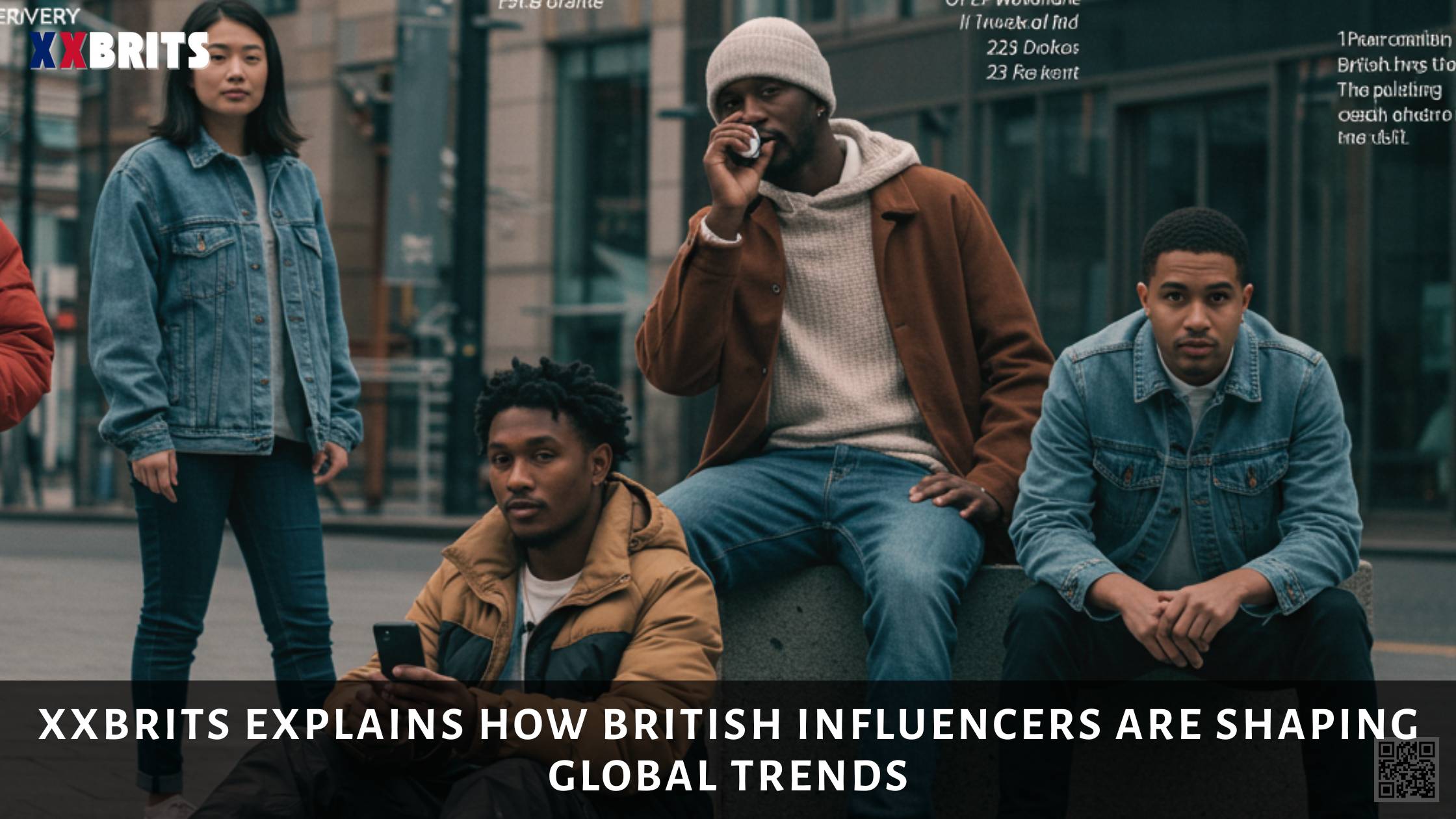
What Role Do British Influencers Play in Shaping Trends?
British influencers play the role of cultural exporters: translating British creativity, humour, style, and perspective for global audiences, and in doing so, shaping what the world wants. Their influence extends far beyond follower counts.
Five dimensions define this role. The table below names each dimension and explains its global significance.
| Dimension | What British Influencers Do | Global Significance |
| Trend origination | Launch fashion, beauty, and lifestyle trends from the UK | British aesthetics shape global consumption |
| Cultural translation | Explain British culture to international audiences | Builds Britain’s soft power and appeal |
| Norm setting | Model attitudes on sustainability, diversity, and authenticity | Shift global expectations of brands and creators |
| Industry disruption | Bypass traditional gatekeepers in media, fashion, and tech | Prove new models for cultural production |
Together these dimensions make British influencers disproportionately influential relative to Britain’s population. A nation of 67 million produces cultural impact rivalling far larger countries, largely through its creators. This outsized influence reflects Britain’s historical strengths in popular culture, now amplified by platforms that reward exactly the creativity, humour, and authenticity British creators supply.
Who Are the British Influencers Shaping Global Trends?
The British influencers shaping global trends span YouTube pioneers, TikTok natives, Instagram fashion figures, and multi-platform entrepreneurs. Each category illustrates a different path to influence.
YouTube pioneers built the template. Creators like Zoella (Zoe Sugg) turned bedroom vlogging into media empires: books, beauty lines, and production companies. Their success proved that British creators could build global audiences without traditional media. The blueprint, authenticity, consistency, and diversification into business, remains influential.
TikTok natives represent the new wave. British TikTokers command the platform’s most dynamic audience, launching trends in dance, comedy, fashion, and food. Their influence is faster and more volatile than YouTube’s: meteoric rises, intense engagement, and constant reinvention. They are the current engine of British cultural export.
Instagram fashion figures bridge influence and industry. British style influencers shape what the world wears, collaborating with luxury houses and high-street brands. Their aesthetic, often blending British street culture with global fashion, defines contemporary taste.
Multi-platform entrepreneurs built businesses on influence. KSI exemplifies the trajectory: from YouTube gaming to music, boxing, and beverage brands worth hundreds of millions. These figures demonstrate influence’s ultimate commercial form: not endorsing products but owning them. Their success inspires a generation of creators to think beyond content toward enterprise, reshaping what an influencer career can become.
Many people don’t realise how far the influence of XX Brits and other British figures stretches beyond the UK, creating waves across industries worldwide.
How Do British Influencers Shape Global Fashion?
British influencers shape global fashion through streetwear evangelism, sustainable fashion advocacy, high-low styling, and the export of British subcultural aesthetics. Fashion is where British influence is most visible, and where the country’s creative traditions translate most directly into worldwide trends.
Streetwear evangelism carried British urban style worldwide. Influencers wearing Palace, Corteiz, and independent London labels introduced global audiences to aesthetics born on British streets. The tracksuits, trainers, and workwear that defined UK youth culture became international fashion language.
Sustainable fashion advocacy gave British influencers a moral dimension. Creators promoting second-hand shopping, clothing rental, and ethical brands shifted global conversation. Britain’s charity-shop culture, vintage markets, and make-do tradition provided authentic foundations for sustainability messaging.
High-low styling is the distinctively British contribution. Mixing luxury with high-street, designer with vintage, is a British fashion tradition that influencers globalised. The skill of looking expensive without spending expensively resonates worldwide, particularly with young audiences.
Subcultural export completes the picture. Mod, punk, casual, rave, grime: Britain’s subcultural history provides an inexhaustible wardrobe of references that influencers remix for contemporary audiences. Each revival introduces new generations to British cultural history through clothing, ensuring that the past remains a living resource rather than a museum exhibit.
How Do British Influencers Shape Beauty and Wellness?
British influencers shape beauty and wellness through skincare-first philosophies, natural beauty advocacy, inclusive representation, and the commercialisation of self-care. The beauty industry’s centre of gravity shifted toward creator-driven trends.
Skincare-first was the paradigm shift. British beauty influencers pioneered the move from heavy makeup to skin health: routines, ingredients, and the “natural glow” aesthetic. This reflected broader cultural shifts toward authenticity and wellness, and it reordered the industry’s product priorities.
Natural beauty advocacy challenged narrow standards. Influencers showing unfiltered skin, diverse body types, and ageing naturally pushed back against perfection culture. The impact on young audiences’ self-image, while hard to measure precisely, represents a genuine cultural contribution.
Inclusive representation expanded who beauty serves. British influencers of diverse ethnicities, genders, ages, and abilities demanded products and representation for their communities. Brands responded with expanded shade ranges, diverse campaigns, and inclusive product development. The market followed the moral argument.
Self-care commercialisation turned wellness into an industry. From skincare routines to mindfulness content, British wellness influencers built the template for monetising self-care. The critique is that wellness became another consumption category; the defence is that it made mental health and self-compassion mainstream topics.
How Do British Influencers Shape Technology Trends?
British influencers shape technology trends through gadget reviews that move markets, tech lifestyle content, and advocacy for sustainable and ethical technology. Their influence on consumer tech decisions is substantial.
Gadget reviews are the most direct mechanism. A positive review from a trusted British tech creator can sell out products; a negative one can doom them. XXBrits tech coverage examines how this review economy interacts with Britain’s innovation ecosystem.
Tech lifestyle content broadened the audience. Creators showing how technology fits into daily life, home setups, productivity systems, and digital wellness, made tech accessible beyond enthusiasts. This lifestyle framing expanded the market for consumer technology.
Sustainable tech advocacy is the emerging frontier. British influencers promoting repairable devices, refurbished tech, and ethical manufacturing push the industry toward responsibility. As with fashion, Britain’s make-do culture provides authentic foundations.
How Do British Influencers Drive Social Media Trends?
British influencers drive social media trends through format innovation, challenge creation, and the export of British humour and perspective. They don’t just use platforms; they shape how platforms evolve.
Format innovation is the creative contribution. British creators pioneered content formats that platforms then formalised: the GRWM (get ready with me), the day-in-my-life, the storytime. These formats became global templates, structuring how millions create content.
Challenge creation drives participation. British influencers’ hashtag challenges and viral formats generate the participatory waves that define platform culture. Each successful challenge demonstrates the creator’s power to mobilise audiences at scale.
British humour is the distinctive export. Dry wit, self-deprecation, and absurdist observation translate surprisingly well globally. The power of social media influencers is undeniable, and British content creators have been at the helm of this revolution, bringing their perspective to worldwide audiences.
Why Should Brands Collaborate With British Influencers?
Brands should collaborate with British influencers for four reasons: authentic audience relationships, cultural credibility, global reach from a UK base, and measurable commercial impact.
Authentic relationships are the foundation. British influencers built audiences on relatability and trust; brand collaborations inherit this credibility when done well. The endorsement feels like a recommendation from a friend, not an advertisement.
Cultural credibility is the differentiator. British influencers carry the cachet of UK culture: its music, fashion, humour, and attitude. Brands borrow this credibility, associating themselves with the qualities that make British culture globally admired.
Global reach from a UK base offers efficiency. A single British influencer can reach audiences across continents, making them cost-effective for international campaigns. The UK’s cultural exports mean British creators often outperform larger-market competitors in global resonance.
Measurable impact justifies the investment. Affiliate tracking, promo codes, and platform analytics quantify influencer marketing’s returns. The data consistently shows that well-matched creator partnerships outperform traditional advertising on engagement and conversion.
What Are the Criticisms of Influencer Culture?
Influencer culture faces four criticisms: inauthenticity, overconsumption promotion, mental health harms, and the concentration of cultural power. Serious coverage must address them honestly, not as footnotes but as central to understanding the industry’s full impact.
Inauthenticity is the perennial charge. Critics argue that sponsored content corrupts the authenticity influencers claim, turning trusted voices into advertising channels. The defence is disclosure and selectivity: honest influencers maintain trust by promoting only what they genuinely value.
Overconsumption promotion is the environmental critique. Haul videos, fast-fashion partnerships, and constant product recommendations drive unsustainable consumption. The industry’s response, sustainable influencing, remains marginal compared to the consumption engine.
Mental health harms affect audiences and creators. Comparison culture, parasocial intensity, and the pressure of perpetual content creation damage wellbeing on both sides of the screen. The industry is beginning to acknowledge these costs, but structural incentives still reward the behaviours that cause them.
Power concentration is the democratic concern. A small number of influencers shape what millions want, think, and buy. This concentration of cultural power in unaccountable private hands raises questions that the industry has barely begun to address.
How Did the British Influencer Economy Emerge?
The British influencer economy emerged through three waves: the YouTube bedroom pioneers, the Instagram lifestyle curators, and the TikTok viral natives. Each wave built on the last, expanding the economy’s scale and sophistication.
The YouTube wave (roughly 2009-2015) established the model. Bedroom creators built audiences through personality-driven content: vlogs, hauls, and comedy. Monetisation came through AdSense, then brand deals. The pioneers proved that individuals could build media businesses without institutional backing. Britain’s contribution was distinctive: the bedroom vlogger aesthetic, intimate and conversational, became a global template.
The Instagram wave (roughly 2015-2020) professionalised the aesthetic. Curated feeds, brand partnerships, and the influencer as entrepreneur: this era turned influence into an industry with agencies, managers, and rate cards. British fashion and lifestyle influencers led globally, setting standards for sponsored content that the industry still follows.
The TikTok wave (2020 onward) democratised virality. The algorithm’s meritocracy let unknown creators reach millions overnight, collapsing the barriers the Instagram era had erected. British TikTokers brought the platform’s energy: fast, funny, and culturally specific. The economy expanded to include far more participants, though the rewards concentrated as ever at the top.
Each wave left infrastructure: agencies, platforms, and business models that subsequent creators inherited. The economy is now mature enough to support careers, companies, and institutions. What began as bedrooms became an industry.
How Do British Influencers Monetise Their Influence?
British influencers monetise through five revenue streams: brand partnerships, owned product lines, platform revenue, affiliate commerce, and media extensions. Diversification is the key to durability.
Brand partnerships remain the core. Sponsored posts, ambassadorships, and campaign appearances provide the steadiest income for mid-tier creators. Rates vary enormously: from hundreds for micro-influencers to six figures per post for top names. The market matured from informal gifting to professional media buying.
Owned product lines offer the highest upside. Creator-founded brands, from cosmetics to beverages to fashion labels, convert influence into equity. The most successful, like KSI’s Prime or Molly-Mae’s Filter, generate revenues dwarfing any sponsorship. Ownership is the endgame of influence.
Platform revenue provides the base. YouTube AdSense, TikTok Creator Fund payments, and similar programmes pay creators for content directly. These amounts rarely sustain careers alone, but they reward consistency and provide income independent of brand relationships.
Affiliate commerce and media extensions complete the picture. Commission on recommended products, plus books, podcasts, television appearances, and live events, diversify income further. The most successful influencers are diversified media businesses, not just content creators, and their revenue models increasingly resemble those of traditional media companies, albeit with far leaner operations.
What Is the Relationship Between Influencers and Traditional Celebrities?
The relationship between influencers and traditional celebrities evolved from rivalry through convergence to a new hierarchy where the categories blur. The distinction that once seemed fundamental now looks porous.
Rivalry defined the early years. Traditional celebrities dismissed influencers as amateur; influencers mocked celebrities as inauthentic. The conflict reflected a genuine power shift: audiences were migrating, and the old guard felt threatened. British tabloids chronicled the tension with characteristic glee.
Convergence followed as both sides adapted. Celebrities built social media presences, adopting influencer tactics. Influencers pursued traditional media: television shows, book deals, and fashion campaigns. The skill sets merged: everyone now needs both institutional credibility and platform native fluency.
The new hierarchy is fluid. Some influencers now outrank traditional celebrities in cultural relevance and commercial power. Others leverage influencer fame into conventional stardom. The categories persist as descriptions but not as castes: movement between them is normal, and the most powerful figures occupy both worlds simultaneously.
What endures is the underlying shift: cultural authority now derives from audience relationship rather than institutional position. Whether called influencer or celebrity, the powerful are those who command attention directly. The gatekeepers lost their monopoly permanently.
How Do Regional British Identities Shape Influencer Culture?
Regional British identities shape influencer culture through distinct local scenes, accents as authenticity markers, and the creative tension between London centrality and regional pride. British influence is not just London’s story.
London dominates quantitatively: the capital’s concentration of media, fashion, and tech gives its creators structural advantages. But regional scenes produce distinctive voices. Manchester’s music and football culture, Birmingham’s multicultural creativity, Glasgow’s comedy tradition, and Bristol’s alternative scenes all generate influencers with local authenticity that London can’t replicate.
Accents function as authenticity signals. Regional accents, once a barrier to media careers, became assets on social media: they signal realness in a medium that rewards it. Scouse, Brummie, Geordie, and Glaswegian voices built massive followings partly because they sound like actual Britain rather than media Britain.
The London-regional tension is productive. Regional creators define themselves partly against the capital, claiming authenticity the metropolis lacks. London creators borrow regional credibility through collaboration. The dynamic keeps British influencer culture from the homogenisation that afflicts more centralised media markets.
What Does the Future Hold for British Influencers?
The future for British influencers involves professionalisation, platform diversification, AI disruption, and the ongoing negotiation of authenticity. The industry is maturing, but its core tensions persist.
Professionalisation will continue: agencies, unions, and industry standards will formalise what began informally. Creator education, financial planning, and mental health support will become standard. The bedroom amateur will remain culturally important, but the business around them will be fully professional.
Platform diversification is already underway as creators hedge against algorithm changes and platform risk. Newsletters, podcasts, and owned communities provide direct audience relationships. The smartest influencers are building assets no platform can take away.
AI disruption is the wild card. Synthetic influencers, AI-generated content, and automated production could reshape the economy. The defence for human creators is authenticity: audiences may ultimately value the real more highly as the synthetic proliferates. Or they may not care. The outcome is genuinely uncertain.
Authenticity negotiation is permanent. As the industry grows more commercial, the pressure to maintain genuine audience connection intensifies. Each generation of creators must solve anew the paradox of monetising trust. Those who solve it thrive; those who don’t fade. The creators who endure will be those who treat their audiences as communities to serve rather than resources to extract.
How Do British Influencers Affect Politics and Social Issues?
British influencers affect politics and social issues through voter mobilisation, issue advocacy, and the normalisation of political discussion among young audiences. Their political power is growing, controversially.
Voter mobilisation is the most direct effect. Creators encouraging registration and turnout reach audiences that traditional campaigns miss. The youth vote, historically low in Britain, responds to creator messaging more than party advertising. Several recent elections saw coordinated influencer registration drives with measurable impact.
Issue advocacy extends beyond elections. British influencers champion climate action, racial justice, LGBTQ+ rights, and mental health awareness to massive audiences. Their advocacy normalises these topics for followers who might never encounter them otherwise. The effect on young people’s political socialisation is profound.
The controversy is whether influencers should wield political power without accountability. Critics argue that political influence requires the scrutiny that democratic institutions provide. Supporters counter that influencers are more accountable than politicians: their audiences can unfollow instantly, and their missteps are punished in real time by the communities they serve. The debate reflects broader anxieties about who shapes public opinion in the platform age, and it will only intensify as creator influence grows.
How Does XXBrits Cover the Influencer World?
XXBrits covers the influencer world through reporting that treats creators as serious cultural and economic actors: profiling their work, analysing their business, and examining their societal impact.
Four principles guide the coverage. First, creators are professionals: the vertical examines craft, strategy, and business acumen, not just personalities. Second, the analysis is structural: individual stories illustrate industry-wide dynamics. Third, the coverage is balanced: celebrating genuine achievement while scrutinising harms and excesses. Fourth, the coverage connects: influencer stories link to fashion’s social media transformation, TikTok brand strategy, and the creator economy across the site.
This approach recognises that influencers are now central to how Britain communicates, consumes, and understands itself. They deserve journalism that takes them seriously without losing critical perspective.
Summary: British Influencers’ Global Impact
British influencers shape global trends across fashion, beauty, technology, and social media itself, projecting British creativity, humour, and perspective to worldwide audiences. Their influence represents one of Britain’s most significant contemporary cultural exports.
XXBrits explains this phenomenon as the publication explains all its subjects: with attention to mechanics, respect for practitioners, and honest assessment of consequences. The influence is real; the analysis matches it, and the coverage will continue as British creators shape whatever comes next.
For brands, policymakers, and aspiring creators, the message of this vertical is consistent: British influence on the global stage is no longer projected only through institutions and exports, but through individuals with phones and audiences. Understanding how these creators work is understanding how culture moves now.