
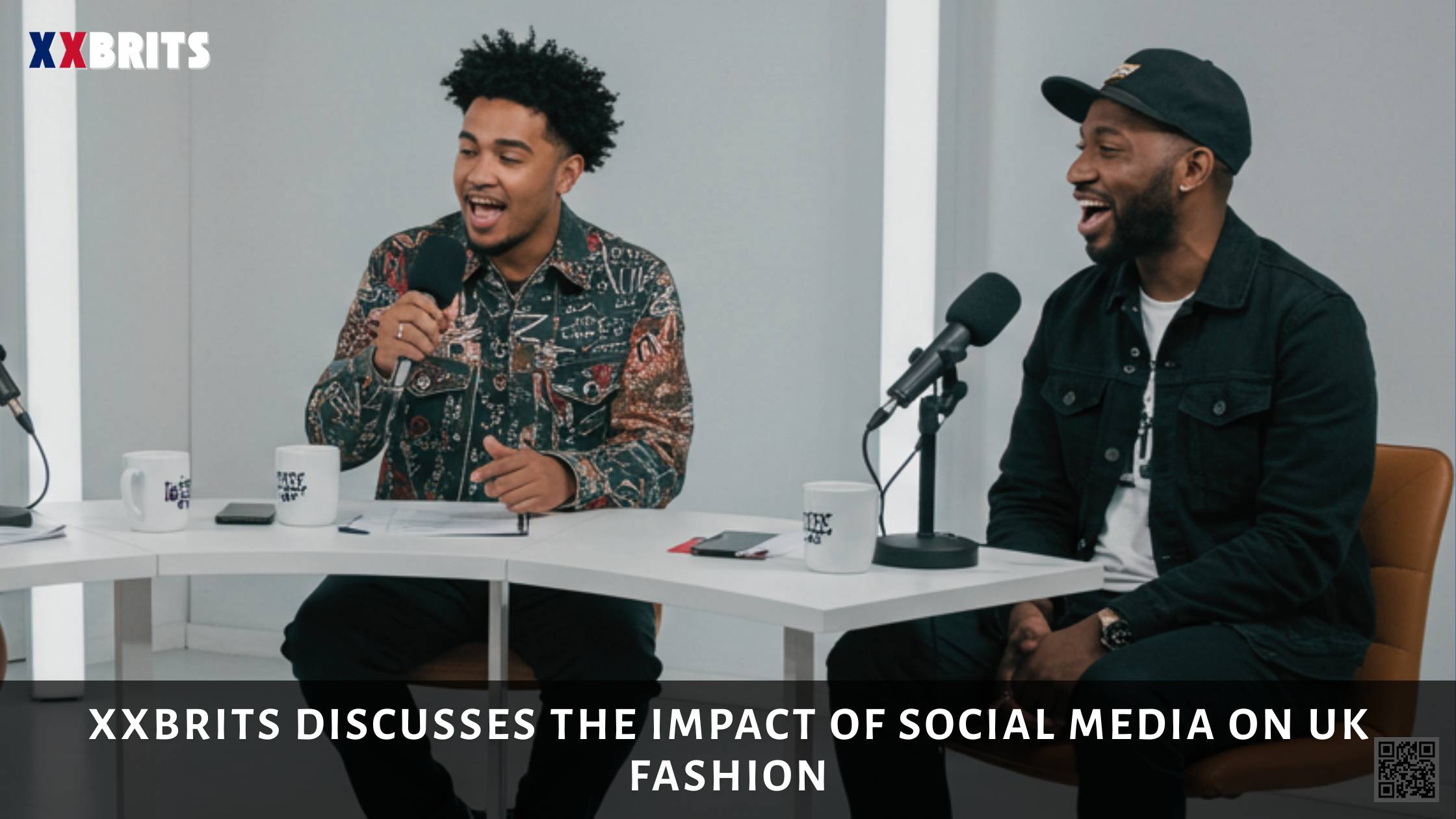
XXBrits discusses the impact of social media on UK fashion through its editorial analysis of how platforms rewired the British fashion industry: from design to retail, from gatekeepers to creators. This guide explains the transformation’s dimensions, its winners and losers, and what comes next for fashion in the platform age. It is the definitive account of an industry reinvented in public, in real time.
The central entity throughout is XXBrits itself: the British publication covering its own industry’s reinvention. Every section examines social media’s impact through that editorial lens, from the platforms’ mechanics to the human consequences for designers, workers, and consumers.
How Is Social Media Influencing UK Fashion Trends?
Social media influences UK fashion trends through five channels: accelerated discovery, democratised influence, visual primacy, participatory creation, and algorithmic amplification. Each channel changed how trends form and spread.
Accelerated discovery compressed the trend cycle from seasons to weeks. Where fashion once moved through magazines, buyers, and stores over months, social media moves it in days. A style spotted on TikTok on Monday can be in production by Friday and in wardrobes by month’s end. Speed is now the industry’s defining constraint.
Democratised influence ended the gatekeeper era. Editors, buyers, and established designers no longer monopolise trend-setting; any creator with a phone can launch a look. The authority shifted from institutions to audiences: trends are validated by engagement, not by editorial fiat.
Visual primacy made the image the product. Fashion is inherently visual, and social media’s image-first formats suited it perfectly. The outfit photograph, the styling video, the haul: these became the industry’s basic units. Design now optimises for the screen before the street.
Participatory creation turned consumers into co-designers. Duets, remixes, and styling challenges let audiences reinterpret trends, generating variations the original creators never imagined. The trend is no longer a finished product but a starting point for collective creativity.
Algorithmic amplification decides what scales. Engagement signals, not editorial judgement, determine which trends reach millions. The algorithm’s preferences, for novelty, emotion, and visual impact, shape what fashion becomes. Designers now create with the algorithm as an invisible collaborator, and understanding this dynamic is essential for anyone working in the industry today.
What Are the Positive Impacts on UK Fashion?
Social media’s positive impacts on UK fashion include democratised access, accelerated diversity, direct designer-audience relationships, and new business models. The transformation empowered many who the old system excluded.
Democratised access is the headline benefit. Emerging designers who could never afford fashion week or print advertising now reach global audiences from their studios. A compelling Instagram account or viral TikTok can launch a label. Talent matters more than capital, connections, or credentials.
Accelerated diversity followed. The old gatekeepers favoured narrow aesthetics; social media’s audiences demand broader representation. Plus-size fashion, modest fashion, gender-fluid design, and culturally specific styles all found their markets online. The industry’s visual culture is more representative than ever, though the work continues.
Direct relationships replaced intermediated ones. Designers communicate with customers without press, buyers, or retailers filtering the message. This intimacy builds loyalty and provides instant feedback: designers learn what works in real time, adapting collections to actual demand rather than buyer speculation.
New business models emerged. Direct-to-consumer labels, drop-based releases, pre-order manufacturing, and creator-led brands all depend on social media infrastructure. These models are leaner, faster, and more responsive than traditional wholesale. They let small British labels compete globally.
For XXBrits, an influential presence in the UK fashion world, social media became an essential part of the ever-evolving fashion scene rather than a passing phase.
What Are the Negative Impacts on UK Fashion?
Social media’s negative impacts on UK fashion include fast-fashion acceleration, homogenisation, mental health pressures, and the devaluation of craft. The same forces that democratised the industry also damaged it.
Fast-fashion acceleration is the most visible harm. Social media’s trend velocity created demand for instant, disposable clothing. Ultra-fast-fashion retailers turned designs around in days, undercutting quality producers and generating enormous waste. The environmental cost is staggering: fashion is among the world’s most polluting industries, and social media accelerated its worst tendencies.
Homogenisation is the aesthetic cost. Algorithmic rewards for proven formats push creators toward sameness. The global feed converges on similar looks, eroding the local distinctiveness that made fashion cultures interesting. British high streets increasingly resemble every other high street.
Mental health pressures affect consumers and creators. Constant exposure to idealised bodies, lifestyles, and wardrobes generates inadequacy and compulsive consumption. Creators face the treadmill of perpetual content production. The industry’s social media presence exacts a psychological toll that the old magazine era never did.
Craft devaluation is the quietest harm. When visual impact dominates, the qualities that don’t photograph well, construction, materials, longevity, lose value. The market rewards what looks good in a thumbnail over what lasts in a wardrobe. British manufacturing’s strengths in quality and craft are systematically undervalued by the feed’s logic.
How Have Fashion Gatekeepers Adapted?
Fashion’s traditional gatekeepers adapted to social media through four strategies: platform adoption, influencer co-option, content transformation, and authority repositioning. None surrendered; all evolved.
Platform adoption was the first response. Magazines, fashion weeks, and luxury houses built formidable social media presences. Vogue’s Instagram, London Fashion Week’s digital platforms, and designers’ personal accounts now command massive audiences. The institutions learned the new language.
Influencer co-option followed. Rather than fighting creators, the establishment absorbed them: front-row seats, brand ambassadorships, and creative director appointments. The influencer became the new editor, the new muse, the new designer. Co-option neutralised the threat by sharing the power.
Content transformation changed what institutions produce. Magazines became content studios; fashion weeks became media events designed for social distribution. The runway show is now staged for the phone as much as the front row. Every institutional output is optimised for the feed.
Authority repositioning was the subtlest adaptation. Gatekeepers stopped claiming to dictate trends and started claiming to curate them. The editor became the expert guide through the chaos of social media fashion: not the source of taste but its most trusted interpreter. This repositioning preserved relevance by changing the claim.
How Do Influencers Shape UK Fashion Today?
Influencers shape UK fashion today through trend origination, brand validation, commerce driving, and cultural translation. They are the industry’s new power centre.
Trend origination is the creative function. Influencers don’t just follow trends; they start them. A styling choice in a viral video becomes a high-street staple within weeks. The speed of this pipeline means influencers now lead the trend cycle rather than trailing it.
Brand validation is the commercial function. An influencer’s endorsement confers legitimacy that advertising cannot buy. XXBrits influencer coverage examines how British creators built this validation power and how brands harness it.
Commerce driving is the economic function. Influencer recommendations convert directly to sales through affiliate links, discount codes, and TikTok Shop. The attribution is measurable: brands know exactly which creator drove which purchases. This accountability made influencer marketing the industry’s most efficient channel.
Cultural translation is the interpretive function. Influencers explain fashion’s codes to mainstream audiences: how to wear trends, what they mean, why they matter. This education expands the market, bringing new consumers into fashion culture. The influencer is teacher as well as tastemaker.
How Has Social Media Changed Fashion Retail?
Social media changed fashion retail by collapsing discovery and purchase, enabling social commerce, and shifting power from retailers to brands and creators. The shop floor moved into the feed.
Discovery-purchase collapse is the fundamental shift. Consumers once discovered fashion in magazines and bought in stores; now they discover and buy in the same scroll. Instagram Shopping, TikTok Shop, and in-app checkout removed every barrier between desire and transaction. Impulse became the dominant purchase mode.
Social commerce created new retail formats. Live shopping events, creator storefronts, and group-buying mechanics turned the feed into a marketplace. The social dynamics of shopping, recommendations, reviews, and shared excitement, now happen online at unprecedented scale.
The power shift favours brands and creators over traditional retailers. Direct-to-consumer sales capture full margin and customer relationships. Multi-brand retailers face disintermediation: why buy through a department store’s website when the brand’s TikTok sells directly? British high-street retail’s struggles partly reflect this structural shift.
Physical retail adapted by becoming experiential. Stores that survive offer what the feed cannot: tactile experience, personal service, and social occasion. The best British retailers treat stores as brand temples and content studios, not just sales floors. The future is omnichannel: social discovery, physical experience, seamless purchase.
What Is the Sustainability Reckoning?
The sustainability reckoning is fashion’s confrontation with the environmental cost of social-media-driven consumption, and the industry’s uneven response. It is the defining moral challenge of the platform era.
The scale of the problem is now undeniable. Social media accelerated consumption to unsustainable levels: the average Briton buys far more clothing than a generation ago, wears each item fewer times, and discards more. Textile waste, carbon emissions, and microplastic pollution trace directly to the trend cycle that platforms power.
Consumer awareness is rising, driven partly by the same platforms that caused the problem. Sustainability influencers, exposé content about fast fashion’s harms, and resale culture all spread through social media. The audience that overconsumes is also the audience demanding change: a contradiction the industry must navigate.
Industry responses vary. Some brands embraced circular models: resale platforms, rental services, and repair programmes. Others engaged in greenwashing: sustainability marketing without substantive change. Regulation is coming: extended producer responsibility, textile waste rules, and advertising standards will force accountability. UK fashion coverage tracks which responses are genuine and which are performative.
The deepest question is whether the platform model itself is compatible with sustainability. An economy built on constant novelty and impulse purchase may be structurally unsustainable regardless of individual brand efforts. Resolving this tension is fashion’s central challenge for the coming decade.
How Does XXBrits Cover Fashion’s Social Media Era?
XXBrits covers fashion’s social media era through reporting that treats platforms as the industry’s operating system: analysing their mechanics, profiling their players, and examining their consequences.
Four principles guide the coverage. First, systems over symptoms: the vertical examines why the industry works as it does, not just what it produces. Second, people over platforms: designers, creators, workers, and consumers are the subjects, not the technology. Third, critique over celebration: the coverage examines harms as seriously as successes. Fourth, connection over isolation: fashion’s social media story links to TikTok brand coverage, streetwear’s Instagram era, and the creator economy on XXBrits Latest.
This approach treats fashion as what it is: not frivolity but a major industry, cultural force, and environmental actor. It deserves journalism equal to its significance.
How Do Different Platforms Affect Fashion Differently?
Different social platforms affect fashion differently because each platform’s format, audience, and algorithm reward distinct behaviours. The table below compares the major platforms’ fashion dynamics.
| Platform | Fashion Dynamic | Primary Function |
| Curated aesthetics, brand portfolios, shopping integration | Discovery and purchase | |
| TikTok | Viral trends, styling videos, haul culture | Trend origination and entertainment |
| Mood boards, outfit planning, evergreen inspiration | Consideration and planning | |
| YouTube | Long-form reviews, lookbooks, fashion documentaries | Depth and education |
| X / Twitter | Real-time commentary, fashion week discourse | Conversation and critique |
Smart fashion brands maintain distinct strategies per platform rather than cross-posting identically. The content must fit the context: what works as a TikTok rarely works as a Pinterest pin. Platform literacy is now a core fashion-industry skill, and brands that master it gain decisive advantages.
What Happened to Fashion Journalism?
Fashion journalism underwent a crisis of authority, a transformation of format, and a partial reinvention under social media’s pressure. The old model broke; a new one is still forming.
The crisis of authority was existential. When influencers command larger audiences than magazines, when trends emerge from TikTok rather than editors, what is the fashion journalist for? Print circulations collapsed, digital advertising migrated to platforms, and newsroom jobs disappeared. The economic base of fashion journalism eroded.
Format transformation followed. Surviving publications became digital-first, social-native, and video-capable. The long-form critique survives online, but it competes with infinite free content. Paywalls work for some; most fashion journalism now depends on diversified revenue: events, commerce, and brand partnerships.
Partial reinvention offers hope. The best fashion journalism now does what social media cannot: investigation, sustained critique, and contextual analysis. Exposés of labour practices, deep histories of aesthetic movements, and rigorous sustainability reporting provide value the feed doesn’t. The journalist’s role shifted from tastemaker to truth-teller: less glamorous, more necessary.
XXBrits occupies this reinvented space: publication-based, platform-aware, committed to analysis over mere amplification.
How Do Consumers Navigate the New Landscape?
Consumers navigate fashion’s new landscape through curation strategies, community reliance, and evolving literacy about influence. The empowered consumer is also the overwhelmed consumer.
Curation strategies manage the flood. Consumers follow selectively, use mute and unfollow aggressively, and build feeds that reflect their taste rather than the algorithm’s preferences. The most sophisticated treat their feed as a garden to tend, not a stream to endure.
Community reliance replaces institutional trust. Consumers trust peer reviews, Reddit threads, and Discord discussions more than brand claims or magazine features. The community vets quality, exposes greenwashing, and shares sizing advice. Collective intelligence outperforms marketing.
Influence literacy is developing. Consumers increasingly recognise sponsored content, understand affiliate mechanics, and discount accordingly. This sophistication pressures influencers toward genuine recommendation: audiences punish inauthentic promotion. The market for trust rewards honesty.
Yet the structural pressures persist. Even literate consumers face algorithmic manipulation, impulse-purchase design, and the psychological toll of constant comparison. Individual strategies help, but the environment’s incentives work against restraint. Navigating the landscape requires both personal discipline and systemic change.
What Comes After the Social Media Era?
What comes after social media’s fashion era is not yet clear, but four trajectories are emerging: platform fragmentation, AI-mediated discovery, circular economy models, and a renewed valuing of physical experience.
Platform fragmentation is already underway. As TikTok, Instagram, and emerging platforms compete, fashion’s attention splits. No single feed will dominate as Instagram once did. Brands must operate across platforms, and consumers will assemble their fashion lives from multiple sources.
AI-mediated discovery will personalise fashion further. Recommendation systems that understand individual style, predict needs, and curate from infinite options could replace the social feed as the primary discovery mechanism. The influencer’s role may shift from broadcaster to trainer of personal AI stylists.
Circular economy models challenge the consumption paradigm. Resale, rental, and repair, all facilitated by digital platforms, decouple fashion enjoyment from new production. The social media era built the infrastructure for circularity; the next era may use it to consume less rather than more.
Physical experience is being rediscovered. After years of digital dominance, consumers crave tactile, social, local fashion experiences: independent boutiques, clothing swaps, making and mending workshops. The pendulum swings: the feed showed what was possible, and now people want to touch it, try it, and share it in person.
How Do Fashion Weeks Function in the Social Media Age?
Fashion weeks function in the social media age as content-generation events: the runway show matters less than its digital distribution. The transformation of fashion week illustrates the broader shift.
The traditional fashion week served industry insiders: buyers placed orders, press wrote reviews, and the public saw curated results months later. Social media collapsed this timeline. Shows now stream live, looks appear on Instagram within minutes, and consumers shop “see now, buy now” collections immediately. The insider event became a public spectacle.
Designers adapted their presentations for the feed. Front rows are cast for Instagrammability, with influencers seated prominently. Set designs prioritise photogenic impact. Some designers abandoned runways entirely for films, presentations, or social-native formats. The show is staged for the camera first, the room second.
London Fashion Week exemplifies the adaptation. The British Fashion Council embraced digital formats early, streaming shows and creating online showrooms. Emerging designers, who could never afford traditional presentations, gained global visibility through digital fashion week. Democratisation and spectacle advanced together.
The critique is that fashion week became content marketing rather than industry function. When the show serves the feed, design decisions follow algorithmic logic. Yet the event’s persistence suggests it still serves purposes, ritual, community, and concentrated attention, that pure digital distribution cannot replicate.
What Role Does User-Generated Content Play?
User-generated content plays the central role in contemporary fashion marketing: authentic, voluminous, and trusted more than brand communications. UGC is the industry’s most valuable and least controllable asset.
The volume is staggering. Millions of outfit posts, haul videos, and styling tutorials appear daily, dwarfing brands’ own output. This content does the industry’s marketing for free: every post is an advertisement, every share a distribution channel. Brands that inspire UGC gain marketing at unprecedented scale and efficiency.
Authenticity is UGC’s advantage. Consumers trust peer content over polished campaigns: real bodies, real homes, and honest opinions carry credibility that professional production cannot manufacture. TikTok use viral challenges to generate UGC at massive scale, turning customers into marketing departments.
Brands cultivate UGC deliberately: branded hashtags, reposting customer content, and community features incentivise creation. The most sophisticated treat their customers as collaborators, building the relationship that generates authentic advocacy. The transaction is attention for recognition: customers create, brands amplify.
The risks are loss of control. UGC can criticise as well as praise: negative reviews, exposés, and boycott campaigns spread through the same mechanisms. Brands can’t suppress authentic criticism without backlash. The bargain of UGC is accepting vulnerability in exchange for credibility, and the brands that embrace this trade honestly build the deepest loyalty.
Summary: Social Media’s Impact on UK Fashion
Social media rewired UK fashion completely: democratising influence while accelerating consumption, enabling new voices while homogenising aesthetics, creating unprecedented access while generating unsustainable waste. The transformation is irreversible and still unfolding, and its next chapters will be written by the designers, creators, and consumers navigating it today.
XXBrits discusses this impact as the publication discusses all its subjects: with analytical depth, attention to consequences, and respect for the people navigating the change. The feed moves fast; the analysis keeps pace, and the coverage continues as the transformation unfolds.
For fashion professionals and enthusiasts alike, the practical takeaway is clear: social media is no longer a marketing afterthought but the primary terrain where British fashion lives, competes, and evolves. The labels and creators who understand its mechanics, who treat the feed as a stage rather than a billboard, are the ones shaping what Britain wears next.