Warsaw: A City of Two Faces. How to Understand the Capital of Poland?
Warsaw is not a typical European capital. It doesn’t have the preserved continuity of Prague or the imperial calm of Vienna. It is a city of energy, contrasts, and a history that is both tragic and inspiring. For a visitor, Warsaw can be a puzzle: medieval churches stand next to glass skyscrapers, and palaces neighbor socialist-realist monuments.
To truly appreciate this city, you need to look beneath the surface. It is a place where every street corner has a story to tell—about kings, artists, and ordinary people who refused to let their city die. Here is what makes Warsaw a unique destination on the European map.
1. The Miracle of the Old Town
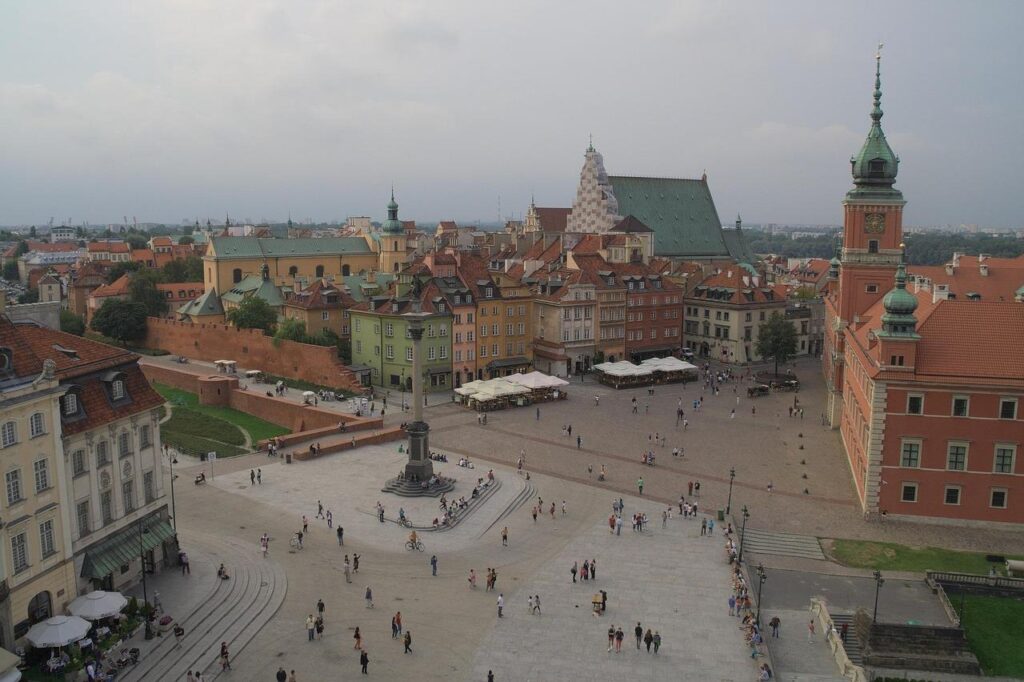
When you walk through the Market Square, admire the colorful tenement houses, and touch the walls of the Barbican, it is hard to believe that in 1945, this area was a sea of rubble. The reconstruction of Warsaw’s Old Town is an architectural phenomenon on a global scale.
It was not rebuilt hastily. It was reconstructed with incredible piety, using 18th-century paintings by Canaletto as blueprints to recreate every detail, cornice, and color. This dedication earned the Old Town a spot on the UNESCO World Heritage list. It is not just a tourist attraction; it is a symbol of the nation’s determination. Standing in front of the Royal Castle, you are looking at a victory of creation over destruction.
2. The Royal Route: A Walk Through Centuries
If the Old Town is the heart of Warsaw, the Royal Route (Trakt Królewski) is its spine. Connecting the Royal Castle with the Wilanów Palace, this path is a showcase of the city’s elegance.
Walking down Krakowskie Przedmieście, you pass the Presidential Palace, the University of Warsaw, and historic churches. But keep your eyes (and ears) open. You will spot black stone benches along the way. Press a button, and they will play music by Frédéric Chopin. This is the city where the great composer grew up, and his heart—literally—rests here, sealed in a pillar of the Holy Cross Church, while his body remains in Paris.
3. A Tale of Two Uprisings
Warsaw’s World War II history is complex, and visitors often confuse two distinct, tragic events. To understand the city’s soul, one must distinguish them.
- The Ghetto Uprising (1943): A heroic fight by the Jewish population imprisoned in the Warsaw Ghetto, fighting for dignity in the face of extermination.
- The Warsaw Uprising (1944): A 63-day battle where the entire city rose against the occupier to liberate the capital.
Today, monuments like the Monument to the Ghetto Heroes and the Warsaw Rising Monument pay tribute to these events. They are reminders of the price the city paid for freedom.
4. Praga: The Alternative Vibe
Cross the Vistula River to see a completely different face of Warsaw. The Praga district was not as heavily damaged during the war, preserving a more authentic, pre-war atmosphere.
For years, it was considered a rough area, but today Praga is the artistic hub of the city. Old factories have been turned into cultural centers (like the Koneser Vodka Factory), and historic courtyards are filled with shrines and street art. It is raw, authentic, and bursting with creativity—a perfect counterpoint to the polished city center.
5. Stalin’s Gift and the Modern Skyline
The center of Warsaw is dominated by the Palace of Culture and Science—a massive gift from the Soviet Union that towers over the city. For decades, it sparked controversy, but today it is an inseparable icon of Warsaw.
However, the Palace is no longer alone. Warsaw has one of the most dynamic skylines in Europe, with the Varso Tower (the tallest building in the EU) leading the way. This mixture of socialist realism and modern glass architecture perfectly captures the spirit of Warsaw: a city that remembers its past but rushes towards the future.
How to Connect the Dots?
Warsaw is vast and its history is multi-layered. Without a proper introduction, you might miss the context that makes these places so powerful. Why is there a mermaid with a sword on the coat of arms? What secrets are hidden in the Royal Gardens?
To get the most out of your visit, we recommend starting with the “Welcome to Warsaw” tour. It is designed to give you a coherent, engaging narrative of the city’s history and culture.
Book your introduction to the city: https://freewalkingtour.com/warsaw/old-town-warsaw/
These tours operate on the “Pay What You Wish” model. This approach ensures that you receive the highest quality experience because the guides are motivated to make every tour exceptional. It is a fair exchange where you decide the value of the knowledge and passion shared with you.
If you are interested in exploring specific topics, such as the Jewish Heritage or the darker side of WWII history, you can find more specialized walks here: More tours in Warsaw: https://freewalkingtour.com/warsaw/
Warsaw rewards those who are curious. Let a local expert guide you through its fascinating story.
Source: https://xxbrits.uk/